A spectrogram is not a picture of sound — it is the sound, serialized
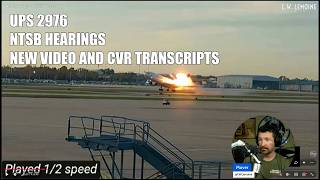
The central misconception driving this incident is that a spectrogram is a visual aid. It isn't. A spectrogram is the magnitude of the Short-Time Fourier Transform of an audio signal, rendered as pixels: each column encodes the frequency content of a small slice of audio, and each row encodes a frequency bin. The amplitude at every (time, frequency) point is the pixel intensity. That means a high-resolution spectrogram PDF is, mathematically, the magnitude half of the audio's spectral representation — the only thing missing is the phase. Griffin-Lim, the 1984 algorithm at the heart of this leak, was designed specifically to recover that missing phase by iterating between time and frequency domains until the reconstructed waveform's STFT matches the given magnitude [3]. Audio engineers in the Reddit threads treated this as Audio 101: modern text-to-speech systems use exactly this pipeline in reverse, generating a spectrogram and then inverting it to waveform via a neural vocoder. NTSB Chairwoman Jennifer Homendy called it 'deeply troubling that emerging technology can be used to extract [CVR] audio from visualized data,' [2]but The Register's coverage pushed back that 'emerging mischaracterizes four-decade-old technology' [3]. The leak isn't novel signal processing. It's a policy that assumed images couldn't be inverted.

![[CVR] UPS flight 2976 leaked CVR (Maybe) (4th, November, 2025)](https://img.youtube.com/vi/xVNmVviD8Oo/mqdefault.jpg)