xAI Restructuring and Internal Upheaval
TECH

xAI Restructuring and Internal Upheaval

38+
Signals

Strategic Overview

  • 01.
    Elon Musk declared on March 13, 2026 that xAI 'was not built right first time around' and must be rebuilt from the foundations up, following months of co-founder departures, layoffs, and poor performance of its Grok coding product.
  • 02.
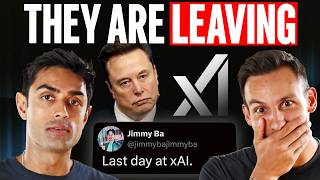
    Ten of xAI's original twelve co-founders have departed the company, leaving only Manuel Kroiss and Ross Nordeen, while xAI hired former Cursor executives Andrew Milich and Jason Ginsberg on March 12, 2026 to lead a fresh rebuild of its AI coding tool.
  • 03.
    SpaceX acquired xAI in early February 2026, creating a combined entity valued at approximately $1.25 trillion, but the ongoing restructuring and talent exodus are raising concerns about SpaceX IPO plans targeting a $1.5-1.75 trillion valuation in mid-2026.
  • 04.
    Musk acknowledged that Grok is 'currently behind in coding' compared to Anthropic's Claude Code and OpenAI's Codex, and ordered sweeping layoffs at xAI with SpaceX and Tesla executives directed to audit and evaluate xAI employees.

Deep Analysis

Why This Matters

The restructuring of xAI represents one of the most dramatic organizational upheavals in recent AI industry history. When Elon Musk publicly admits that a company he founded was 'not built right,' it signals a level of dysfunction that goes beyond normal startup growing pains. xAI was launched in 2023 with an all-star roster of 12 co-founders drawn from DeepMind, Google Brain, and other leading AI labs, yet barely three years later, 83% of that founding team has walked away.

The implications extend far beyond xAI itself. The SpaceX-xAI merger, completed in February 2026, means this turmoil is now directly tied to one of the most anticipated IPOs in history. SpaceX is targeting a $1.5-1.75 trillion valuation for its mid-2026 public offering, but investors will be scrutinizing whether xAI represents a crown jewel or an albatross within that combined entity. The Tesla shareholder lawsuit over the $2 billion investment in xAI adds another layer of legal and financial complexity. For the broader AI industry, xAI's struggles underscore how difficult it is to build a competitive frontier AI lab even with virtually unlimited resources.
How It Works: The Rebuild Strategy

Musk's restructuring follows his well-documented 'delete and simplify' playbook, previously applied at Twitter (now X), SpaceX, and Tesla. The approach involves sweeping layoffs to eliminate what Musk considers dead weight, bringing in outside talent to inject fresh perspectives, and reorganizing into focused product-driven teams. At xAI, this has manifested as the 'Four Teams' model: Grok Main/Voice, Coding Models, Imagine/Multimedia, and the now-troubled 'Macrohard' division.

The hiring of Andrew Milich and Jason Ginsberg from Cursor is particularly revealing. Cursor, valued at approximately $50 billion with $2 billion in annualized revenue and just 20 engineers, has become the gold standard for AI-powered coding tools. By poaching Cursor's engineering leadership, Musk is effectively conceding that xAI's internal approach to coding failed and that external expertise is needed. Both executives will report directly to Musk, bypassing whatever remains of xAI's management structure. However, the Macrohard division's collapse -- with leader Toby Pohlen departing just 16 days after his appointment -- suggests that Musk's management style itself may be a root cause of the retention problems.

By The Numbers

The statistics paint a stark picture of organizational instability. Ten of xAI's twelve original co-founders have departed, an 83% attrition rate that dwarfs even OpenAI's notable co-founder exodus (8 of 11). Only Manuel Kroiss and Ross Nordeen remain from the founding team. The departures accelerated sharply following the SpaceX acquisition: five co-founders left between February and March 2026 alone, compared to three departures across all of 2024.

The financial figures are equally dramatic. The SpaceX-xAI combined entity carries a $1.25 trillion valuation, with xAI contributing $250 billion of that total. Tesla's $2 billion investment, made just weeks before the SpaceX acquisition, is now the subject of shareholder litigation. Meanwhile, the company xAI is trying to catch -- Cursor -- has achieved $2 billion in annualized revenue with roughly 20 engineers, a level of capital efficiency that stands in sharp contrast to xAI's resource-intensive approach. Toby Pohlen's 16-day tenure leading the Macrohard division may be one of the shortest executive tenures at a major technology company.

Impacts and What's Next

The most immediate impact is on SpaceX's IPO timeline. Planned for June-July 2026, the offering needs to tell a coherent story about how xAI fits into the SpaceX ecosystem and generates value. Ongoing executive departures and public admissions of failure make that narrative harder to construct. Investment bankers and institutional investors will demand clarity on xAI's technology roadmap, talent retention strategy, and competitive positioning before committing to a $1.5-1.75 trillion valuation.

The competitive landscape in AI coding is also shifting. With Grok acknowledged as trailing both Claude Code and Codex, xAI faces the challenge of rebuilding while its competitors continue to advance. The Cursor hires bring valuable expertise, but recreating Cursor's engineering culture inside Musk's 'extremely hardcore' environment is a significant challenge. Social media commentary, including viral posts from Aakash Gupta (522 likes) and Yuchen Jin (3,400 likes), has amplified the narrative of institutional dysfunction. YouTube coverage from channels like Limitless Podcast (10,250 views) and BitBiasedAI (7,946 views) is bringing the story to broader audiences. The talent drain also creates a negative feedback loop: as more high-profile departures make headlines, remaining employees may question their own futures, and prospective recruits may think twice about joining.

The Bigger Picture

xAI's troubles illuminate a fundamental tension in the AI industry: the gap between capital and culture. Musk's companies have access to virtually unlimited financial resources -- the SpaceX-xAI entity is valued at $1.25 trillion -- yet money alone cannot buy the institutional knowledge, research culture, and collaborative dynamics that make frontier AI labs productive. Anthropic, where all seven co-founders remain intact, provides a striking counterexample that stability and scientific culture can coexist with rapid commercial growth.

The xAI saga also raises governance questions that extend beyond one company. The SpaceX-xAI merger, Tesla's $2 billion investment, and the cross-company executive audits all occur within Musk's interconnected empire, where traditional corporate governance mechanisms may not provide adequate checks. As Kevin LaCroix noted, the merger allowed Musk to set valuations within a founder-controlled ecosystem without public-company scrutiny. Whether this concentration of control accelerates or impedes xAI's recovery will be a closely watched test case for the technology industry's approach to founder-led conglomerates. The dismantling of xAI's internal safety oversight team, reported by anonymous insiders, adds an additional dimension of concern as the company rebuilds with less institutional guardrails than before.

Historical Context

2023-03-01
Elon Musk launches xAI with 12 co-founders to compete in the frontier AI race.
2024-02-01
Christian Szegedy becomes the first co-founder to depart xAI.
2024-07-01
Kyle Kosic leaves xAI to join OpenAI, signaling talent drain to competitors.
2024-08-01
Igor Babuschkin departs xAI to pursue venture capital.
2026-01-16
Tesla invests $2 billion in xAI during its Series E round at approximately $230 billion valuation.
2026-02-02
SpaceX acquires xAI, creating a combined entity valued at approximately $1.25 trillion.
2026-02-11
Musk holds all-hands meeting announcing the 'Four Teams' reorganization into Grok Main/Voice, Coding Models, Imagine/Multimedia, and Macrohard; co-founders Jimmy Ba and Tony Wu depart.
2026-03-12
Andrew Milich and Jason Ginsberg leave Cursor to join xAI, tasked with leading the rebuild of xAI's AI coding tool.
2026-03-13
Zihang Dai and Guodong Zhang depart; Musk publicly declares xAI was 'not built right' and announces a ground-up rebuild, bringing total co-founder departures to 10 of 12.

Power Map

Key Players
Subject

xAI Restructuring and Internal Upheaval

EL

Elon Musk

CEO of xAI, SpaceX, and Tesla; driving the restructuring, ordering layoffs and executive audits across xAI

AN

Andrew Milich & Jason Ginsberg

Former Cursor Heads of Engineering/Product who joined xAI on March 12, 2026 to lead the coding tool rebuild, reporting directly to Musk

CU

Cursor (Anysphere)

AI coding company valued at ~$50B with $2B annualized revenue; competitive benchmark xAI is trying to match; lost two senior leaders to xAI

TE

Tesla

Invested $2B in xAI at ~$230B valuation in January 2026; shareholders suing Musk for breach of fiduciary duty over the deal

AN

Anthropic & OpenAI

Competitors whose coding tools (Claude Code and Codex) are the performance benchmarks Grok is trailing

SP

SpaceX

Acquired xAI in February 2026; IPO plans for mid-2026 at $1.5-1.75T valuation potentially complicated by xAI turmoil

THE SIGNAL.

Analysts

"Characterized xAI as 'starting over again, again,' noting that Musk is applying his signature 'delete and simplify' philosophy to AI software development, a strategy that has worked at SpaceX and Tesla but faces different challenges in AI talent retention."

Tim Fernholz
Reporter, TechCrunch

"Argued that the SpaceX-xAI merger allowed Musk to 'set relative valuations within a founder-controlled ecosystem' without the scrutiny of public-company merger procedures, raising governance and fiduciary concerns."

Kevin LaCroix
Author, D&O Diary

"Warned that the wave of co-founder departures could complicate SpaceX IPO plans and spook potential investors, given that talent stability is a key factor in tech company valuations."

Fortune Analysis Team
Fortune Magazine

"Observed that Musk has 'mass-fired his way to the world's most valuable rocket company and the world's most valuable car company' and is now applying the same approach to his AI lab, where 10 of 12 co-founders have left."

Aakash Gupta
Tech commentator, X.com

"Highlighted that while every frontier AI lab has lost co-founders (xAI: 10 of 12, OpenAI: 8 of 11), Anthropic stands out as the only major lab where all 7 co-founders remain, drawing a sharp contrast to xAI's instability."

Yuchen Jin
AI industry observer, X.com
The Crowd

"Elon has mass-fired his way to the world's most valuable rocket company and the world's most valuable car company. He's now doing it to his AI lab. 10 of xAI's 12 cofounders have left. The CFO lasted three months. The general counsel lasted 16 months."

@@aakashgupta522

"Every frontier AI lab has lost co-founder(s): xAI: 5 of 12 gone, OpenAI: 8 of 11 gone, Thinking Machines: 3 of 6 gone, SSI: 1 of 3 gone, DeepMind: 1 of 3 gone. Except Anthropic. All 7 co-founders are still there."

@@Yuchenj_UW3400

"xAI co-founder left xAI. I believe this makes it the 4th co-founder to leave. Also Greg Yang is sick. Still wish xAI can build top models."

@@Yuchenj_UW1700
Broadcast
Elon Musk's Master Plan: The Reason Everyone is Leaving xAI

Elon Musk's Master Plan: The Reason Everyone is Leaving xAI

Grok Collapse? Elon Musk's xAI Exodus & the Rise of Macrohard

Grok Collapse? Elon Musk's xAI Exodus & the Rise of Macrohard

Does Elon Musk Hates Smart People (The Truth About xAI Exodus)

Does Elon Musk Hates Smart People (The Truth About xAI Exodus)