The three-generations frame: why most teams are still on Classic RAG
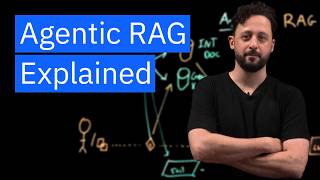
The cleanest way to read the 2026 RAG landscape is as three overlapping generations rather than a linear upgrade. Classic (Pipeline) RAG does 'one retrieval call. One generation call. Minimal orchestration overhead' — and as the Medium framework analysis argues, 'that simplicity is the feature, not the limitation.' It remains the right answer for FAQs, policy lookups, and any workload where one well-chosen chunk is enough. Graph RAG sits in the middle, reframing retrieval from 'most similar text chunks' to entity-relationship traversal using LLM-generated knowledge graphs with community summarization, which pays off when answers span multiple documents. Agentic RAG is the emerging generation, defined by the Singh et al. arXiv survey as embedding autonomous AI agents that leverage 'reflection, planning, tool use, and multi-agent collaboration' inside the pipeline.
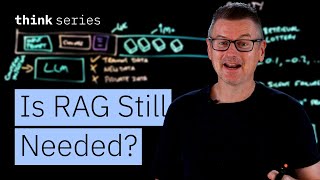
What the research repeatedly emphasizes is that this is a specialization story, not a replacement story. The Techment analysis is explicit: 'RAG architectures are no longer one-size-fits-all; specialization defines 2026 enterprise AI systems,' with hybrid approaches becoming the production baseline. IBM Technology's widely-viewed enterprise framing carries the same message — the right generation depends on query complexity, data volatility, and compliance needs. The practical implication is that the question teams should answer first is not 'should we upgrade to Agentic RAG' but 'which of our workloads actually need a control loop, and which are best served by the one-shot path we already have working?'