What Counts As 'Incontrovertible Evidence' Of AI Slop

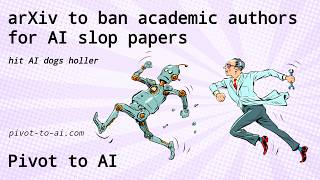
The new arXiv rule is narrow on paper and sweeping in practice. The trigger is not LLM use, but visible carelessness: hallucinated references, fabricated citations, and embedded model meta-comments such as 'here is a 200 word summary; would you like me to make any changes?' or 'the data in this table is illustrative, fill it in with the real numbers from your experiments' [1]. Chair Thomas Dietterich's logic is unforgiving — if the authors did not even check the LLM output, nothing else in the paper can be trusted either [1]. Procedurally, it is a one-strike rule, but with safeguards: arXiv moderators flag the issue, the section chair must confirm before the ban applies, and authors retain appeal rights [2]. Crucially, responsibility attaches to every listed author, regardless of who actually pasted the prompt response into the manuscript [1]. That design choice converts a content-moderation problem into a collective-liability regime: junior coauthors inherit the same one-year exile as the senior author who shipped the broken draft, and the appeal process becomes the only buffer against guilt-by-association.