Musk v. Altman OpenAI nonprofit-betrayal trial
TECH

Musk v. Altman OpenAI nonprofit-betrayal trial

63+
Signals

Strategic Overview

  • 01.
    Musk v. Altman is being tried in Oakland before Judge Yvonne Gonzalez Rogers with a 9-person advisory jury on roughly a 3-week schedule, with a ruling expected by mid-May 2026.
  • 02.
    Of Musk's 26 original claims, only two survived to trial: breach of charitable trust and unjust enrichment, after the court trimmed most counts in May 2025.
  • 03.
    Musk testified he was 'a fool' for donating roughly $38M to OpenAI and is seeking up to $134B in 'wrongful gains' to be redirected to OpenAI's nonprofit foundation, alongside removal of Altman and Brockman.
  • 04.
    Under cross-examination, Musk admitted xAI 'partly' used distillation on OpenAI models to train Grok, an admission that may complicate his own legal and competitive posture.

Deep Analysis

The Two Claims Left Standing

By the time the jury was empaneled in Oakland on April 27, 2026, Musk's case had already been filtered down by a year of motion practice. Of 26 original claims, only two survived: breach of charitable trust and unjust enrichment. That narrowing, completed in the court's May 2025 ruling, is the most underappreciated fact about the trial. Fraud-style theories that would have required showing OpenAI lied to Musk personally are gone. What remains is essentially a charity-law dispute about whether donated funds were diverted from the purpose for which they were given.

That reframing changes who 'wins' looks like. Even if Musk prevails, damages flow to OpenAI's nonprofit foundation, not to Musk. The remedy he is asking for, reverting OpenAI to a nonprofit and removing Altman and Brockman, is a structural equitable order rather than a personal payout. Vivian Dong, an attorney and AI safety expert, told Fortune flatly that 'it would be unprecedented for a court, in a private breach of charitable trust suit, to order the structural changes to OpenAI that Musk is seeking.' The legal headline is therefore not 'will Musk get paid' but 'will a federal judge use trust law to reach into a $135B recapitalization?'
The $38M to $134B Arithmetic

The dollar figures define the case's drama. Musk donated roughly $38M, with total contributions of about $44M across 2016 to 2020, and now seeks up to $134B in 'wrongful gains' to be redirected to OpenAI's nonprofit. He testified he was 'a fool who created free funding for them to create a startup' and characterized the resulting OpenAI as roughly an $800B for-profit. His framing is that the gap between $38M of charitable input and an $800B private enterprise is itself the evidence of betrayal.

What sits on the other side of that arithmetic is the October 28, 2025 recapitalization. Microsoft holds approximately 27% (~$135B) and the OpenAI Foundation retains roughly a $130B stake. A Musk win that orders structural unwinding would not be a paper exercise. It would force renegotiation of Microsoft's position, complicate any future OpenAI IPO, and route a multi-hundred-billion-dollar reallocation through a charitable foundation. The defense's counter, voiced by lead counsel Bill Savitt, is that Musk pursued financial gain and 'wanted the keys to the kingdom as CEO, later suing after failing to obtain that position,' a framing that makes the damages number look less like remedy and more like leverage.

Distillation Backfire on Musk's Own Bench

The single most consequential moment of cross-examination on April 30 was not about charitable trust at all. Asked whether xAI used distillation on OpenAI's models to train Grok, Musk answered 'partly.' TechCrunch and Decrypt both treated the admission as a turning point because it cuts directly against the moral architecture of his case. Musk has cast the trial as a defense of charitable purpose against private capture, but distillation is itself the cheap competitive shortcut by which a rival lab trains on a leader's outputs.

For the advisory jury, the admission complicates the simple 'looter vs. founder' frame Musk has tried to set. For the broader industry, it converts a courtroom moment into a policy data point. If a CEO concedes under oath that his frontier-model competitor distilled from the company he is suing, regulators and OpenAI's own legal team gain a citable record. The risk is bidirectional. xAI's distillation admission may invite industry-wide policing, but it also seeds future litigation between OpenAI and xAI that has nothing to do with charity law.

How the Judge Is Narrowing the Story

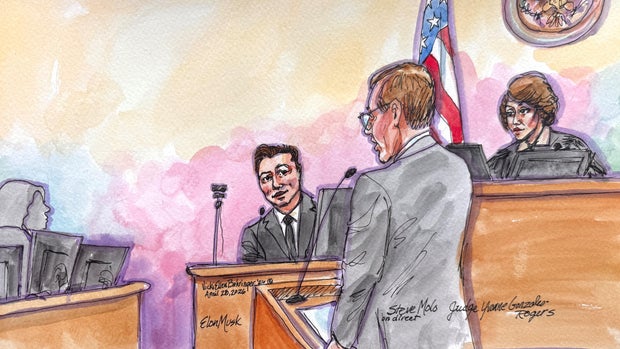
Judge Yvonne Gonzalez Rogers has spent the first week of trial actively shaping what the jury hears. She told Musk's team that 'there are plenty of people who don't want to put the future of humanity in Mr. Musk's hands, but it doesn't matter, we aren't going to get into those issues,' effectively walling off the AI-existential-risk theatrics that Musk's filings have leaned on. SFist observed that Musk 'really wants the jury to know that AI might kill us all' and the judge will not let him.

She also admonished Musk personally about behavior outside the courtroom, telling him to 'try to control your propensity to use social media to make things work outside the courtroom.' Combined, those rulings push the trial toward a tight charity-law question and away from a referendum on AI safety or on Musk's public persona. That is not a neutral choice. It hurts Musk's narrative power, which has historically run on doomsday framing and platform amplification, and forces both sides to argue trust law on its own terms in front of an advisory jury whose findings the judge is not bound to follow.

The Community Read and the IPO Cascade

Outside the courtroom, the public reception fractures along distinct lines. Mainstream news communities on Reddit gravitated to a 'plague on both their houses' posture, treating the trial as a fight between two billionaires rather than a vehicle for any larger principle. A separate cohort focused on financial cascade risk, arguing that a Musk win could block a future OpenAI IPO and expose investors to clawbacks. A more technical thread advanced the theory that the structural illegality of converting a nonprofit that received tax-exempt donations is the real issue, independent of Musk's motives, and even floated the idea that current OpenAI models might qualify as AGI under the founding agreement, which would have separate licensing implications.

Mainstream-network coverage from NBC and CBS framed the case primarily as 'betrayal of nonprofit mission' and amplified Musk's 'extreme concerns' about who controls AI. Together, these communities sketch a story the legal proceeding itself does not capture: a Musk win is being priced by some online observers not as an abstract trust-law precedent but as a concrete trigger for Microsoft renegotiation, IPO blockage, and clawback exposure. Whether the advisory jury or Judge Gonzalez Rogers shares that risk model is the open question of the next two weeks.

Historical Context

2015-12-11
OpenAI launches as a nonprofit research lab co-chaired by Elon Musk and Sam Altman.
2018
Musk leaves OpenAI's board, ending his formal governance role.
2019
OpenAI introduces its 'capped-profit' OpenAI LP structure, the first major step away from a pure nonprofit model.
2024-02-29
Musk files Musk v. Altman in the Northern District of California.
2024-11
Musk seeks a preliminary injunction to halt OpenAI's for-profit conversion.
2025-04
Twelve former OpenAI employees file an amicus brief; OpenAI countersues Musk.
2025-05-01
Court trims most of Musk's 26 claims, allowing breach of charitable trust and unjust enrichment to proceed.
2025-05-05
OpenAI abandons full nonprofit-stripping and pivots to a public benefit corporation under nonprofit oversight.
2025-10-28
OpenAI completes its for-profit recapitalization; Microsoft holds about 27% (~$135B) and the OpenAI Foundation retains a roughly $130B stake.
2026-04-27
Jury selection; a 9-person advisory jury is empaneled in Oakland.
2026-04-28
Opening statements; Musk takes the stand as the trial's first witness.
2026-04-30
Musk concludes testimony after admitting xAI 'partly' used distillation on OpenAI models; wealth manager Jared Birchall is called as the second witness.

Power Map

Key Players
Subject

Musk v. Altman OpenAI nonprofit-betrayal trial

EL

Elon Musk

Plaintiff and OpenAI co-founder; testified for three days as the trial's first witness, alleges Altman and Brockman betrayed the founding nonprofit mission, and seeks reversion plus up to $134B routed to the nonprofit foundation.

SA

Sam Altman

Defendant and OpenAI CEO. Faces personal liability and potential removal; the defense argues Musk sued only after failing to obtain CEO control of OpenAI.

GR

Greg Brockman

Defendant and OpenAI President; Musk's requested remedies seek his removal alongside Altman from OpenAI's leadership.

JU

Judge Yvonne Gonzalez Rogers

Presiding U.S. District Judge for the Northern District of California in Oakland. Has limited Musk's AI-doomsday rhetoric, admonished him over social media use during trial, and is expected to issue a ruling by mid-May 2026 informed by an advisory jury.

MI

Microsoft / Satya Nadella

Approximately 27% (~$135B) stakeholder in the recapitalized OpenAI for-profit and on the witness list. Microsoft's position would face direct disruption if the court orders structural unwinding.

CA

California AG Rob Bonta

State regulator over OpenAI's charitable assets; declined to oppose the October 2025 recapitalization after concessions, framing the public-interest backdrop of this private trust suit.

Source Articles

Top 5

THE SIGNAL.

Analysts

"Unless they made an explicit promise to him that they would never create a for-profit subsidiary, it's hard to see how he was defrauded."

Sam Brunson
Professor of Nonprofit Law, Loyola University Chicago

"As a general rule, the answer to that is no. If I donate to an organization, I've given up that money, and if it turns out that I don't like what they do subsequently, my recourse is to stop donating to them."

Sam Brunson
Professor of Nonprofit Law, Loyola University Chicago

"It would be unprecedented for a court, in a private breach of charitable trust suit, to order the structural changes to OpenAI that Musk is seeking."

Vivian Dong
Attorney and AI safety expert

"If they get away with what they did, this case will become case law and become precedent to looting every charity in America."

Elon Musk
Plaintiff, OpenAI co-founder, xAI CEO

"Musk pursued financial gain and wanted 'the keys to the kingdom' as CEO, later suing after failing to obtain that position."

Bill Savitt
Lead defense counsel for OpenAI

"There are 'plenty of people who don't want to put the future of humanity in Mr. Musk's hands, but it doesn't matter, we aren't going to get into those issues.'"

Judge Yvonne Gonzalez Rogers
U.S. District Judge, N.D. Cal., presiding
The Crowd

"Here's a general summary of Elon Musk's 3.5 hour long testimony today during day 2 of the OpenAI trial: • Elon on Sam Altman & Greg Brockman: "If they wanna get rich, they should go do so as a for-profit. They should not get rich off a nonprofit. I gave them $38 million of...""

@@SawyerMerritt0

"MUSK VS ALTMAN OPENAI TRIAL BEGINS — Elon Musk's $134B lawsuit against Sam Altman goes to court, alleging OpenAI abandoned its nonprofit mission. The case pits two co-founders now leading rival AI ventures, both reportedly preparing for IPOs. Prediction markets are split..."

@@DeItaone0

"Elon Musk on AI during the OpenAI trial: "It (AI) could make us more prosperous, but it could also kill us all. We want to be in a Gene Roddenberry movie, like Star Trek, not so much a James Cameron movie, like Terminator." He then elaborated by comparing AI training to almost..."

@@niccruzpatane0

"Elon Musk and OpenAI CEO Sam Altman head to court in high-stakes showdown over AI"

@u/AudibleNod8000
Broadcast
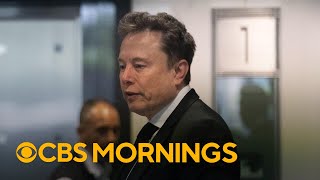
Elon Musk testifies at OpenAI trial

Elon Musk testifies at OpenAI trial

Elon Musk testifies in OpenAI trial accusing company of abandoning nonprofit mission

Elon Musk testifies in OpenAI trial accusing company of abandoning nonprofit mission

Elon Musk testifies he has "extreme concerns" about who controls AI in trial vs. Altman

Elon Musk testifies he has "extreme concerns" about who controls AI in trial vs. Altman