The $30B Stake Brockman Got for $0
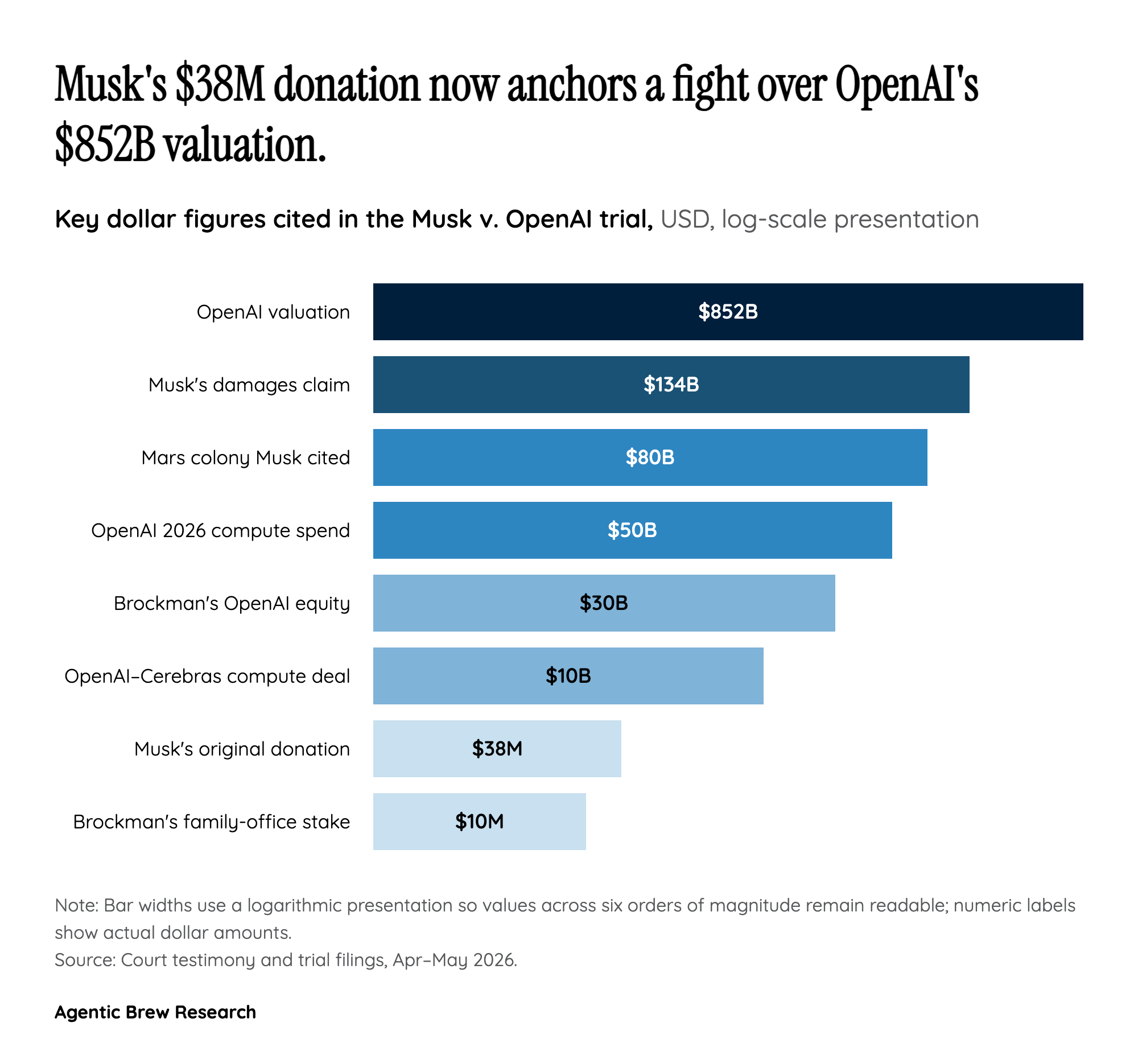
The single most damaging exchange of the week was Brockman conceding, point by point under Steven Molo's cross-examination, the basic shape of the financial transformation Musk's team is challenging. Brockman agreed that he was part of the OpenAI founding group with Altman and Musk, that he was there when a for-profit subsidiary was created, that he was given an equity stake in that for-profit, that he did not contribute any money to get that stake, and that the stake is today worth close to $30 billion. He also acknowledged that the $100,000 he had pledged to the original nonprofit was never paid.
This is the through-line Musk's lawyers want the jury to walk away with: a nonprofit founded in 2015 to be a counterweight to Google produced, within a decade, a roughly $30 billion windfall for an executive who put in no cash. Brockman pushed back that the equity grant came in 2018 — years before ChatGPT, when 'financial and technical success was uncertain' — and that he did not vote on his own grant. But the ratio of inputs to outputs becomes the case's emotional anchor whether or not it maps cleanly to legal liability. A plaintiff doesn't have to win the doctrinal argument to win the narrative; the $0-to-$30B framing is the kind of fact a jury remembers when it weighs every other contested element of the testimony.