Musk v. Altman OpenAI Trial
TECH

Musk v. Altman OpenAI Trial

40+
Signals

Strategic Overview

  • 01.
    Musk v. Altman is being tried in U.S. District Court for the Northern District of California in Oakland (case 4:24-cv-04722) before Judge Yvonne Gonzalez Rogers, with jury selection beginning April 27, 2026 and the trial entering its second week in early May.
  • 02.
    Only two of Musk's original 26 claims reached trial — breach of charitable trust and unjust enrichment — both turning on whether assets donated to OpenAI's charitable mission can lawfully end up inside a for-profit corporate structure.
  • 03.
    Greg Brockman's personal journal — including a November 2017 entry musing he was 'warm to steal the nonprofit from [Musk] to convert to b corp without him' — has become central evidence, while Shivon Zilis testified Musk himself tried to recruit Sam Altman to lead a Tesla AI lab.
  • 04.
    Musk is seeking up to $150 billion in damages from OpenAI and Microsoft directed to OpenAI's charitable arm, and two days before trial sent Brockman a settlement text warning he and Altman 'will be the most hated men in America.'

Deep Analysis

How Brockman's personal diary became Exhibit A

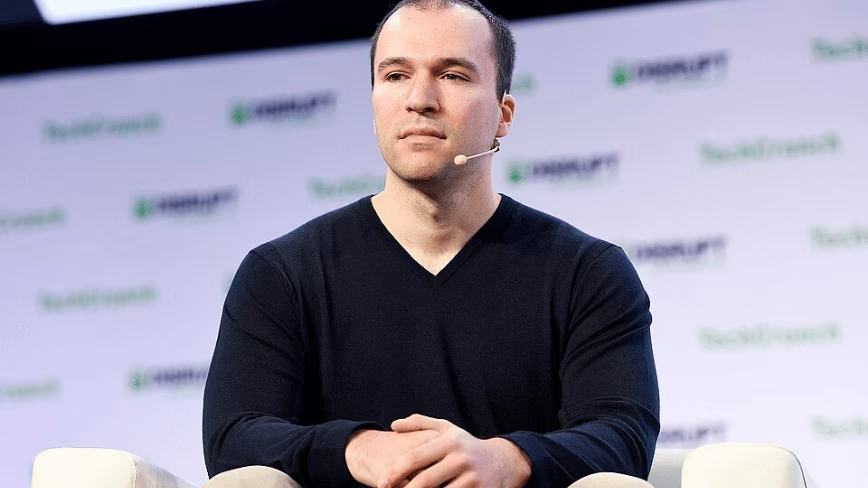
The strangest piece of evidence in the Musk v. Altman trial is not a contract or an email chain — it is Greg Brockman's personal journal. In November 2017, while OpenAI's leadership was wrestling with how to fund the compute their AGI ambitions required, Brockman wrote entries that read more like internal monologue than corporate strategy: he was 'warm to steal the nonprofit from [Musk] to convert to b corp without him,' and elsewhere asked himself, 'Financially, what will take me to $1B?' Musk's lawyers have used those entries to argue that the eventual creation of OpenAI's for-profit arm was not an emergent funding necessity but a pre-meditated displacement of the donor whose money built the lab.

The journal's evidentiary weight is bigger than the lines themselves. Judge Gonzalez Rogers cited those entries when she denied OpenAI's motion to dismiss, calling them suggestive of intent to deceive — meaning Brockman's diary is part of why this case is at trial at all. On the stand Brockman pushed back, saying he never made commitments to Musk about OpenAI's future structure and that the 'one thing we could not accept was to hand him unilateral, absolute control, potentially, over the AGI.' But the document is doing rhetorical work the testimony cannot undo: jurors now have a contemporaneous record, written in the defendant's own hand, of the exact betrayal Musk's complaint describes.
The narrative inversion: it was Musk who wanted absolute control

Musk's complaint is built around a clean story — OpenAI promised to remain a nonprofit dedicated to safe AGI, then abandoned that promise for profit. The testimony in week two has been steadily inverting that frame. Brockman told the court that what OpenAI's leadership refused to accept in 2017 was not commercialization in the abstract but Musk's demand for 'unilateral, absolute control' over the for-profit arm and, by extension, over AGI itself. Then Shivon Zilis — a former OpenAI board member, Neuralink executive, and the mother of four of Musk's children — took the stand and testified that while Musk sat on OpenAI's board he tried to recruit Sam Altman to lead a Tesla AI lab and offered him a seat on Tesla's board. By early 2018, Zilis had reportedly prepared nine possible AGI scenarios for Musk; most centered on Tesla absorbing the work and bringing Altman with it.

The defense's emerging theory is that Musk did not lose a charitable mission to greedy successors — he lost a corporate-control fight and is now litigating it as charity law. That theory gets sharper still when you add the trial-disclosed facts that Musk recruited OpenAI employees to do months of free Autopilot work in 2017 and that his current AI venture, xAI, distills OpenAI's models. A jury watching that pattern is being asked to decide which Musk to believe: the donor whose charitable trust was breached, or the would-be acquirer who walked away when he could not get the deal he wanted.

The legal theory: equity, charitable trust, and why the judge — not the jury — will decide what happens next

Of Musk's original 26 claims, only two survived to trial: breach of charitable trust and unjust enrichment. Both are equitable claims, which has structural consequences most coverage glosses over. The jury is being asked to find facts — did OpenAI's leadership accept Musk's roughly $38 million on representations that the assets would be held in a charitable trust, and did they later enrich themselves by routing those assets through a for-profit shell? — but the remedies, if liability is found, sit with Judge Gonzalez Rogers. That is why attorney Vivian Dong's framing matters: she calls it 'unprecedented' for a court in a private breach-of-charitable-trust suit to order the structural changes Musk wants, which include unwinding the for-profit conversion entirely.

There is also a quieter standing problem hovering over the case. Musk's contributions came partly via the Musk Foundation, and analysts cited in trial coverage estimate that his money represented 50% to 75% of OpenAI's enterprise value at the time of donation — a number that matters because disgorgement under unjust enrichment is calibrated to the value the defendant retained, not the headline damages figure. Musk's filings reference up to $150 billion in damages, but legal analysts surveyed by Fortune broadly view the case as weak on the merits. The likeliest outcome, even on a partial Musk win, is a tailored equitable order — restrictions on how the for-profit arm uses charitable-origin assets — rather than the full structural unwind his complaint demands.

Tim Higgins' 'already won' thesis: the trial as a competitive lever

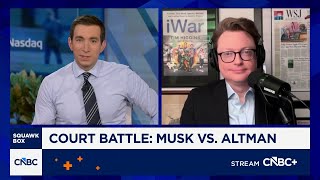
WSJ business columnist Tim Higgins has argued the cleanest counter-narrative to the 'Musk's case is weak' consensus: in many ways Musk has already won. The reasoning is structural, not legal. OpenAI is racing toward an IPO at a valuation approaching $1 trillion (trial coverage cites $800 billion as a working number, with an October 2025 valuation reported at $852 billion and $122 billion in funding from Amazon, Nvidia, and SoftBank). Every day the trial runs, public attention is dragged back to two questions OpenAI's bankers least want spotlighted heading into a roadshow: can charitable-origin assets legitimately power a for-profit IPO, and is the company's leadership trustworthy?

That is a competitive lever for xAI, which is currently valued around $250 billion and which — by Musk's own trial admission — distills OpenAI's models. The contradiction is almost theatrical: Musk is suing OpenAI for going commercial while his own AI lab competes commercially using OpenAI's outputs. But Higgins' point is that the contradiction does not need to be resolved in court for the trial to do its job. NBC's and CBS's mainstream framing — 'abandoning the nonprofit mission,' 'betraying altruistic principles' — is exactly the headline package OpenAI's eventual S-1 will have to be marketed against. Even a defense verdict leaves that record on the docket.

The community read: cynicism, spectacle, and a small but real legal undertow

Public sentiment around the trial does not split cleanly along pro-Musk or pro-OpenAI lines. The dominant frame on Reddit's news and law forums is 'a pox on both their houses' — readers distrust Musk's motives but accept that OpenAI's pivot from charitable nonprofit to for-profit juggernaut looks suspect on the merits. Several of the most-upvoted threads zero in on the standing question (Musk's contributions ran partly through the Musk Foundation and YC), and on the procedural fact that, because the surviving claims are equitable, the judge — not the jury — will decide the actual remedies. That is a more legally literate read than the spectacle coverage suggests.

X leans more partisan: the trial is framed as the 'craziest courtroom drama in tech history,' with pro-Musk accounts amplifying the $150 billion damages claim and the All-In Podcast turning Brockman's diary into a meme ('journalmaxxing'). Mainstream business YouTube — CNBC, CBS, NBC — has been straighter: Musk testifies, Altman is accused, OpenAI denies. Cutting across all three platforms is the same underlying recognition: regardless of who wins on the law, the trial has already forced a public reckoning with the question OpenAI most wanted to avoid until after its IPO — what, exactly, did the world's most valuable AI company promise its donors, and what does it owe them now?

Historical Context

2015-12-11
Founded as a nonprofit by Musk, Altman, Ilya Sutskever, Greg Brockman and others, with Musk and Altman as co-chairs and Musk publicly pledging up to $1 billion in funding.
2017-11
Brockman wrote journal entries about being 'warm to steal the nonprofit' from Musk and converting OpenAI into a B-corp without him — entries Judge Gonzalez Rogers later cited as suggestive of intent to deceive.
2018-02-20
Musk resigned from OpenAI's board citing a conflict with Tesla's AI work; he later acknowledged he had wanted to take control of OpenAI directly and merge it with Tesla but was rejected by Altman and Brockman.
2024-02-29
Musk filed the original lawsuit in San Francisco Superior Court alleging breach of OpenAI's founding agreement; the case was later refiled and consolidated in federal court.
2025-05
Trimmed Musk's pleadings down to two surviving claims — breach of charitable trust and unjust enrichment — clearing the case for a jury trial in 2026.
2026-04-27
Jury selection began in Oakland federal court before Judge Gonzalez Rogers; Musk testified across the first week starting April 28, with Brockman, Zilis, and recorded Murati testimony following in week two.

Power Map

Key Players
Subject

Musk v. Altman OpenAI Trial

EL

Elon Musk

Plaintiff and OpenAI co-founder; alleges Altman and Brockman betrayed nonprofit promises and seeks to remove them, unwind the for-profit restructuring, and recover damages — even as trial testimony exposed his own attempts to seize OpenAI for Tesla.

SA

Sam Altman

OpenAI CEO and co-defendant; accused of pivoting OpenAI from charitable mission to for-profit; characterized in recorded testimony from former CTO Mira Murati as 'sowing chaos' and capable of being deceptive with executives.

GR

Greg Brockman

OpenAI President and co-defendant; key witness whose 2017 journal became the trial's most discussed evidence; testified Musk demanded 'unilateral, absolute control' over OpenAI's AGI work and that no commitments were made about its future corporate structure.

SH

Shivon Zilis

Former OpenAI board member, Neuralink executive, and mother of four of Musk's children; testified that while Musk sat on OpenAI's board he tried to poach Altman to a Tesla AI lab and offered him a Tesla board seat.

JU

Judge Yvonne Gonzalez Rogers

Presiding U.S. District Judge for the Northern District of California; previously cited Brockman's journal entries as suggesting intent to deceive when denying OpenAI's motion to dismiss; will decide equitable remedies if liability is found.

MI

Microsoft

Co-defendant tied to OpenAI's commercial structure; named in Musk's $150 billion damages claim, which would direct any recovery to OpenAI's charitable arm.

TE

Tesla and xAI

Musk's AI ventures; trial revealed Musk diverted OpenAI staff to months of free Tesla Autopilot work in 2017 and that xAI distills OpenAI's models — facts that complicate Musk's nonprofit-mission framing.

Source Articles

Top 3

THE SIGNAL.

Analysts

"Argues most legal analysts believe Musk's case is weak and that the trial is generating far more spectacle than substantive insight into the actual policy question of who should control frontier AI."

Jeremy Kahn
Editor, AI at Fortune

"Predicts limited AI-safety implications regardless of the verdict, and warns it would be unprecedented for a court to order the structural unwinding of OpenAI in a private breach-of-charitable-trust suit brought by a former donor."

Vivian Dong
Attorney and AI safety expert

"Argues that even a courtroom loss would be a strategic win for Musk, because the trial spotlights questions about OpenAI's for-profit conversion at exactly the moment it is racing toward an IPO at a valuation approaching $1 trillion."

Tim Higgins
Business columnist, Wall Street Journal
The Crowd

"The Musk vs OpenAI trial is the craziest courtroom drama in tech history. Here are the wildest facts from Week 1: → Musk tried to settle 2 days before trial. Brockman said "let's both drop it." Musk replied: "you and Sam will be the most hated men in America. If you insist, so...""

@@alex_prompter430

"The Besties React to Greg Brockman's Diary in the Elon/Sam Altman Trial. Jason: "Greg Brockman, the co-founder (of OpenAI), was journalmaxxing apparently." Friedberg: "I just don't know why Greg Brockman's got a friggin' diary where he's literally documenting…""

@@theallinpod318

"The trial of the decade has officially started: Elon Musk vs. Sam Altman and OpenAI. Musk is seeking 150 billion in damages, accusing OpenAI of unjust enrichment and flipping a nonprofit into a for-profit. He is demanding that the company revert to a nonprofit and that Altman..."

@@ianmiles329

"Elon Musk and OpenAI CEO Sam Altman head to court in high-stakes showdown over AI"

@u/AudibleNod8000
Broadcast
In many ways Elon Musk 'has already won' against OpenAI's Sam Altman, says WSJ's Tim Higgins

In many ways Elon Musk 'has already won' against OpenAI's Sam Altman, says WSJ's Tim Higgins

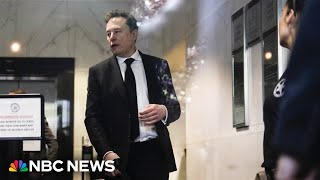
Elon Musk testifies in OpenAI trial accusing company of abandoning nonprofit mission

Elon Musk testifies in OpenAI trial accusing company of abandoning nonprofit mission

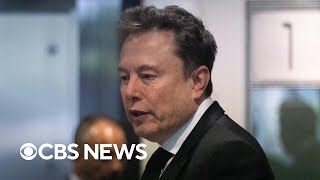
Elon Musk testifies at OpenAI trial

Elon Musk testifies at OpenAI trial