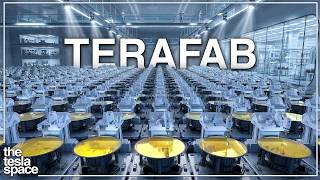
Elon Musk's Terafab Chip Manufacturing Project
TECH

Elon Musk's Terafab Chip Manufacturing Project

33+
Signals

Strategic Overview

  • 01.
    Elon Musk announced Terafab on March 21, 2026, as a $20-25 billion joint semiconductor fabrication facility operated by Tesla, SpaceX, and xAI, targeting 2-nanometer chip manufacturing at the North Campus of Giga Texas in Austin.
  • 02.
    The facility will produce two chip families: the AI5 terrestrial inference chip for Tesla's Full Self-Driving, Cybercab, and Optimus robots, and the D3 radiation-hardened processor for SpaceX's orbital AI satellite constellation, with 80% of output allocated to space-based applications.
  • 03.
    Terafab aims to produce more than one terawatt of AI compute capacity per year, roughly 50 times the current global semiconductor production of approximately 20 gigawatts per year, with initial capacity of 100,000 wafer starts per month scaling to 1 million at full capacity.
  • 04.
    Industry analysts and competitors have expressed deep skepticism, with Nvidia CEO Jensen Huang warning that matching TSMC's capabilities is 'virtually impossible,' and Barclays calling it a 'show-me story' given Tesla's track record of missing ambitious manufacturing targets.

Deep Analysis

Why This Matters

Terafab represents the most ambitious vertical integration play in semiconductor history. At its core, the project is Elon Musk's answer to a supply chain vulnerability that he believes threatens the future of Tesla, SpaceX, and the broader AI revolution. Musk has claimed that all current fabrication facilities on Earth produce only about 2% of what his companies will need across autonomous vehicles, humanoid robots, and orbital AI satellites. Whether that figure is accurate or aspirational, the underlying concern is real: the global semiconductor supply chain is dominated by a single company (TSMC) in a single geopolitically sensitive location (Taiwan), and demand for AI chips is accelerating far faster than new capacity can be built.

The announcement has generated enormous engagement across social media platforms. On X, posts from accounts like @cb_doge (2,900 likes) and @rohanpaul_ai (1,200 likes) framed the project in near-mythological terms, with comparisons to the Manhattan Project. The official Tesla promotional video on YouTube accumulated 360,000 views within days. Yet this enthusiasm exists in sharp tension with the professional analyst community and Reddit forums, where the dominant sentiment is deep skepticism rooted in Tesla's track record. The fact that a single company's semiconductor announcement can simultaneously be described as 'the most ambitious manufacturing bet in history' (Patrick Moorhead) and dismissed as unlikely to matter 'beyond the hype' (Stacy Rasgon of Bernstein) illustrates the polarized landscape surrounding Musk's ventures.
How It Works

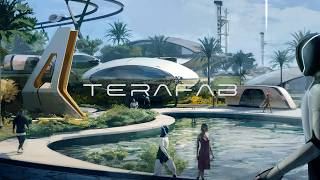
Terafab consolidates every stage of semiconductor production under one roof: chip design, lithography, fabrication, memory production, advanced packaging, and testing. The facility targets 2-nanometer process technology, which uses Gate-All-Around Field-Effect Transistor (GAAFET) architecture, one of the most complex manufacturing processes ever developed. Two chip families are planned: the AI5, a terrestrial inference chip optimized for Tesla's Full Self-Driving system, Cybercab robotaxi fleet, and Optimus humanoid robots; and the D3, a radiation-hardened processor designed for SpaceX's orbital AI satellite constellation, where each satellite would provide 100 kilowatts of power for onboard AI processing.

The facility would start at 100,000 wafer starts per month, scaling to 1 million at full capacity, with a target of producing 100-200 billion AI and memory chips annually. For context, at full scale this would represent roughly 70% of TSMC's entire current global output from a single facility. The project is critically dependent on securing Extreme Ultraviolet (EUV) lithography machines from ASML, the sole global supplier of this equipment. TrendForce analysts have suggested that advanced packaging, rather than cutting-edge fabrication, may be the most realistic entry point for Terafab, since packaging operations can leverage existing Texas facilities and face lower technical barriers than front-end 2nm lithography. AI5 chip small-batch production is targeted for late 2026, with volume production projected for 2027, though industry benchmarks suggest a single 2nm fab requires approximately 38 months to construct.

By The Numbers

The scale of Terafab is staggering by any measure. The $20-25 billion estimated cost places it among the largest single-facility investments in industrial history. For reference, a single state-of-the-art 2nm fab costs approximately $28 billion by current industry benchmarks. The target of one terawatt of annual compute capacity would represent a 50-fold increase over current global semiconductor production of roughly 20 gigawatts per year. The allocation split of 80% for space-based orbital AI and 20% for ground applications reveals that SpaceX's satellite constellation, not Tesla's cars, is the primary demand driver.

Market reactions have been telling. Tesla stock jumped 3.5% on Monday following the Saturday announcement, and chip equipment stocks also surged. However, Wall Street analysts remain cautious. Barclays projects the humanoid robot market, one of Terafab's key end markets, to grow from $2-3 billion today to $40-200 billion by 2035, a wide range that reflects deep uncertainty. The Battery Day comparison looms large in discussions across Reddit and analyst reports: Tesla's 2020 promise of 3 TWh battery capacity by 2030 has yielded approximately 2% of the original target after more than five years. As Reddit communities noted, Tesla has zero semiconductor manufacturing experience, and its closest comparable venture in advanced manufacturing has dramatically underperformed. The talent pipeline question is equally stark: the U.S. significantly lags Asia in semiconductor engineering talent, and Tesla has lost key chip architects including Jim Keller (2018), Ganesh Venkataramanan (2023), and Peter Bannon (2025).

Impacts & What's Next

The near-term impacts are already visible across capital markets and the semiconductor supply chain. Equipment suppliers like Applied Materials and ASML stand to benefit from Terafab construction regardless of the project's ultimate success. TSMC faces an interesting strategic dynamic: while analysts assess minimal near-term competitive threat, TrendForce notes that even an incomplete Terafab could serve as bargaining leverage to secure better terms from TSMC for Tesla and SpaceX. Musk confirmed that his companies will continue buying from TSMC during the multi-year Terafab buildout.

The risks are substantial and multifaceted. A $25-40 billion capital commitment diverts significant resources from Tesla's core automotive and energy storage businesses at a time when the company faces intensifying competition in both sectors. Conflict-of-interest concerns have emerged given Musk's simultaneous role leading DOGE, a government efficiency initiative, while launching a massive private semiconductor project that could benefit from favorable industrial policy. On Reddit, discussions have highlighted that other major tech companies, including Nvidia, Google, and Blue Origin, are pursuing similar space computing concepts, suggesting that even if Terafab struggles, the broader trend of space-based AI compute is likely to advance. The YouTube analysis from 'The Tesla Space' channel (78,000 views) emphasized that volume production of the AI5 chip by 2027 is the first real milestone that will determine whether Terafab is on a fundamentally different trajectory than Battery Day.

The Bigger Picture

Terafab sits at the intersection of several megatrends: the global AI chip shortage, the geopolitical drive to reshore semiconductor manufacturing to the United States, the emergence of space-based computing infrastructure, and the ongoing consolidation of Elon Musk's corporate empire. The SpaceX acquisition of xAI in February 2026, followed weeks later by the Terafab announcement, reveals a deliberate strategy to create a vertically integrated technology conglomerate that controls its own compute supply chain from fabrication through deployment, both terrestrial and orbital.

The semiconductor industry has historically been defined by extreme specialization. TSMC built its dominance over three decades of relentless process optimization, accumulating institutional knowledge that cannot be replicated simply by spending money. Jensen Huang's warning that matching TSMC is 'virtually impossible' reflects the view of an industry insider who understands that semiconductor manufacturing is fundamentally different from other forms of manufacturing, including the automotive and rocket production where Musk has succeeded. Yet Musk's track record also includes achievements that were widely dismissed as impossible, from reusable orbital rockets to viable electric vehicle mass production. The truth likely lies somewhere between the breathless enthusiasm on X, where the announcement was framed as the dawn of a 'galactic civilization,' and the deep skepticism on Reddit, where commenters pointed out that no amount of capital can substitute for decades of accumulated process knowledge. The next 18 months, through the targeted AI5 small-batch production milestone in late 2026, will provide the first concrete evidence of which narrative is closer to reality.

Historical Context

2020-09-22
Tesla held Battery Day, promising 3 TWh of battery capacity by 2030 and unveiling the 4680 cell. More than five years later, Tesla has achieved only about 2% of its original cell manufacturing volume goal, a precedent that has fueled widespread skepticism about Terafab's feasibility.
2026-01-28
Tesla first confirmed Terafab on its Q4 2025 earnings call, with Musk telling investors the company needs to build a chip fabrication facility to avoid supply constraints projected within three to four years.
2026-02-01
SpaceX acquired xAI in an all-stock deal, consolidating Musk's AI operations under SpaceX ahead of the Terafab announcement and signaling the intent to unify chip demand across Musk's companies.
2026-03-21
Elon Musk officially announced Terafab at a special event at the Seaholm Power Plant in Austin, Texas, revealing the $20-25 billion semiconductor fabrication project targeting 2nm chips with initial production of the AI5 chip by late 2026.

Power Map

Key Players
Subject

Elon Musk's Terafab Chip Manufacturing Project

TE

Tesla

Co-developer and primary funder of Terafab, building on the North Campus of Giga Texas. Primary consumer of AI5 terrestrial chips for Full Self-Driving, Cybercab robotaxi, and Optimus humanoid robots.

SP

SpaceX

Co-developer and primary consumer of D3 radiation-hardened chips for its orbital AI satellite constellation. Acquired xAI in February 2026 to consolidate AI operations ahead of the Terafab announcement.

AS

ASML

Sole global supplier of Extreme Ultraviolet (EUV) lithography machines essential for 2nm chip production. Terafab's viability is contingent on securing massive EUV equipment allocations from ASML.

TS

TSMC

Dominant global chip manufacturer and current Tesla/SpaceX supplier. Analysts assess Terafab poses minimal near-term competitive threat. Musk confirmed continued purchasing from TSMC during Terafab buildout.

XA

xAI

AI subsidiary now owned by SpaceX, contributing AI expertise and chip design capabilities to the Terafab project.

AP

Applied Materials

Key semiconductor equipment supplier expected to benefit from Terafab construction and scaling.

THE SIGNAL.

Analysts

"Publicly warned Musk against underestimating the challenge of chip manufacturing, stating 'Building advanced chip manufacturing is extremely hard' and that matching TSMC's capabilities is 'virtually impossible.' His comments underscore the enormous technical gap between designing chips and fabricating them at scale."

Jensen Huang
CEO, Nvidia

"Stated the announcement is unlikely to matter 'beyond the hype' for now. Drew a direct comparison to Tesla's Battery Day 2020 targets of 3 TWh battery capacity by 2030, noting Tesla has not come close to achieving those goals, suggesting a pattern of overpromising on manufacturing ambitions."

Stacy Rasgon
Analyst, Bernstein

"Characterized the Terafab project as a 'show-me story,' expecting much smaller-scale aspirations in the near and mid-term. Conceded he 'failed to grasp the sheer size of targets that Elon Musk would present,' reflecting Wall Street's surprise at the project's scope."

Dan Levy
Analyst, Barclays

"Called Terafab 'the most ambitious semiconductor manufacturing bet in history,' noting it represents a dramatic shift into one of the most complex industrial processes ever developed. His assessment highlights the unprecedented scale of the undertaking."

Patrick Moorhead
Chief Analyst, Moor Insights & Strategy

"Assessed that Terafab poses minimal immediate threat to TSMC. Identified three major barriers: manufacturing complexity of GAAFET architecture at 2nm, limited EUV equipment supply from ASML, and the U.S. talent gap versus Asia. Suggested advanced packaging may be the optimal starting point for Terafab, leveraging existing Texas facilities."

TrendForce Analysts
Industry Research, TrendForce
The Crowd

"ELON MUSK: Even when we estimate the best case scenario for chip production from our suppliers, it is still not enough. So I think we may have to do a Tesla TeraFab."

@@cb_doge2900

"Elon Musk finally announced the most ambitious manufacturing project since the Manhattan Project. A $20B Austin chip fab meant to supply the AI hardware for Tesla, SpaceX, and xAI at enormous scale."

@@rohanpaul_ai1200

"elon is finally launching Terafab. tesla own semiconductor mega fab to produce 100-200 billion AI chips per year all because TSMC was not fast enough."

@@birdabo960

"Elon Musk announces Terafab project he claims will be the largest chip manufacturing facility ever"

@u/unknown0
Broadcast
TERAFAB

TERAFAB

Elon Reveals TERAFAB (Tesla & SpaceX) - Full Replay

Elon Reveals TERAFAB (Tesla & SpaceX) - Full Replay

Elon Musk Reveals Tesla TeraFab Chip Factory

Elon Musk Reveals Tesla TeraFab Chip Factory