Google-Pentagon Classified AI Deal
TECH

Google-Pentagon Classified AI Deal

41+
Signals

Strategic Overview

  • 01.
    Google signed a classified agreement on April 28, 2026 letting the Pentagon use Gemini and other Google AI for 'any lawful government purpose,' including on classified networks.
  • 02.
    Under the contract, Google must adjust its AI safety settings and filters at the government's request and retains no right to control or veto operational decision-making.
  • 03.
    The deal followed the Pentagon designating Anthropic a 'supply-chain risk' for refusing to drop guardrails on mass surveillance and autonomous weapons; OpenAI and xAI had already signed earlier classified contracts.
  • 04.
    More than 600 Google employees, including DeepMind researchers and 20+ directors and senior executives, signed an open letter to CEO Sundar Pichai opposing the work the day before it was announced.

Deep Analysis

The Contract That Erases Google's Red Lines Without Rewriting Them

The most consequential part of Google's Pentagon deal is not what Google said in its press statement; it is what the contract itself permits. The agreement allows the Pentagon to use Gemini and other Google AI for 'any lawful government purpose,' obligates Google to 'assist in adjusting its AI safety settings and filters at the government's request,' and explicitly denies Google 'any right to control or veto lawful government operational decision-making.' Each clause individually is unremarkable in defense procurement. Stacked together, they form a structure where Google's published safety norms are operationally unenforceable inside the customer environment they most matter in.

Google's public defense leans on its prior policy stance: AI should not be used for domestic mass surveillance or autonomous weaponry without appropriate human oversight. But there is a clean asymmetry here. The policy stance is a unilateral commitment Google can honor only by being able to refuse, throttle, or audit specific uses. The contract removes all three levers. The result is a posture where Google retains the language of its red lines while contractually forfeiting the mechanism to enforce them. That is materially different from OpenAI's deal, which kept three explicit prohibitions written into its agreement: no mass domestic surveillance, no autonomous weapons targeting, no high-stakes automated decisions. Reporting suggests Google's contract carries no equivalent carve-outs.

This is also why the air-gapped, classified nature of the work is not a side detail but the core problem. On classified networks, even Google's own trust and safety teams cannot observe how Gemini is being prompted, retrieved against, or composed with other systems. The employee letter's sharpest line — 'Classified workloads are by definition opaque... no way to ensure that our tools wouldn't be leveraged to cause terrible harms' — is a structural argument, not a moral one. There is no oversight pipe through the SCIF wall.

How the Anthropic Blacklist Rewrote AI Procurement Policy in Three Months

Until early 2026, AI vendors largely set their own use policies, and customers — including the U.S. government — accepted those terms as part of the package. The Pentagon's designation of Anthropic as a 'supply-chain risk' inverted that. By applying a label normally reserved for adversary states to a U.S. AI lab whose only offense was holding firm on its published guardrails, the DoD turned ethics from a vendor differentiator into a procurement disqualifier. The signal to the rest of the market was unambiguous: refuse the customer's terms and you are not a values-driven supplier, you are a national-security liability.

The industry response broke along three axes. Anthropic chose litigation and won an injunction but lost the contract pipeline. OpenAI renegotiated and accepted the work with three written red lines preserved. xAI reportedly accepted with no equivalent restrictions. Google has now landed in the most permissive position of the three signers — the 'any lawful government purpose' framing with no carve-outs and a duty to relax filters on request. Read in sequence, these are not four independent decisions. They are four points along a curve the Pentagon drew when it weaponized supply-chain language against an AI lab.

For the DoD, vendor multiplexing — roughly $200 million each to xAI, OpenAI, Google, and originally Anthropic — is the structural payoff. Any one vendor that tries to reassert its own use policies can be routed around. Pentagon AI chief Cameron Stanley's emphasis on diversification is not just operational redundancy; it is leverage. The buyer has redesigned the market so that no single AI lab can be a gatekeeper on how its models are used inside classified workloads. That is a far bigger shift in AI governance than any single contract.

From 4,000 Walkouts to a Letter That Landed a Day Late

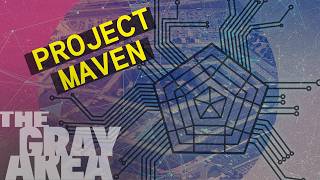
The 2018 Project Maven revolt is the obvious comparison, and the comparison flatters neither side. Then, roughly 4,000 employees signed a petition, at least a dozen resigned, and within a year Google had declined to renew the Pentagon contract and codified AI principles pledging not to build weapons or surveillance tech. In April 2026, more than 600 employees signed — including DeepMind researchers and 20+ directors — and the contract was signed the next day. The dissent now arrives with senior backing it lacked in 2018, but at a scale roughly an order of magnitude smaller and against a company that has already removed the policy language those earlier protests won. Google rolled back the weapons-and-surveillance carve-out from its AI principles in February 2025. By the time the 2026 letter circulated, it was protesting a deal the policy framework had already made permissible.

The reaction in tech-worker communities reflects the change in posture. Discussion in tech and privacy forums skewed toward cynical resignation rather than mobilization, with the most-circulated threads predicting that letter signatories would be quietly targeted in subsequent layoffs and treating 'don't be evil' as cultural shorthand for a value the company has already exited. A parallel thread fixated on the elasticity of the word 'lawful' — read as politically pliable, not as a meaningful constraint — and many commenters pivoted to practical de-Googling rather than expecting internal reform. On X, the most-circulated employee response was a DeepMind engineer expressing public shame over the deal — a tone of moral capitulation rather than active resistance. None of this is the energy of 2018.

The gap between the two episodes is the real story: not that Google employees stopped objecting, but that the company restructured itself so that objections no longer have anywhere to land. Once the principles document was edited and the contract structure stripped of veto rights, the letter became a moral document with no procedural path to influence the outcome.

'Lawful' Is the Load-Bearing Word — and It's the Weakest Word in the Contract

In U.S. national-security practice, 'lawful' is not a fixed boundary; it is a moving line set by whichever administration currently controls the executive branch. The relevant determinations live in classified Office of Legal Counsel memos, in agency-level interpretations of statutes whose application is rarely tested in open court because the standing and disclosure barriers are nearly insurmountable. Programs that one administration's lawyers conclude are lawful — bulk metadata collection, targeted killings of U.S. persons abroad, predictive policing data-sharing — have been re-litigated and recategorized by successor administrations without the underlying authorities ever changing. What 'lawful government purpose' means in 2026 is not what it will mean in 2029, and a vendor whose only constraint is that word has effectively delegated its policy boundary to whichever party wins the next election.

Long-form video coverage has begun pressing on exactly this elasticity. In Vox's 'The Pentagon's AI war machine,' Bloomberg national security correspondent Katrina Manson, appearing as a guest, develops the case that the norms now being established for battlefield AI will migrate into domestic policing under the same legal framing — because once a tool has been blessed as lawful in a classified military context, the doctrinal arguments for excluding it from law-enforcement use become harder to sustain. The community read on Reddit converged on the same conclusion from the bottom up: the word is politically pliable, and a contract anchored to it offers no durable protection against scope creep across administrations.

This is the angle Google's corporate statement cannot answer. Reiterating opposition to mass surveillance is honest as a description of intent today, but intent is not durable across political cycles. The contract will outlive the administration that signed it, and the only remaining lever for Google when 'lawful' expands will be a public objection — the same lever the employee letter just demonstrated is not sufficient to slow a deal by even 24 hours.

Historical Context

2018-04-04
Roughly 4,000 Google employees signed a petition and at least a dozen resigned over Project Maven, a Pentagon program using Google AI to analyze drone footage.
2019-03
Google declined to renew Project Maven and adopted AI principles pledging not to build weapons or surveillance technologies.
2025-02
Google quietly removed language from its AI principles pledging to avoid building weapons or surveillance technologies, dismantling the policy guardrail it had erected after Maven.
2026-02
The Pentagon designated Anthropic a 'supply-chain risk' after it refused unrestricted use; Anthropic obtained an injunction and continues litigating.
2026-03
Google deployed Gemini AI agents across the Pentagon's roughly three-million-person workforce at the unclassified level, a precursor to the classified expansion.
2026-04-27
More than 600 Google employees, including DeepMind researchers and 20+ directors and senior executives, sent an open letter to Sundar Pichai urging him to reject classified Pentagon AI work.
2026-04-28
Google signed the classified DoD agreement covering 'any lawful government purpose,' a day after the employee letter went public.

Power Map

Key Players
Subject

Google-Pentagon Classified AI Deal

GO

Google / Sundar Pichai

AI vendor and CEO who signed the classified DoD agreement despite a high-profile employee letter, opening Gemini to classified military deployment with no contractual veto over use cases.

U.

U.S. Department of Defense

The buyer; pushed for unrestricted 'any lawful government purpose' terms, designated vendors who refused as supply-chain risks, and is multiplexing across four frontier labs to neutralize any single vendor's leverage.

CA

Cameron Stanley (Pentagon AI chief)

Public face of DoD AI strategy; confirmed expanded Google work and frames Gemini's productivity gains as justification for the broader procurement push.

AN

Anthropic

The negative example; refused to drop carve-outs on mass surveillance and autonomous weapons and was branded a Pentagon 'supply-chain risk,' a label normally reserved for foreign adversaries, while litigating against the DoD.

OP

OpenAI and xAI

First movers into the post-Anthropic classified procurement gap; OpenAI accepted a deal with three explicit red lines while xAI reportedly signed without them, defining the new range of vendor postures.

GO

Google employee signatories

Internal opposition bloc of 600+ workers including DeepMind researchers and 20+ directors who put a public ethical mark on the company before the contract closed, but failed to alter the outcome.

Source Articles

Top 5

THE SIGNAL.

Analysts

"Defends the multi-vendor strategy by pointing to operational gains: 'There's a lot of different things that are saving thousands of man hours, literally thousands of man hours on a weekly basis.'"

Cameron Stanley
Pentagon AI Chief, U.S. Department of Defense

"Argue that classified deployment makes oversight structurally impossible: 'Classified workloads are by definition opaque... no way to ensure that our tools wouldn't be leveraged to cause terrible harms or erode civil liberties.'"

Google open letter signatories
Google AI staff, including DeepMind researchers

"Frames the deal as a fundamental ethical line and a reputational risk: 'We believe that Google should not be in the business of war,' and warns that 'making the wrong call right now would cause irreparable damage to Google's reputation, business and role in the world.'"

Google employee letter (collective)
Google workforce open letter to Sundar Pichai

"Defends the deal by reiterating prior policy: 'We remain committed to the private and public sector consensus that AI should not be used for domestic mass surveillance or autonomous weaponry without appropriate human oversight.'"

Google (corporate statement)
Public response from Google
The Crowd

"Google Signs Classified AI Deal With Pentagon Amid Employee Opposition — The Information"

@@pstAsiatech0

"Google has signed an agreement with the US government allowing the Pentagon to use Google's AI models for classified work, according to a report by The Information. The contract permits Google's AI to be used for "any lawful government purpose.""

@@WatcherGuru0

"Google Workers Urge CEO to Reject Classified Artificial Intelligence Work with the Pentagon"

@@democracynow0

"Google employees ask Sundar Pichai to say no to classified military AI use / After a report that Google is in talks with the Pentagon, hundreds of employees signed a letter against the idea."

@u/MarvelsGrantMan1361400
Broadcast
The Pentagon's AI war machine

The Pentagon's AI war machine

Google, Pentagon in talks to deploy Gemini in classified systems, report says

Google, Pentagon in talks to deploy Gemini in classified systems, report says

Google signs classified AI deal with Pentagon, The Information reports

Google signs classified AI deal with Pentagon, The Information reports