Google's Ecosystem Moat: Why No Competitor Can Replicate Personal Intelligence
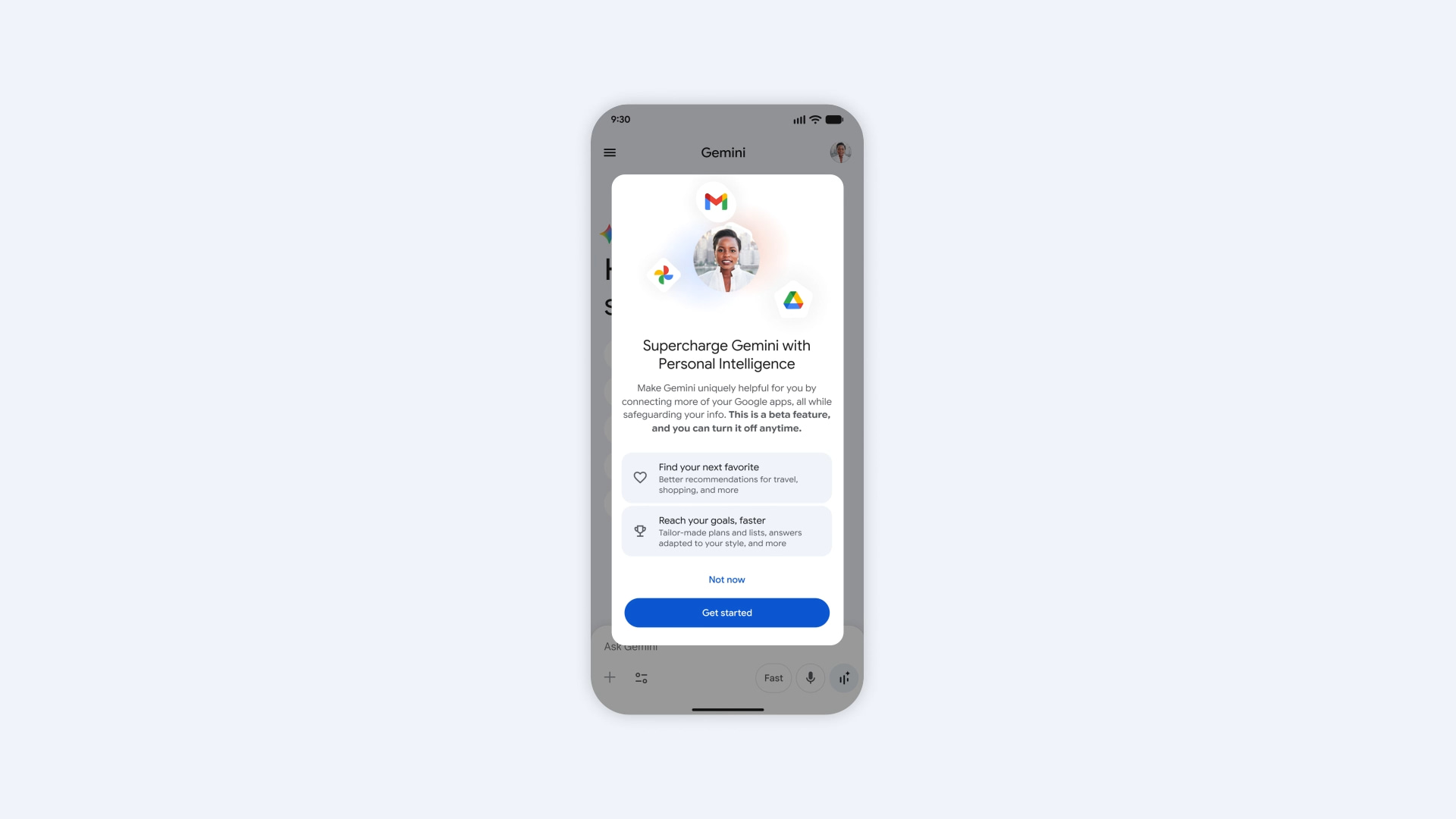
Personal Intelligence is not merely a feature update — it is the strategic culmination of Google's two-decade investment in consumer services. By connecting Gemini to Gmail, Google Photos, YouTube watch history, Search activity, Maps location data, Calendar events, and Drive documents, Google has created an AI personalization layer that draws on a breadth of user context no rival can match. ChatGPT may have a large user base, but OpenAI does not own an email service, a photo library, a mapping platform, or a video history. Microsoft's Copilot has Office data but lacks the consumer-side signals — search habits, location patterns, photo memories — that make Personal Intelligence uniquely comprehensive.
This structural advantage explains why Google chose to make the feature opt-in rather than default: the sheer volume of personal data accessible is so large that an opt-in model serves both as a privacy safeguard and a trust-building mechanism. Users choose which apps Gemini can access, creating a sense of control even as they grant the AI access to some of the most intimate digital records imaginable. The competitive implication is clear: as users opt in and experience personalized responses, switching costs rise dramatically. A user whose Gemini assistant understands their email patterns, photo memories, calendar rhythms, and search habits faces a significant loss of utility in moving to a competitor. Google is betting that Personal Intelligence transforms Gemini from a commodity chatbot into an indispensable personal utility — one whose value compounds with every connected service.