Musk v. Altman trial testimony
TECH

Musk v. Altman trial testimony

36+
Signals

Strategic Overview

  • 01.
    Musk v. Altman wrapped its liability phase in Oakland after 11 trial days, with Judge Yvonne Gonzalez Rogers holding discretionary power to overturn the jury's advisory verdict and decide remedies herself.
  • 02.
    Musk is seeking $134 billion in damages, the removal of Sam Altman and Greg Brockman from leadership, and the unwinding of OpenAI's conversion to a for-profit company.
  • 03.
    Witnesses spanned the OpenAI inner circle and its biggest partner: Altman, Brockman, Ilya Sutskever, Mira Murati, Helen Toner, Shivon Zilis, Joshua Achiam, and Microsoft CEO Satya Nadella, who voiced concerns about over-dependence on OpenAI.
  • 04.
    Bloomberg Law's closing-argument analysis noted the jury was given no single corporate document, text, or email establishing the alleged charitable trust Musk claims was broken.

Deep Analysis

The legal mechanism: a jury that doesn't decide and a charitable trust no one can find

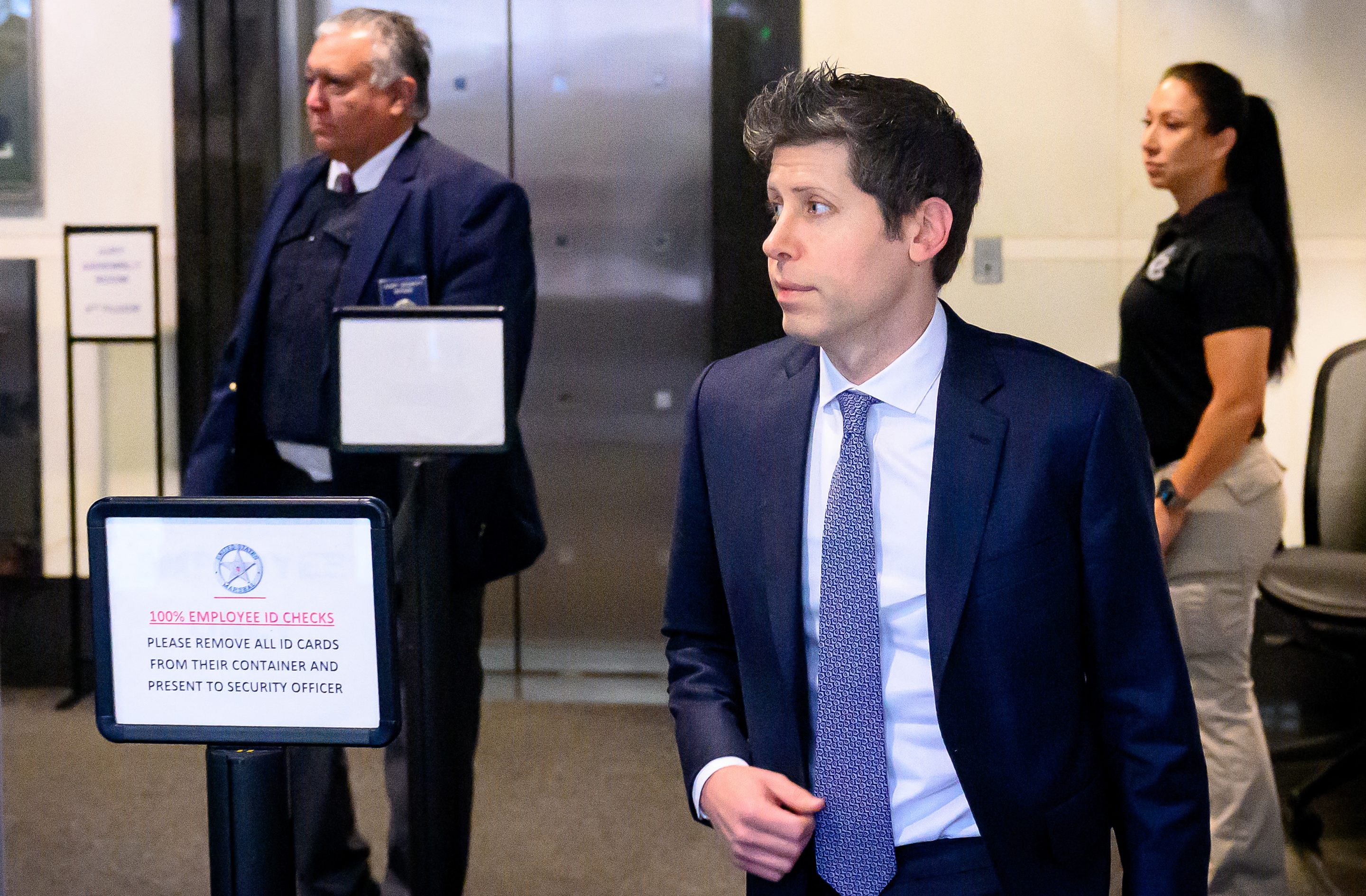
The most under-appreciated fact about Musk v. Altman is that the jury verdict is advisory only. Judge Yvonne Gonzalez Rogers retains discretion to overturn it and will personally decide remedies [1]. That structure changes the dynamics of every witness exchange — Altman, Brockman, Sutskever and Murati were ultimately testifying for an audience of one. Musk's underlying theory is that his early donations created an enforceable charitable trust that OpenAI breached by converting to a capped-profit and then a public benefit corporation. Bloomberg Law's closing-day analysis flagged a structural weakness in that theory after three weeks of testimony: 'The jury is left with no particular corporate document, text message, or email to hang a decision on' [1]. The case has thus become less about contract evidence and more about the credibility of the witnesses on each side — which is precisely why OpenAI's defense leaned so hard on Musk's own 2017 demands for unilateral control and his subsequent founding of xAI [2]. If Gonzalez Rogers nonetheless accepts the charitable-trust framing, the precedent would matter far beyond OpenAI: every mission-driven tech nonprofit that later raised capital would face new exposure to donor and state-AG lawsuits.
The Microsoft subplot: 'we don't want to be the next IBM'

Satya Nadella's testimony was arguably the most strategically important non-OpenAI moment of the trial. Internal Microsoft conversations as early as April 2022 captured a fear that the OpenAI partnership had quietly outsourced Microsoft's core AI IP, leaving Redmond in the position IBM occupied during the PC era — owner of the box, renter of the brain [7]. Nadella told the court Microsoft needed 'real agency at every layer of the stack' [7], and the trial confirmed Microsoft's response: invest in independent AI infrastructure and openly partner with rival labs, including Musk's xAI on Azure since 2024 [9]. Notably, Nadella also testified that Musk never raised investment concerns with him directly — undercutting Musk's framing that Microsoft's involvement was the moment OpenAI's mission was sold out [8]. For the AI industry, the takeaway is that the most consequential AI-platform relationship of the decade has already been quietly rewired toward multi-vendor independence, regardless of how Gonzalez Rogers rules.

The money: $38M in, $800B out, $134B back

The financial story Musk wants the court to see is brutally simple: he donated roughly $38 million in OpenAI's early years (Wikipedia's filings cite $44M across 2016-2020), and that seed funding helped create what is now valued around $800 billion [3]. He is asking for $134 billion directed back to the nonprofit arm [1]. OpenAI's counter-narrative is equally simple and was hammered home through Brockman and Zilis: Musk wanted majority control, majority board seats, and unilateral authority over AGI; when refused, he left and started a competitor [2]. Musk also admitted on the stand that xAI uses distillation from OpenAI's models [3], an acknowledgement OpenAI's lawyers used to argue the suit is at least partly competitive interference.

Altman's credibility on trial — even before the jury rules

The phrase that may define this trial isn't 'charitable trust' but 'consistent pattern of lying' — the description Ilya Sutskever wrote in a 2023 memo to the board before Altman's brief ouster [14]. Sutskever, Murati and former board member Helen Toner all testified that they personally observed Altman misleading colleagues or resisting oversight before the November 2023 firing [14]. Altman countered on the stand with the simple line, 'I believe I am an honest and trustworthy businessperson' [5], and pushed back at the 'stole a charity' framing as one he could not 'wrap my head around' [6]. CNBC's takeaways piece noted Altman's testimony was, by design, more measured than Musk's — closing arguments aside, the contrast between a controlled CEO and a confrontational plaintiff was itself part of OpenAI's defense [10]. Regardless of how Gonzalez Rogers rules, sworn testimony from Sutskever and Murati under oath alleging dishonesty is now on the public record — a governance overhang that will follow OpenAI into any near-term IPO.

The community read: 'a pox on both their houses'

Outside the courtroom, the trial has played as billionaire psychodrama rather than mission-versus-money morality play. Reddit's r/OpenAI threads zeroed in on Altman's testimony that Musk wanted 'total control' of OpenAI to pass to his children — flagged by commenters as more dynastic than philanthropic — while r/TechGawker users mocked the 'it is not ok to steal a charity' framing on the grounds that xAI is not a charity either. Social signals on X amplified the most-shared moments from the courtroom: the 'jackass for safety' trophy [4]and the resurfaced texts and side-deal details that defense and plaintiff lawyers each used to chip at the other side's credibility. The dominant community sentiment isn't pro-Musk or pro-Altman; it's that the trial has exposed how concentrated AGI governance has become in a small group of feuding executives, with no clear public-interest party at the table — which is itself the strongest argument either side has accidentally made for outside regulation.

Historical Context

2015-12
OpenAI launched as a nonprofit research lab co-chaired by Musk and Altman after a $1 billion pledge from Musk, Peter Thiel, Reid Hoffman and others.
2017
Musk pushed for a for-profit subsidiary, sought majority control and board seats, then emailed co-founders 'I've had enough' when refused.
2018-02
Musk resigned from OpenAI's board citing potential conflict with Tesla's AI work; he later founded competitor xAI and tried to poach OpenAI talent.
2019
OpenAI restructured into a 'capped-profit' company (OpenAI LP) to attract the capital needed for frontier AI research.
2024-02
Musk filed the original lawsuit in San Francisco Superior Court alleging breach of OpenAI's founding agreement.
2025-10
OpenAI formed for-profit entity OpenAI Group PBC, with the nonprofit retaining 26% ownership.
2026-04-28
Musk testified for three days, cross-examined by OpenAI's William Savitt.
2026-05-13
Day 11 closed the liability phase of the trial as Achiam recounted the 'jackass for safety' trophy he received from colleagues after Musk insulted him over AGI safety in 2018.

Power Map

Key Players
Subject

Musk v. Altman trial testimony

EL

Elon Musk

Plaintiff and OpenAI co-founder; donated tens of millions in early years and now runs competitor xAI. Seeks to unwind OpenAI's for-profit conversion and recover damages to the nonprofit.

SA

Sam Altman

OpenAI CEO and lead defendant; testified that he never promised Musk OpenAI would remain a nonprofit and that Musk abandoned the project after departing in 2018.

GR

Greg Brockman

OpenAI President and co-founder; testified Musk demanded unilateral control over AGI before leaving and that founders rejected that condition.

SA

Satya Nadella

Microsoft CEO; testified about Microsoft's fears of becoming 'the next IBM' through over-dependence on OpenAI, and said Musk never raised investment concerns to him directly.

IL

Ilya Sutskever, Mira Murati, Helen Toner

OpenAI insiders and former board members; testimony described a 'consistent pattern of lying' memo, Altman's resistance to board oversight, and the chain of events leading to his brief 2023 ouster.

SH

Shivon Zilis & Joshua Achiam

Former board member and OpenAI employee; provided color testimony — Zilis on Musk's attempts to poach Altman and OpenAI staff for Tesla, Achiam on the 2018 'jackass for safety' trophy episode.

Fact Check

11 cited
  1. [1] As Musk v. Altman Trial Closes, Spectacle and Personalities Rule
  2. [2] Musk v. Altman week 2: OpenAI fires back and Shivon Zilis reveals that Musk tried to poach Sam Altman
  3. [3] Musk v. Altman week 1: Musk says he was duped, warns AI could kill us all, and admits that xAI distills OpenAI's models
  4. [4] Musk v. Altman Day 11: testimony finishes as witness recalls 'jackass for safety' trophy
  5. [5] Sam Altman testimony at the OpenAI Elon Musk trial
  6. [6] Sam Altman testifies in Elon Musk OpenAI Microsoft trial
  7. [7] Musk v. Altman: Satya Nadella was worried about Microsoft being the next IBM in OpenAI deal
  8. [8] Microsoft CEO Satya Nadella to testify in Musk-Altman trial
  9. [9] Microsoft feared being too dependent on OpenAI, Musk-Altman trial testimony reveals
  10. [10] Takeaways from Sam Altman's testimony in Musk-Altman trial
  11. [14] Elon Musk Sam Altman trial live updates: Microsoft CEO Satya Nadella testifies week 3

Source Articles

Top 5

THE SIGNAL.

Analysts

"Framed the entire suit as hypocritical theater, given Musk's own attempt to take control of OpenAI in 2017 and his subsequent launch of xAI."

William Savitt
Lead trial attorney for OpenAI

"Observed that after three weeks the jury still had no specific document, text, or email pinning down the charitable-trust theory at the heart of Musk's case."

Bloomberg Law analysis
Legal trade publication

"Testified he was tricked into seed-funding what became an extraordinarily valuable for-profit company and warned of existential AI risk on the stand."

Elon Musk
Plaintiff and CEO of xAI/Tesla/SpaceX

"Rejected the 'stole a charity' framing, arguing Musk abandoned the nonprofit when he left and that the capped-profit structure was required to fund safe AI development."

Sam Altman
CEO, OpenAI

"Said Microsoft was outsourcing core IP development to OpenAI and needed 'real agency at every layer of the stack' to avoid becoming dependent on a single AI partner."

Satya Nadella
CEO, Microsoft
The Crowd

"Here's a general summary of Elon Musk's 3.5 hour long testimony today during day 2 of the OpenAI trial: Elon on Sam Altman and Greg Brockman: 'If they wanna get rich, they should go do so as a for-profit. They should not get rich off a nonprofit. I gave them $38 million of...'"

@@SawyerMerritt0

"THESE TEXTS FROM WHEN SAM ALTMAN GOT FIRED FROM OPENAI JUST GOT RELEASED. These were just entered into evidence in the Elon Musk vs. Sam Altman trial. Here is a text chain between Sam Altman and Mira Murati from November 19th, 2023."

@@StockMKTNewz0

"LIVE TRIAL UPDATE: Brockman confirms Sam Altman gave him a $10M stake in his family office as compensation in 2017. Brockman testifies Musk was never directly informed of the arrangement. Court documents show Musk's adviser warned him the deal meant Brockman would have greater alignment with Altman."

@@MTSlive0

"Sam Altman testimony: Musk wanted 'total control' of OpenAI to pass to his children"

@u/businessinsider1100
Broadcast
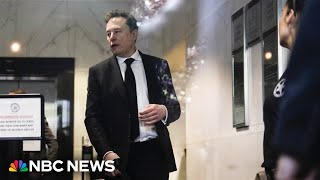
Elon Musk testifies in OpenAI trial accusing company of abandoning nonprofit mission

Elon Musk testifies in OpenAI trial accusing company of abandoning nonprofit mission

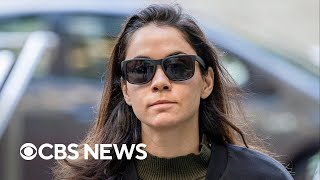
Former OpenAI board members, including mother of 4 Musk children, testify in trial

Former OpenAI board members, including mother of 4 Musk children, testify in trial

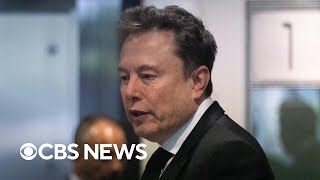
Elon Musk testifies at OpenAI trial

Elon Musk testifies at OpenAI trial