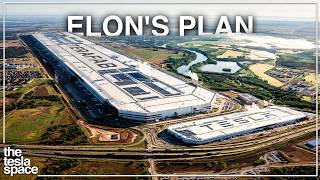
Tesla Terafab & $2B AI hardware acquisition
TECH

Tesla Terafab & $2B AI hardware acquisition

42+
Signals

Strategic Overview

  • 01.
    Tesla's Q1 2026 10-Q quietly disclosed an April 2026 agreement to acquire an unnamed AI hardware company for up to $2 billion in Tesla common stock and equity awards, with only roughly $200 million guaranteed upfront and about $1.8 billion contingent on service conditions and performance milestones tied to successful deployment of the target's technology. The filing names no company, no technology category, and no specific milestones — an unusually thin disclosure for a nine-figure stock-and-equity deal.
  • 02.
    The acquisition lands inside a much larger AI hardware push. On March 21, 2026 Musk unveiled Terafab — a Tesla/SpaceX/xAI joint venture building the largest chip manufacturing facility ever, with a $20-25 billion Austin pilot budget aimed at 100,000 wafer starts per month scaling to 1 million, producing 100-200 billion custom AI and memory chips a year for roughly 1 terawatt of annual compute. On April 7, Intel joined as process-technology partner, committing its next-generation 14A node and making Tesla Intel Foundry's first major external 14A customer.
  • 03.
    To fund it, Tesla raised 2026 capex guidance to more than $25 billion — up from a ~$20 billion January projection and roughly triple the $8.5 billion spent in 2025 — directed at AI training, chip design, Optimus production, robotaxi operations, and the Austin fab. CFO Vaibhav Taneja warned the plan will produce negative free cash flow for the year; Tesla enters it with $44.7 billion in cash and short-term investments. The first Terafab pilot product is the AI5 chip, which taped out April 15, 2026 (nearly two years behind schedule), with small-batch production targeted for late 2026 and volume in mid-2027.

Deep Analysis

The $2B deal is a 90%-contingent acqui-hire dressed as an acquisition

The money shape here is the story. Of the up-to-$2 billion headline number, only about $200 million is guaranteed upfront; the other ~$1.8 billion is explicitly tied to service conditions and performance milestones conditional on 'successful deployment of the company's technology.' That is not how a strategic asset purchase is typically structured. It is the structure of a retention-heavy acqui-hire: Tesla is effectively paying a small cash-equivalent sticker price for the IP and a team, then re-underwriting the bulk of the consideration as a multi-year equity vest that only pays if the acquired technology actually ships inside Tesla's stack.

That framing changes how to read the deal. At face value it looks like a $2B AI hardware bet; in practice it is a ~$200M option on a small team, with ~$1.8B of dilution behavior triggered only if the team clears engineering gates Tesla hasn't named. For shareholders, the exposure is asymmetric — the dilution only happens if the technology works, meaning the downside is bounded by the guaranteed slug while the upside is gated on delivery. That is a rational structure if Tesla believes the target's roadmap is high-variance, and it reinforces the reading that this is a capability-acquisition (likely founders + early silicon IP) rather than a mature-product buyout.
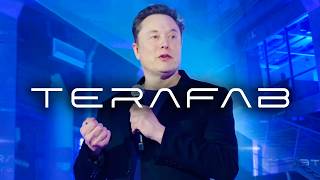
Terafab quietly became Intel Foundry's survival plan

The Terafab headlines emphasize Tesla's ambition — 1 terawatt of annual compute, 100-200 billion chips a year, a trillion-dollar full-scale price tag. But the more consequential near-term shift is for Intel. Lip-Bu Tan has publicly signaled that Intel would exit chip manufacturing without an external 14A customer, and Tesla just became that customer. The stock-market reaction mapped to that read: INTC rose 3.6% in extended trading on the 14A news, and analyst Ben Bajarin described the commitment as potentially 'a bigger deal for Intel than folks thought.'

This inverts a decade of received wisdom. Tesla has historically been the price-taker in silicon, dependent on TSMC and Samsung cadence; Intel has been the incumbent foundry trying to reclaim leading-edge credibility. Terafab reroutes both stories. Tesla gets a process partner willing to co-develop at Tesla's pace and cost structure, and Intel gets a marquee logo whose existence validates 14A to every other would-be external customer. Seaport's Jay Goldberg framed it as 'having a customer is more important than the timing' — Tesla's volumes are below Apple or Nvidia scale, but they are real enough to anchor a node ramp and create a reference design other fabless players can follow onto 14A.

Tesla is converting into a cash-burning infrastructure company

The capex math is the less-discussed risk vector. Tesla's 2026 capex guide jumped from ~$20 billion in January to $25 billion+ on the Q1 call — roughly triple 2025's $8.5 billion — directed at AI training, chip design, the Austin semiconductor fab, Optimus production, and robotaxi operations. CFO Vaibhav Taneja explicitly warned this will produce negative free cash flow for 2026. Tesla still enters the year with $44.7 billion of cash and short-term investments, so the program is fundable, but the composition of the balance sheet is going to change fast if the Austin pilot alone consumes $20-25 billion before first volume silicon in mid-2027.

The second-order effect is how the market reprices Tesla's equity during a multi-year cash-burn window. For most of the last cycle, the bull case priced Tesla as a software/AI compounder riding on a capital-light auto business. Terafab plus the $2B AI hardware deal flips that: Tesla is now a vertically integrated hardware company funding its own fab, its own chip team, and its own AI hardware M&A out of auto cash flow. The stock-based compensation component of the acquisition — paid in Tesla shares rather than cash — is itself a tell that management wants to preserve cash for concrete (literally) fab capex and is comfortable using equity as the M&A currency for capability buys.

The 'orbital compute' thesis is load-bearing, and contested

Buried inside the Terafab numbers is Musk's claim that ~80% of the fab's eventual compute output is intended not for cars, Optimus, or terrestrial data centers but for space-based orbital AI satellites, citing ~5x greater solar irradiance in orbit and better thermal rejection in vacuum. That single assumption does enormous work in the financial model: 1 terawatt of annual compute only pencils out if there is demand at that scale, and Earth-side AI demand — even including FSD, Cybercab, Optimus, and xAI training — almost certainly cannot absorb it in the Terafab timeline.

This is where the trade press skepticism lands hardest. Electrek characterized the broader Terafab pitch as coming from a posture of 'AI desperation,' and the $2B acquisition disclosure as asking shareholders to approve dilution with almost no information. The charitable reading of Musk's orbital framing is that SpaceX's Starlink chassis gives Tesla a uniquely credible path to deploy compute in orbit at scale, turning 14A wafers into revenue-generating satellite payloads. The uncharitable reading is that orbital compute is the demand-side hand-wave that makes a $5-trillion full-scale fab look rational, and that the real near-term justification has to come from FSD, Optimus, and robotaxis alone — none of which is yet generating the revenue run-rate a 1TW fab would need to amortize.

The narrative split: moonshot YouTube vs. foundry-pragmatist trade press

The public reaction cleaves cleanly along audience lines. Tesla- and Musk-oriented YouTube channels have leaned into the galactic-civilization framing — walkthroughs of the factory design, full replays of the Terafab reveal, and explainers tying AI5 to FSD, Optimus, and robotaxi economics — largely treating Terafab as Musk's next moonshot rather than interrogating unit economics. Tesla's own social channel reinforced this register by pitching Terafab as 'the next step to becoming a galactic civilization.'

Finance and semiconductor trade outlets read the same set of facts very differently. Benzinga and Yahoo Finance framed the 14A news primarily as Intel's foundry lifeline, not as Tesla's AI coronation. Tom's Hardware zeroed in on the likely Intel tech-licensing mechanics of SpaceX handling high-volume manufacturing. Electrek, covering the 10-Q, treated the $2B acquisition as a governance story about minimal disclosure rather than a product story. The gap matters because the two audiences will underwrite very different things: the moonshot audience prices Terafab as upside optionality on orbital compute, while the foundry-pragmatist audience prices it as a derisking event for INTC and a capex overhang for TSLA. Both can be right, but they imply opposite trades.

Historical Context

2026-03-21
Musk unveiled Terafab at a special event at the defunct Seaholm Power Plant in Austin, Texas, announcing a three-way JV targeting ~1 terawatt of annual AI compute.
2026-04-07
Intel officially joined Terafab, committing its 14A process and making Tesla its first major external 14A customer — a milestone CEO Lip-Bu Tan had publicly said was required for Intel to remain in chip manufacturing.
2026-04-15
Musk confirmed Tesla had taped out the AI5 chip — nearly two years behind the original schedule — positioning AI5 as Terafab's first pilot product ahead of small-batch 2026 and volume 2027 production.
2026-04-22
On the Q1 2026 earnings call, Tesla raised its 2026 capex plan to $25B+ (up from ~$20B in January and ~$8.5B in 2025) and CFO Taneja flagged negative free cash flow for the year.
2026-04-23
Tesla quietly disclosed the up-to-$2B AI hardware acquisition in Note 14 (Subsequent Events) of its Q1 2026 10-Q, omitting the target's name, technology description, and milestone structure.

Power Map

Key Players
Subject

Tesla Terafab & $2B AI hardware acquisition

TE

Tesla

Lead initiator and R&D operator of Terafab, acquirer in the up-to-$2B AI hardware stock-and-equity deal, and funder of the $25B+ 2026 AI/robotics capex plan that underwrites AI5, FSD, Optimus, robotaxi and orbital compute.

SP

SpaceX

Joint-venture partner responsible for high-volume chip manufacturing at Terafab and downstream consumer of orbital AI chips for space-based satellites, where Musk argues ~5x greater solar irradiance and vacuum thermal rejection make inference cheaper.

XA

xAI

Third Terafab JV partner (acquired by SpaceX) providing AI workload demand to soak up Terafab compute output alongside Tesla's autonomy and robotics needs.

IN

Intel

Process-technology partner supplying its 14A node to Terafab; Tesla becomes Intel Foundry's first major external 14A customer, a validation CEO Lip-Bu Tan has publicly said the company needed to stay in chip manufacturing at all.

EL

Elon Musk (Tesla CEO)

Architect and public advocate of the Terafab/$25B capex thesis, framing the fab as existential for Tesla's AI roadmap given pace limits at TSMC, Samsung and Micron.

VA

Vaibhav Taneja (Tesla CFO)

Signaled the capex surge will drive negative 2026 free cash flow, reframing Tesla temporarily as a cash-burning infrastructure company rather than a cash-generative automaker.

TS

TSMC & Samsung

Incumbent Tesla chip suppliers whose expansion cadence Musk publicly calls insufficient — the stated motivation for in-house fab build-out.

THE SIGNAL.

Analysts

"Tesla's commitment elevates Intel 14A strategically because early design partners are the gating factor for foundry credibility; the deal could matter more for Intel than it does for Tesla in the near term."

Ben Bajarin
Analyst, Creative Strategies

"Having a real customer matters more than Terafab's still-uncertain scale, timing and funding — Tesla's volumes are below Apple or Nvidia levels but are plausibly large enough to anchor a 14A ramp."

Jay Goldberg
Analyst, Seaport Research Partners

"The 10-Q disclosure effectively asks shareholders to approve up to $2 billion in stock dilution for an unnamed company doing unspecified work with undisclosed milestones — a governance red flag dressed as a subsequent-events footnote."

Electrek editorial
EV trade publication

"Frames Terafab as existential: TSMC, Samsung and Micron cannot expand fast enough to meet Tesla/SpaceX demand, so Tesla must build its own fab or forfeit its AI roadmap; describes it as the most epic chip-building exercise in history."

Elon Musk
CEO, Tesla
The Crowd

"TERAFAB: the next step to becoming a galactic civilization. Together with @SpaceX & @xAI, we're building the largest chip manufacturing facility ever (1TW/year) – combining logic, memory & advanced packaging under one roof. To harness as much power as possible from the Sun, we..."

@@Tesla0

"Intel may have just landed the kind of outside customer it badly needed, and Elon Musk is the reason why. On Tesla's first-quarter 2026 earnings call, Musk said the company plans to use Intel's next-generation 14A manufacturing process for chips tied to Terafab, the advanced AI..."

@@Benzinga0

"Intel is proud to join the Terafab project with @SpaceX, @xAI, and @Tesla to help refactor silicon fab technology. Our ability to design, fabricate, and package ultra-high-performance chips at scale will help accelerate Terafab's aim to produce 1 TW/year of compute to power..."

@@intel0
Broadcast
TERAFAB | The Largest Chip Manufacturing Facility Ever

TERAFAB | The Largest Chip Manufacturing Facility Ever

Elon Reveals TERAFAB (Tesla & SpaceX) - Full Replay - "Becoming a galactic civilization"

Elon Reveals TERAFAB (Tesla & SpaceX) - Full Replay - "Becoming a galactic civilization"

Inside Elon Musk's TeraFab AI Factory

Inside Elon Musk's TeraFab AI Factory