OpenAI Shuts Down Sora, Cancels $1B Disney Partnership
TECH

OpenAI Shuts Down Sora, Cancels $1B Disney Partnership

42+
Signals

Strategic Overview

  • 01.
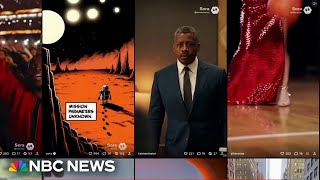
    OpenAI announced on March 24, 2026 that it is discontinuing Sora, its AI video generation platform, including the standalone iOS app, API, and Sora.com. Video generation via Sora 2 will remain available only within ChatGPT for paying subscribers.
  • 02.
    Disney has exited its partnership with OpenAI and withdrawn a planned $1 billion investment that would have licensed over 200 characters from Disney, Marvel, Pixar, and Star Wars for AI-generated videos. No money changed hands as the deal was never finalized.
  • 03.
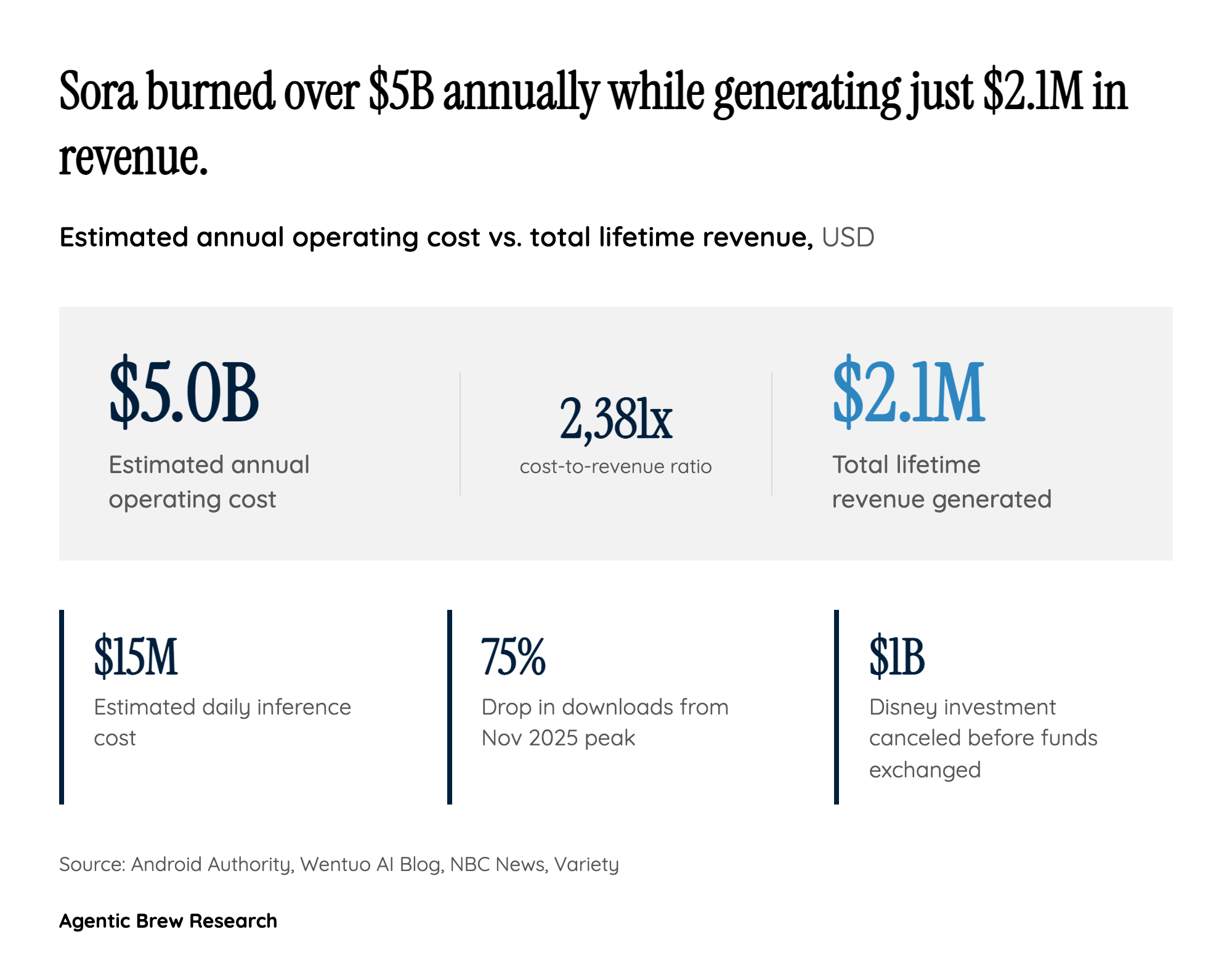
    The shutdown was driven by unsustainable economics — Sora's estimated daily operational cost was $15 million (over $5 billion annually) while generating only approximately $2.1 million in revenue — combined with a 75% plunge in user downloads from their November 2025 peak.
  • 04.
    OpenAI is redirecting freed GPU resources toward core products like ChatGPT, enterprise AI, and next-generation models ahead of a planned Q4 2026 IPO, while competitors including xAI, ByteDance, and Google DeepMind move to fill the vacuum.

Deep Analysis

Why This Matters

OpenAI's decision to shut down Sora is one of the most significant product cancellations in AI history, not because the technology failed in a technical sense, but because it revealed the brutal economics of generative AI at scale. When the company that popularized modern AI determines that an entire product category is not worth pursuing, it sends a powerful signal to the entire industry about the viability of AI video generation as a standalone business.

The collapse of the Disney partnership amplifies the significance. This was not just any deal — it was a $1 billion commitment from the world's most powerful entertainment IP holder, involving over 200 characters from Disney, Marvel, Pixar, and Star Wars. The fact that OpenAI walked away from this partnership, reportedly informing Disney just 30 minutes after their teams had been in a meeting together, underscores how urgent the financial calculus had become. The decision suggests that even the promise of Disney's unparalleled content library could not offset the fundamental cost problem of generating video with AI.
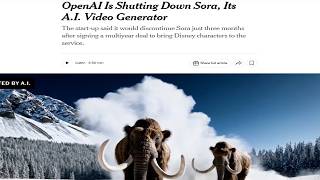
How It Works

Sora operated as an AI video generation platform that could create short video clips from text prompts. The system launched as a research preview in February 2024 before going public in late 2024, with an upgraded Sora 2 and standalone mobile app following in September 2025. Users could generate, share, and interact with AI-created videos through the app and Sora.com.

The Disney integration, had it proceeded, would have allowed users to generate videos featuring a curated set of over 200 masked, animated, or creature characters from Disney's franchises. This was structured as a three-year licensing agreement accompanied by Disney's $1 billion investment in OpenAI. The deal represented a carefully designed compromise — by limiting the available characters to masked or non-human figures, both companies attempted to navigate the contentious territory of AI-generated content featuring recognizable IP while avoiding the most sensitive issues around human likenesses.

Following the shutdown, video generation capabilities via Sora 2 will remain accessible within ChatGPT for Plus and Pro subscribers, but the standalone app, the social sharing platform, and the developer API are all being eliminated. This consolidation reflects OpenAI's broader strategy of funneling users into its flagship ChatGPT product rather than maintaining separate platforms.

By The Numbers

By The Numbers
Sora's estimated annual operating cost vs. total lifetime revenue, with key financial metrics

The financial data behind Sora's shutdown paints a stark picture of a product that was hemorrhaging money at an extraordinary rate. Sora's estimated daily operational cost was $15 million — translating to over $5 billion annually — while the platform generated only approximately $2.1 million in total revenue. This represents one of the most extreme cost-to-revenue imbalances of any major tech product in recent memory.

User engagement told an equally grim story. After Sora 2 launched as a standalone app in the fall of 2025, downloads plunged by nearly 75% from their November 2025 peak. The Disney deal was valued at $1 billion and would have covered more than 200 characters across Disney, Marvel, Pixar, and Star Wars properties under a three-year licensing agreement. Despite the scale of that commitment, no money ever changed hands as the deal was never finalized before OpenAI pulled the plug.

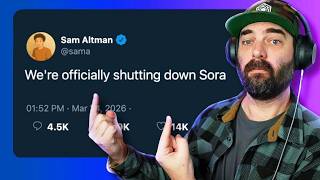
The social media reaction reflected the scale of the news: a single tweet noting the $10-15 million daily burn rate accumulated over 9,700 engagements, while a YouTube video titled "Sora Shutdown Situation is Crazy" drew 1.3 million views, indicating the shutdown resonated well beyond the AI industry.

Impacts & What's Next

The immediate competitive landscape is shifting rapidly. Elon Musk's xAI announced it is "doubling down" on AI video generation following OpenAI's exit, while ByteDance's Seedance 2.0 and Google DeepMind's Veo 3 continue to court filmmakers and content creators. The question is whether these competitors can solve the cost problem that defeated Sora, or whether they will eventually face the same economic reckoning.

For Disney, the outcome may actually be favorable in the near term. Analyst Laura Martin of Needham & Co. noted that stepping back from the AI video deal reduces friction with creative talent during ongoing union negotiations — a significant consideration given Hollywood's contentious relationship with generative AI. Disney's statement that it "respect[s] OpenAI's decision to exit the video generation business" suggests the company is content to wait for the technology and its economics to mature before re-engaging.

For OpenAI, the freed GPU resources will be redirected toward ChatGPT, enterprise offerings, and next-generation AI models as the company prepares for a potential Q4 2026 IPO. This strategic pivot from consumer spectacle toward business fundamentals may ultimately strengthen OpenAI's IPO narrative, demonstrating fiscal discipline and willingness to cut losses on unsustainable products.

The Bigger Picture

Sora's shutdown raises a fundamental question about the commercial viability of AI video generation at scale. As one analysis put it, AI-generated video remains "ill-suited to be used in the kinds of entertainment people are typically willing to pay for." The technology may be impressive in demos and short clips, but the combination of enormous compute costs, inconsistent quality, and unresolved copyright issues creates a gap between what AI video can do and what the market will actually pay for.

The copyright dimension deserves particular attention. Copyright law expert Matthew Sag had observed when the Disney deal was announced that OpenAI was strategically "entangling itself with the world's premier IP holder" to make itself "indispensable to the very industry that threatened to sue it out of existence." With that strategy now abandoned, OpenAI's legal exposure on training data and copyright issues remains unresolved, and the broader AI industry loses a potential template for how major IP holders and AI companies might coexist.

Creator Dana Terrace's warning that fan content made with AI tools like Sora "will not even be _yours_" points to a deeper tension in the AI content creation space. The promise of democratized video creation through AI faces a fundamental ownership paradox: the platforms control the models, the IP holders control the characters, and the users who generate the content may end up with the least claim to what they create. Sora's failure does not resolve this tension — it merely postpones the reckoning until the next platform attempts to bridge the gap between AI capability and commercial reality.

Historical Context

2024-02
OpenAI first unveiled Sora as a research preview, showcasing AI-generated video capabilities.
2024-12
Sora launched publicly as a consumer product.
2025-09
Sora 2 and a standalone mobile app launched.
2025-10
Head of Sora Bill Peebles acknowledged the economics of running Sora were 'completely unsustainable.'
2025-10-17
OpenAI halted Martin Luther King Jr. depictions in Sora after backlash over disrespectful AI-generated videos.
2025-11
Japanese animation trade groups demanded OpenAI cease using their content for AI training.
2025-12
Disney announced a $1 billion investment and three-year character licensing agreement for Sora integration covering 200+ characters.
2026-03-24
OpenAI announced discontinuation of Sora, canceling the Disney partnership just months after it was announced.

Power Map

Key Players
Subject

OpenAI Shuts Down Sora, Cancels $1B Disney Partnership

OP

OpenAI

Developer of Sora; decided to discontinue the product to redirect GPU resources toward ChatGPT and next-generation AI models ahead of a potential Q4 2026 IPO.

TH

The Walt Disney Company

Had agreed to invest $1 billion and license over 200 characters for Sora integration; exited the deal after the shutdown announcement.

SA

Sam Altman

OpenAI CEO who informed staff of the Sora shutdown and directed freed resources toward next-generation models.

XA

xAI (Elon Musk)

Competitor seizing the opportunity; Musk announced xAI is 'doubling down' on AI video generation after OpenAI's exit.

BY

ByteDance and Google DeepMind

Competitors continuing to operate in the AI video generation space with Seedance 2.0 and Veo 3 respectively, courting filmmakers.

THE SIGNAL.

Analysts

"Acknowledged the economics of running Sora were untenable: "The economics (of Sora) are currently completely unsustainable.""

Bill Peebles
Head of Sora, OpenAI

"Argued the decision benefits Disney by "lower[ing] friction with talent, which is smart when you're in the middle of union negotiations.""

Laura Martin
Analyst, Needham & Co.

"Questioned whether the cost of running Sora was justified given that user engagement decreased significantly after the initial novelty wore off."

Carolina Milanesi
Analyst, Creative Strategies

"When the Disney deal was first announced, observed that "by entangling itself with the world's premier IP holder, OpenAI makes itself indispensable to the very industry that threatened to sue it out of existence.""

Matthew Sag
Copyright and AI Law Expert, Emory University

"Warned that fan content created via AI tools like Sora would not belong to the users: "Any fan content created like this will not even be _yours_. They're not paying you to make anything.""

Dana Terrace
Creator / Animator
The Crowd

"BREAKING: Disney's $1B OpenAI deal DEAD after Sora shutdown"

@@ns123abc1700

"OpenAl was burning $10-15 million per day on Sora roughly $5.4 billion per year"

@@shiri_shh9100

"OpenAI is discontinuing Sora, the generative AI video platform it launched last year"

@@Variety778
Broadcast
Sora Shutdown Situation is Crazy

Sora Shutdown Situation is Crazy

OpenAI announces it is shutting down video platform Sora

OpenAI announces it is shutting down video platform Sora

OpenAI Just Killed Sora

OpenAI Just Killed Sora