Apple-Intel chip manufacturing deal
TECH

Apple-Intel chip manufacturing deal

42+
Signals

Strategic Overview

  • 01.
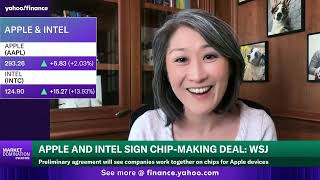
    Apple and Intel have reached a preliminary agreement, first reported by The Wall Street Journal on May 8, 2026, after more than a year of intensive talks brokered in part by the Trump administration.
  • 02.
    Intel would fabricate chips based on Apple's designs, mirroring TSMC's current arrangement, with the preliminary scope reportedly covering lower-tier M-series chips and standard iPhone processors rather than Pro lineup parts.
  • 03.
    Apple is most likely to wait for Intel's next-generation 18A-P node, with mass production for Apple expected as early as 2027 for M-series chips and possibly 2028 for iPhone chips.
  • 04.
    Intel stock surged roughly 14% on the news to a record high of $126.23, eclipsing its dot-com peak; Apple shares rose about 1.7-2%.
  • 05.
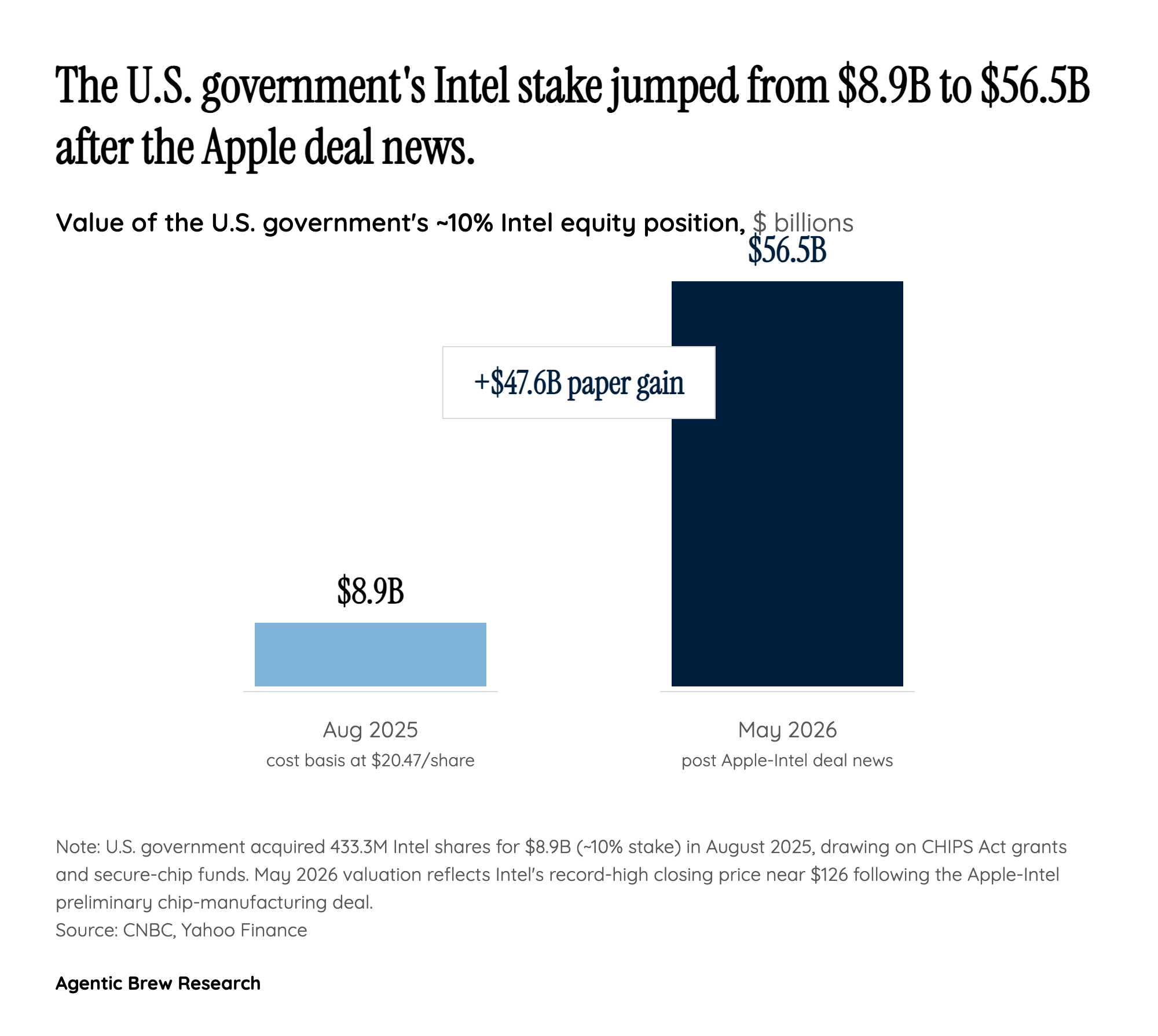
    The deal lifts the U.S. government's roughly 10% Intel stake — acquired in August 2025 for $8.9B at $20.47 a share — to about $56.5B in market value, an unrealized gain near $47.6B.

Deep Analysis

The $47.6B taxpayer windfall and government-as-shareholder mechanics
The $47.6B taxpayer windfall and government-as-shareholder mechanics
U.S. government's roughly 10% Intel equity stake, valued at cost basis (Aug 2025) vs. market value after the Apple-Intel deal news (May 2026).

The most underappreciated dimension of this deal is fiscal. After the Trump administration took a roughly 10% stake in Intel last August — buying 433.3M shares at $20.47 for $8.9B with CHIPS Act and secure-chip funds — the Apple announcement repriced that position to roughly $56.5B, a paper gain near $47.6B. That makes the U.S. government Intel's largest shareholder and a direct financial beneficiary of every customer Commerce Secretary Howard Lutnick has been steering toward Fab 52, including the Apple, Musk and Huang meetings he reportedly held over the past year.

The political pattern is hard to miss in the community reception: the most upvoted Reddit thread on the news was an r/EconomyCharts post charting the stake's appreciation, with comments dwelling on the legality and ethics of an industrial-policy program that doubles as a directional bet. The line between policy and equity speculation has been erased. The mechanics are unprecedented for a U.S. tech champion, and they raise unresolved questions about how the government discloses, exits or votes that position — questions that will only sharpen if Intel's stock keeps compounding off Apple-driven momentum.
TSMC's AI capacity squeeze is the actual cause — Apple is running out of TSMC, not choosing Intel

Strip away the political theater and the proximate cause of this deal is mundane wafer math. Surging AI server demand from Nvidia and AMD has tightened TSMC's leading-edge capacity to the point that Apple — historically TSMC's most privileged customer and roughly 25% of its revenue — was squeezed during the iPhone 17 launch. Creative Strategies analyst Ben Bajarin's blunt characterization that TSMC is 'printing wafers as fast as they can' captures why he also argues the Apple-Intel deal does not really hurt TSMC: there is no spare capacity for it to lose.

In that frame, Apple is not defecting; it is buying optionality on a second source because its primary one is fully booked. That is also why Samsung Foundry was in the running until late, per Bloomberg, and why geographic diversification away from southern Taiwan — roughly 100 miles from mainland China — is a secondary, not primary, motivator. The highest-reach YouTube treatment of the news framed the deal the same way: a forced second source driven by hyperscaler-AI wafer demand, not a sudden vote of confidence in Intel.

18A vs N3B: base M-series only, on a node that still trails TSMC

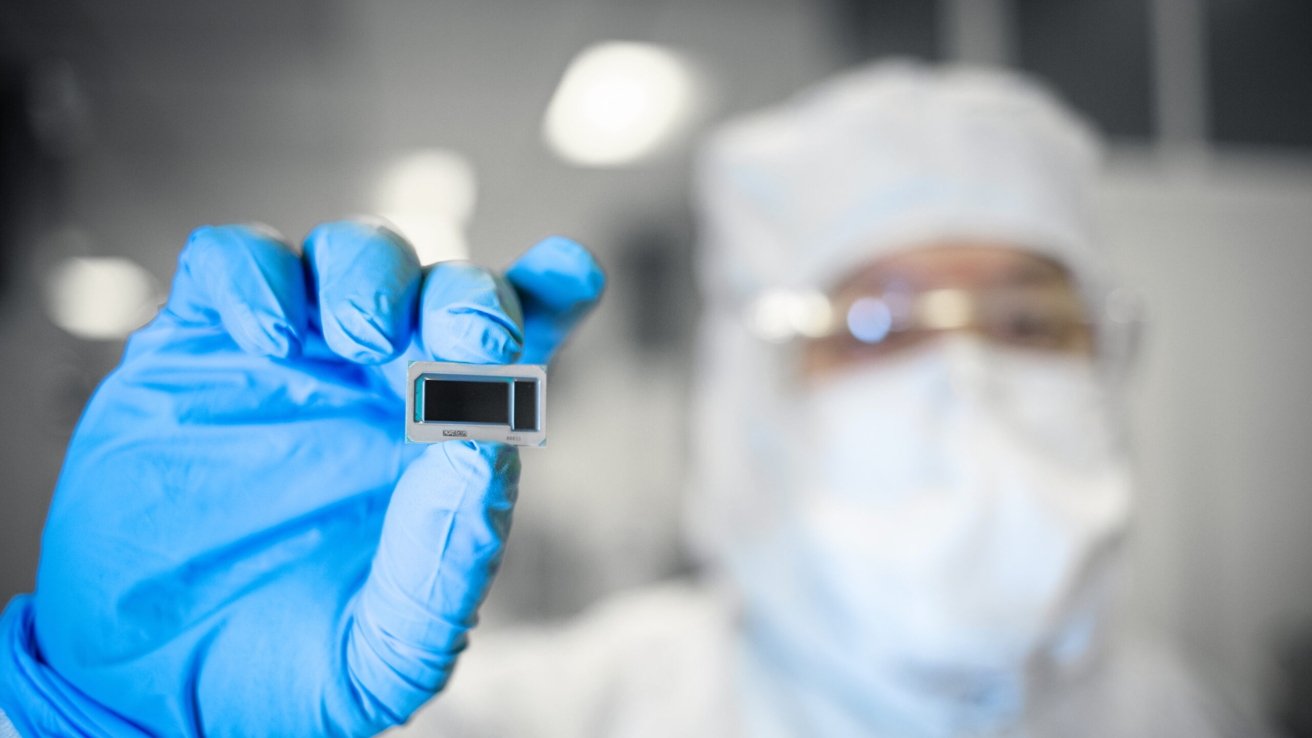
The technical scope of this deal is narrower than the headlines suggest. Reporting indicates Intel's allocation will cover lower-tier M-series and standard iPhone parts, not Pro/Pro Max/Ultra silicon, which is expected to stay on TSMC. The node in question is Intel 18A — now in high-volume production at Fab 52 in Arizona — and the follow-on 18A-P, which TrendForce data pegs at >18% lower power at iso-performance or >9% higher performance at iso-power versus standard 18A. That is competitive on paper.

The technically-literate community read pushed past the headline number, however. The substantive r/apple discussion landed on a more careful position: Intel 18A roughly matches TSMC's N3B with backside-power-delivery (PowerVia) advantages, but trails N2 — which is exactly where Apple's Pro-tier silicon is heading. Yields tell the same story; Intel's are reported around 65% versus TSMC's 80%-plus, with per-chip cost reportedly close to 3x TSMC. So Apple has every reason to put non-flagship silicon on Intel first while Pro tiers continue riding the N2/A16 leading edge in Taiwan.

The 'agreement to make an agreement' risk: preliminary terms, no chips before 2027

Beneath the stock pop is a deal that has not, in any contractually meaningful sense, shipped. Reporting describes a preliminary agreement after more than a year of talks, with product scope, wafer volumes, node selection and shipment timing all undisclosed. Apple is most likely to wait for 18A-P, with mass production for M-series no earlier than 2027 and possibly 2028 for iPhone parts.

Process-design-kit transitions for an Apple-class customer typically take three to four years, a point r/apple commenters were quick to make in arguing the first Apple chips on Intel will probably be M9- or M10-era rather than near-term M6 silicon. Layer in execution risk — 18A is reportedly 'a little bit rough,' and Intel has never fabricated Apple chips at scale — plus an unusual political brokerage layer in Lutnick and Trump, and the headline arrow can still slip. The market is pricing a comeback. The documents describe an option.

Historical Context

2005-06-06
Apple announced its transition of Macs from PowerPC to Intel x86 processors, beginning a roughly 15-year partnership.
2010
Then-Intel CEO Paul Otellini declined Apple's request for Intel to manufacture iPhone chips, deeming volumes too low — a now-famous strategic miss.
2014-09
Apple's A8 chip in the iPhone 6 marked TSMC's first major Apple production win, after TSMC's $10B 20nm investment for Apple.
2020-06-22
At WWDC, Tim Cook announced a two-year transition of Macs away from Intel CPUs to Apple Silicon, calling it a historic day for the Mac.
2020-11
Apple unveiled the M1, the first Apple Silicon SoC, shipping in MacBook Air, MacBook Pro and Mac mini.
2023-06
Apple discontinued the last Intel-based Mac (Mac Pro), completing the Apple Silicon transition.
2025-03
Lip-Bu Tan took over as Intel CEO and began an aggressive turnaround focused on the foundry business and external customer relationships.
2025-08-22
U.S. government took a roughly 10% equity stake in Intel via an $8.9B purchase of 433.3M shares at $20.47, drawing on CHIPS Act grants and secure-chip funds.
2026-05-05
Bloomberg reported Apple was exploring Intel and Samsung as US-based foundry options for main device chips, sending Intel up 13%.
2026-05-08
WSJ reported the preliminary agreement; Intel hit a record high near $126, eclipsing its dot-com peak, and Apple shares ticked up.

Power Map

Key Players
Subject

Apple-Intel chip manufacturing deal

AP

Apple

Customer and chip designer seeking to diversify manufacturing away from sole reliance on TSMC after iPhone 17 supply constraints; ships over 200 million iPhones annually plus iPads and Macs.

IN

Intel (Lip-Bu Tan, CEO)

Foundry seeking an anchor external customer; Tan took the helm in March 2025 and has tripled Intel stock by securing U.S. government, SpaceX/Terafab and now Apple relationships.

TS

TSMC

Currently fabricates essentially all leading-edge Apple silicon, with Apple representing roughly 25% of TSMC revenue; capacity is strained by AI demand from Nvidia and AMD.

TR

Trump Administration / Commerce Secretary Howard Lutnick

Brokered the deal; Lutnick met repeatedly with Tim Cook, Elon Musk and Jensen Huang to push customers toward Intel, while Trump personally lobbied Cook at the White House.

U.

U.S. Government

Largest Intel shareholder via a roughly 10% stake acquired in August 2025 for $8.9B; the Apple deal lifted that stake's market value to about $56.5B.

SA

Samsung Foundry

Considered by Apple as an alternative second source per Bloomberg's reporting, though Intel emerged as the leading partner.

Source Articles

Top 4

THE SIGNAL.

Analysts

"Frames Intel's revival as a question of execution rather than just technology or scale: 'Intel has the technology, talent and scale to lead again, but leadership is earned through execution.'"

Lip-Bu Tan
CEO, Intel

"Argues that Intel's internal product volumes alone cannot underwrite the capital intensity of leading-edge fabs, making external anchor customers like Apple essential to the foundry's economic viability."

Naga Chandrasekaran
Intel Foundry executive

"Notes an Apple-Intel deal does not really hurt TSMC because TSMC is already capacity-constrained: 'they're already printing wafers as fast as they can,' leaving Intel as the only viable second source at scale."

Ben Bajarin
CEO and Principal Analyst, Creative Strategies

"Confirms direct administration lobbying on Intel's behalf to win commercial customers like Apple: 'We have been trying to drum up business for Intel.'"

Donald Trump
U.S. President

"Was historically dismissive of Intel's foundry capability — reportedly saying 'Intel just does not know how to be a foundry' — making the 2026 preliminary deal a notable about-face."

Tim Cook (historical, recounted by SemiAnalysis)
CEO, Apple
The Crowd

"APPLE AND INTEL JUST SIGNED A PRELIMINARY CHIP-MAKING DEAL. The two companies hammered out a formal agreement in recent months after over a year of intensive talks, per WSJ. It is the third major customer Intel has landed in 8 months: - Apple $AAPL: Will manufacture some chips"

@@WOLF_Financial0

"Comeback of the decade has taken place $INTC & @Apple have reached preliminary chip making deal"

@@soicfinance0

"President Trump's purchase of 10% of Intel was worth $8.9 billion in August 2025. Today, Apple announced a deal with Intel and this position is worth $56.5 billion"

@u/RobertBartus1100

"Apple and Intel $INTC reach agreement for Intel to make chips in Apple devices, WSJ reports."

@u/cowardbeater1969621
Broadcast
The REAL Reason Apple Is Going Back to Intel (Nobody Saw This Coming!)

The REAL Reason Apple Is Going Back to Intel (Nobody Saw This Coming!)

Why Apple-Intel Deal Could Shift Your AI Investments

Why Apple-Intel Deal Could Shift Your AI Investments

Intel CEO Who Won Over Trump Now Needs a Breakthrough

Intel CEO Who Won Over Trump Now Needs a Breakthrough