How a Number Theory Detour Killed an 80-Year-Old Belief
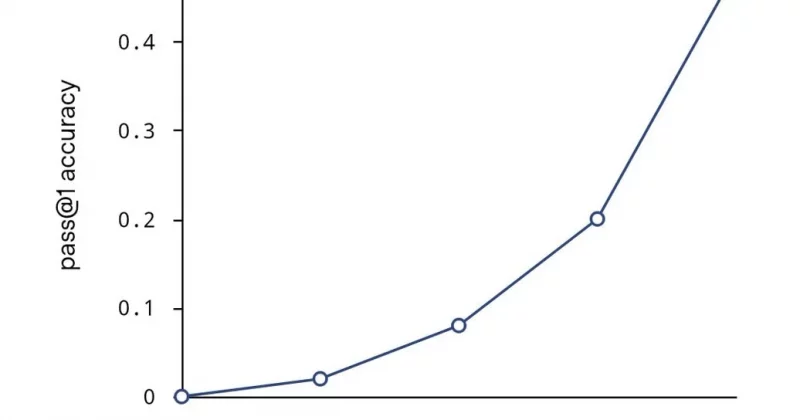
For decades the working consensus was that square grids — Erdős's own construction — were essentially optimal, yielding roughly n^(1+c/log log n) unit-distance pairs and motivating the conjectured upper bound of n^(1+o(1)) [2]. The AI proof breaks that ceiling by abandoning fixed-degree settings like Gaussian integers and instead taking points in a CM number field K whose degree grows with the size of the configuration, building on ideas from Ellenberg–Venkatesh and Hajir–Maire–Ramakrishna [2]. The key ingredient is an infinite class field tower of Golod–Shafarevich type: a sequence of progressively larger unramified extensions whose existence is guaranteed by Golod–Shafarevich-style inequalities and which supplies enough algebraic units to force many distinct pairs of points to lie at distance exactly one. Will Sawin later refined the argument by reducing the required input to a single rational prime splitting in the tower [2]. The result is a sequence of point sets in R^2 with at least |P|^(1+ε) unit distances for some fixed ε > 0 — superlinear by a polynomial factor, not a logarithmic one — establishing the first known violation of the n^(1+o(1)) belief [3].