Why Local AI Found Apple Silicon Before Apple Found It
The most striking line on Apple's Q2 FY2026 call was not the revenue beat — it was Tim Cook conceding Apple itself had under-modeled the demand. "Both of these are amazing platforms for AI and agentic tools, and the customer recognition of that is happening faster than what we had predicted." That admission tells you the local-AI use case is being pulled into existence by developers, not pushed by Apple's marketing. The mechanism is structural: unified memory architecture lets a single Apple Silicon SoC address the same pool of high-bandwidth RAM as both CPU and GPU, which means a $1,999 Mac Studio can hold 128GB-class models in working memory without the PCIe shuffling that wrecks throughput on a discrete-GPU PC. Apple's M5 launch in October 2025, with a redesigned 16-core Neural Engine and per-core Neural Accelerators, made that architecture meaningfully faster for transformer inference just months before the demand wave hit.
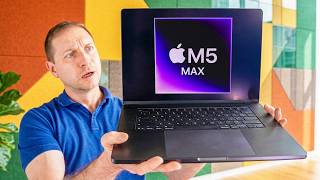
What Apple appears to have missed is that this was the first generation where running a serious local model on a non-NVIDIA box was no longer a stunt. YouTube's most-viewed coverage of the moment — a 966K-view jakkuh video on clustering Mac Studios with Exo, and Alex Ziskind's M5 Max review — reframed Mac Studio as a credible alternative to an NVIDIA DGX Spark or ASUS GX10. The software stack (MLX, llama.cpp, Exo 1.0 with RDMA over Thunderbolt 5) matured to the point where a developer could buy a Mac mini, plug it in, and have a usable agent host that evening. Apple sold the silicon; the open-source community sold the workflow. Now Apple is the one playing catch-up on supply.