Japan's Flagship Carrier Just Bet Its Tarmac on Chinese Hardware
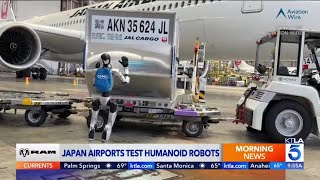
The story most coverage soft-pedals: when Japan Airlines decided to put humanoid robots on its national flag-carrier's home airport, every robot on the tarmac is Chinese. The two models in the trial — Unitree's G1 from Hangzhou and UBTECH's Walker E — were both designed and manufactured in China. There is no Japanese humanoid platform in this rollout. That is a sharp reversal of the country's traditional industrial reflex to build domestically and license outward, and it reads as a tacit admission that Japan does not yet have a price-competitive humanoid stack of its own ready for commercial deployment.
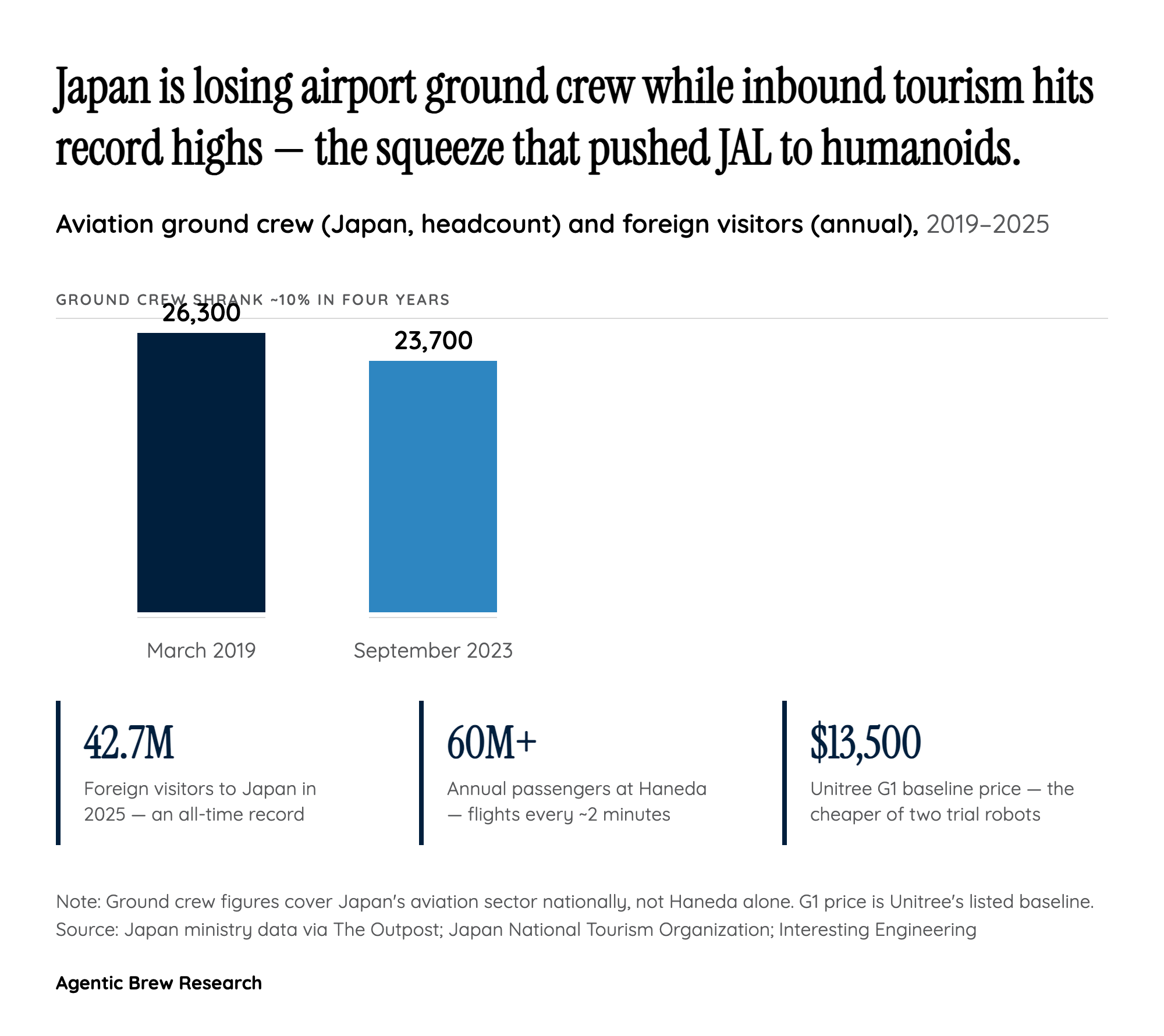
The procurement choice is also pragmatic in a way worth naming. The Unitree G1 lists at roughly $13,500 — by industrial automation standards, that is closer to the cost of a high-end barcode scanner than to a multimillion-dollar baggage system retrofit. Pairing a cheap, abundant smaller bot (G1) with a heavier industrial platform (Walker E) lets JAL test two ends of the cost-capability curve in the same pilot. But it also creates a dependency that the trial does not address: if humanoids prove useful at airport scale, JAL will be sourcing critical airside hardware, software updates, and spare parts from Chinese vendors at a moment when several allied governments are tightening rules around exactly that. The trial's narrow framing — 'two robots moving cargo on a tarmac' — obscures the supply-chain commitment a successful pilot would set in motion.