Anthropic Ships Claude Code Desktop Redesign, Routines, and Prepares Opus 4.7
TECH

Anthropic Ships Claude Code Desktop Redesign, Routines, and Prepares Opus 4.7

31+
Signals

Strategic Overview

  • 01.
    Anthropic released a major redesign of the Claude Code desktop app on April 14, 2026, featuring a sidebar for managing parallel sessions, drag-and-drop workspace layout, integrated terminal and file editor, and a faster diff viewer.
  • 02.
    Claude Code Routines launched in research preview on April 14, allowing developers to create saved automations that run on cloud infrastructure with scheduled, API, or GitHub triggers, with daily limits of 5 (Pro), 15 (Max), and 25 (Team/Enterprise).
  • 03.
    Anthropic is preparing to launch Claude Opus 4.7 and a new AI design tool for creating websites and presentations, according to The Information.
  • 04.
    Anthropic's annual recurring revenue has grown to $30B from $9B at end of 2025, with projections of $80-100B by end of 2026, and the company now has over 1,000 enterprise customers spending $1M+ annually.

From Chatbot to Developer OS: The Architecture Behind Claude Code's Redesign

The April 14 desktop redesign is not a cosmetic refresh — it is a structural pivot that repositions Claude Code from a conversational coding assistant into something closer to a full integrated development environment. The new sidebar for managing multiple parallel sessions means developers can run separate Claude agents on different parts of a codebase simultaneously, each with its own context and history. The drag-and-drop workspace layout with integrated terminal, file editor, and HTML/PDF preview creates a surface area that competes directly with VS Code's extension ecosystem rather than with other AI chatbots.

The scope of this transformation becomes clearer in the context of Anthropic's overall shipping pace. The developer community has been tracking the cadence closely, and the sentiment on r/ClaudeAI is a mixture of awe and fatigue — one widely discussed post tallied 74 distinct product releases in just 52 days, a pace that few software companies of any size have sustained. That velocity is not just a vanity metric; it means each new feature lands before users have fully absorbed the last one, creating a compounding effect where the product surface area expands faster than competitors can respond.

The three view modes — Verbose, Normal, and Summary — reveal a design philosophy oriented around trust calibration. A developer debugging a subtle concurrency issue needs to see every tool call Claude makes; a product manager generating boilerplate needs only the final output. This graduated visibility is a UX pattern borrowed from observability tools like Datadog, not from chat interfaces, and it signals that Anthropic is designing for sustained multi-hour work sessions rather than quick question-answer exchanges. The integrated diff viewer, specifically called out as "faster" in the release, addresses one of the most common friction points in AI-assisted coding: reviewing what the model actually changed before accepting it.

This architectural shift matters because it raises switching costs. Once a developer has their workspace layout configured, their parallel sessions running, and their preferred view mode set, moving to a competitor means rebuilding an entire workflow — not just swapping out a chat window. Anthropic is building the kind of environmental lock-in that IDE makers have relied on for decades.
Routines and Managed Agents: Claude Code Becomes a Background Worker

Claude Code Routines represent the most consequential feature in this release cycle because they shift Claude from a tool you actively operate to one that operates on your behalf. A Routine is a saved automation consisting of a prompt, connected repositories, and connectors that executes on Anthropic's cloud infrastructure. Triggers include schedules (cron-style), API calls, and GitHub events — meaning a Routine can automatically run when a PR is opened, a CI pipeline fails, or at 2 AM every night to refactor technical debt.

Routines are part of a broader pattern: Anthropic has also been developing Managed Agents — persistent, supervised agent instances that can be deployed and monitored across teams. The r/ClaudeAI community responded enthusiastically to that direction, with discussion threads reflecting strong demand for agents that can own ongoing responsibilities rather than just respond to one-off prompts. Together, Routines and Managed Agents suggest Anthropic is building toward a model where Claude is not a tool you use but a team member you delegate to.

The daily execution limits — 5 for Pro, 15 for Max, 25 for Team/Enterprise — are the most telling design choice. These are not generous limits; they force developers to be deliberate about which workflows they automate. This constraint likely reflects both compute cost management (each Routine invocation consumes significant GPU time on Anthropic's infrastructure) and a safety-first deployment strategy consistent with the graduated rollout of auto mode a month earlier. Anthropic appears to be building an autonomous coding platform incrementally, testing each layer of autonomy before expanding it.

The competitive implications are significant. GitHub Copilot Workspace, Cursor, and Windsurf have all been racing to add agentic features, but none have shipped a cloud-hosted automation layer with trigger-based execution. Routines effectively make Claude Code a serverless function platform for AI-assisted development — a hybrid of GitHub Actions and an AI coding agent. The research preview designation gives Anthropic room to adjust limits and capabilities based on real usage patterns before committing to pricing that could define the economics of AI-automated software development.

The Effort-Level Controversy Exposes a Fundamental Tension in AI Product Management

While Anthropic was shipping its most ambitious product updates, it was simultaneously dealing with a user revolt over a change made weeks earlier: reducing the default effort level from high to medium. The backlash, documented by Fortune and amplified by prominent engineers like AMD's Stella Laurenzo and Microsoft's Dimitris Papailiopoulos, reveals a tension that every AI company will face as models become embedded in critical workflows.

The core problem is that Anthropic made a backend configuration change — reducing compute per query to manage costs or capacity — that users experienced as a quality regression. When Laurenzo says Claude "cannot be trusted to perform complex engineering," she is describing a real capability change, but one driven by a business decision rather than a model degradation. Opus 4.5's benchmarks did not change; what changed was how much of the model's capability was being allocated per default request. Anthropic highlighted that at medium effort, Opus 4.5 matches Sonnet 4.5's best quality score while using 76% fewer output tokens — an efficiency win on paper, but one that meant power users accustomed to high-effort Opus performance were now getting Sonnet-equivalent output by default.

This episode is instructive because it previews a challenge that will recur across the industry. As AI models become infrastructure — as critical to a developer's workflow as their compiler or database — silent changes to default behavior create outsized trust damage. The frustration is palpable in developer communities, where the pace of releases itself has become a source of whiplash — the same community marveling at 74 product launches in 52 days is also asking whether Anthropic is moving too fast to maintain quality. For Anthropic specifically, the timing is awkward: launching a redesigned desktop app and autonomous Routines while power users publicly question whether the underlying model can be trusted creates a credibility gap that no amount of product polish can paper over.

Opus 4.7 and the AI Design Tool: Anthropic's Bid to Escape the Developer Niche

The leaked plans for Opus 4.7 and an AI design tool for creating websites and presentations mark a strategic inflection point for Anthropic. Until now, Anthropic's product surface has been overwhelmingly developer-facing: Claude Code, API access, enterprise integrations, coding benchmarks. A design tool that creates websites and presentations targets an entirely different user base — marketers, product managers, founders, and non-technical knowledge workers who currently live in Figma, Canva, and Google Slides.

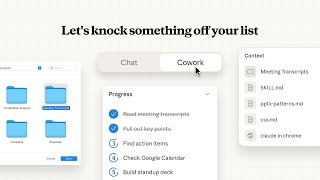
The market's immediate reaction was telling: Figma, Adobe, and Wix stock prices dropped 2%+ on the leak alone, before any product was even announced. This suggests investors believe Anthropic's model capabilities are strong enough to produce design outputs that compete with purpose-built tools — a belief grounded in the rapid improvement of multimodal generation across the industry. If Anthropic can produce a tool where you describe a website or presentation in natural language and get a production-quality result, the value proposition of learning Figma's interface or managing Wix's template system diminishes substantially for a large segment of users. The earlier Cowork feature — which drew significant attention when it launched, with its introductory video becoming one of the most-watched AI product demos of the year — already demonstrated appetite for delegating complex creative tasks to Claude.

It is worth noting the model progression that leads to this moment. After Opus 4.5 shipped in late 2025, Anthropic released Opus 4.6 as an iterative step before the forthcoming 4.7. The jump from 4.5 directly to 4.7 in public discourse has left some observers confused, but 4.6 served as the production workhorse during the early months of 2026 — the model behind much of the Cowork and Claude Code expansion.

A separate thread in Reddit's r/singularity mentions a model called "Claude Mythos" allegedly being tested by early partners. This claim originates from an unverified user-submitted leak post and should be treated as community speculation rather than confirmed fact. If such a model does exist, it would suggest a tiered strategy where Opus 4.7 powers consumer and prosumer products while a more capable model serves enterprise and research customers — mirroring OpenAI's GPT/o-series distinction. But until Anthropic confirms anything, the Mythos narrative says more about the community's appetite for insider information than about Anthropic's actual product roadmap.

Historical Context

2025-11-24
Claude Opus 4.5 released, achieving 80.9% on SWE-bench Verified with a 67% price reduction to $5/$25 per million tokens.
2026-01-31
Claude Cowork launched in research preview, enabling users to hand off time-consuming tasks to Claude.
2026-02-20
Claude Code Security unveiled for zero-day vulnerability scanning.
2026-03
Default effort level reduced from high to medium, later triggering widespread user complaints about perceived performance degradation.
2026-03-24
Claude Code auto mode released in research preview, allowing Claude to autonomously execute safe coding actions while blocking risky behaviors.
2026-04
Claude Opus 4.6 released, continuing the model iteration cycle between Opus 4.5 and the forthcoming Opus 4.7, with an introductory video drawing over 363K views on YouTube.
2026-04-14
Claude Code desktop redesign and Routines launched, introducing parallel sessions, drag-and-drop workspace layout, and cloud-based automated workflows.
2026-04-15
Reports surface that Anthropic is preparing to launch Claude Opus 4.7 and a new AI design tool for websites and presentations.

Power Map

Key Players
Subject

Anthropic Ships Claude Code Desktop Redesign, Routines, and Prepares Opus 4.7

AN

Anthropic

Developer and operator of the Claude AI platform, driving rapid product expansion across models, developer tools, and enterprise features. 8 of Fortune Global 10 are deeply embedded with Claude, and the company's $380B valuation reflects aggressive bets on agentic AI infrastructure.

OP

OpenAI

Primary competitor that lost web traffic and mobile app share to Claude and Gemini in March 2026, intensifying the developer tooling race as Anthropic's product velocity accelerates.

FI

Figma, Adobe, and Wix

Design and web-building incumbents whose stock prices dropped 2%+ after news leaked of Anthropic's AI design tool, signaling potential disruption of the creative tooling market.

EN

Enterprise customers (Fortune Global 10)

Over 1,000 businesses spending $1M+ annually on Claude, making them both the primary revenue engine and the constituency most affected by performance regressions and product changes.

THE SIGNAL.

Analysts

""Claude has regressed to the point [that] it cannot be trusted to perform complex engineering" — highlighting a growing backlash from power users who noticed performance degradation after Anthropic reduced the default effort level from high to medium."

Stella Laurenzo
Senior Director of AI, AMD

""I've had incredibly frustrating sessions with Claude Code the past two weeks" — underscoring that even researchers at competing labs have become dependent on Claude's tooling and are vocal when quality drops."

Dimitris Papailiopoulos
Principal Research Manager, Microsoft
The Crowd

"New on the Engineering Blog: How we designed Claude Code auto mode. Many Claude Code users let Claude work without permission prompts. Auto mode is a safer middle ground: we built and tested classifiers that make approval decisions instead."

@@AnthropicAI4100

"NEW: Anthropic launches Claude Code Auto-Fix — cloud based sessions that automatically follow PRs, fix CI failures and address comments."

@@tokens709

"Today in AI Stuff (New Claude Code Design): GM! @ClaudeAI redesigned Claude Code! They added an integrated terminal, file editing, HTML and PDF preview, and a faster diff viewer, all in a drag-and-drop layout you can arrange to your preference"

@@adamagb383

"Anthropic is set to release Claude Opus 4.7 and a new AI design tool as early as this week"

@u/Outside-Iron-8242876
Broadcast
Introducing Cowork: Claude Code for the rest of your work

Introducing Cowork: Claude Code for the rest of your work

Introducing Claude Opus 4.6

Introducing Claude Opus 4.6

Claude Code 2.0: New Desktop/CLI App, Routines + Opus 4.7 This Week!

Claude Code 2.0: New Desktop/CLI App, Routines + Opus 4.7 This Week!