Why This Matters
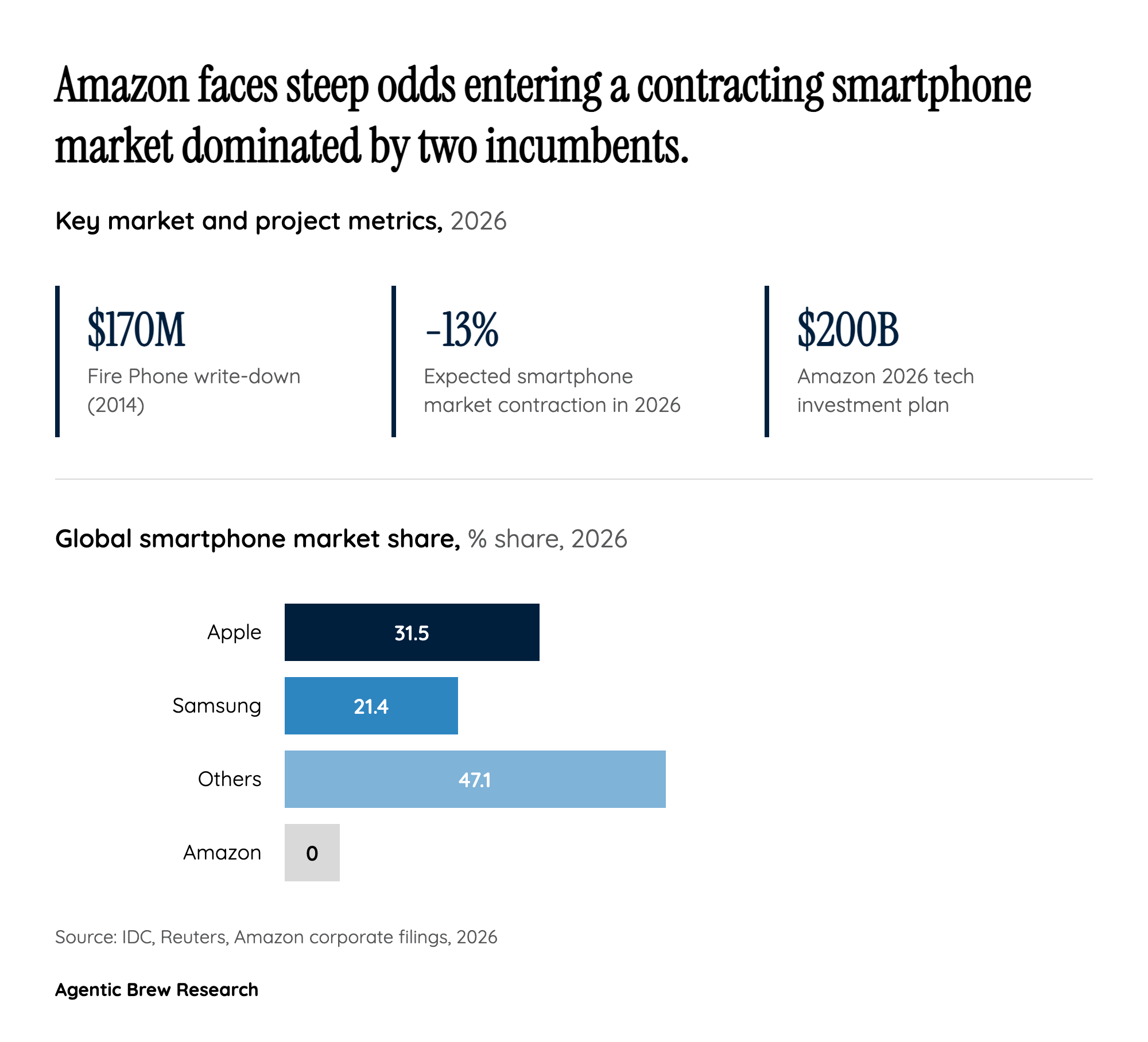
Amazon's Transformer project represents far more than a second attempt at smartphone hardware. It signals a fundamental strategic bet that the AI paradigm shift will reset the rules of mobile computing, potentially breaking the Apple-Google duopoly that has defined the smartphone era for over fifteen years. If Amazon succeeds in creating a device where AI-driven interactions replace the traditional app model, it could reshape how hundreds of millions of consumers access digital services.
The timing is deliberate. Generative AI has reached a maturity point where voice-first, context-aware interfaces can plausibly replace tap-and-swipe app navigation for many everyday tasks. Amazon's Alexa+ launch in February 2026 demonstrated the company's confidence in its AI capabilities, and the Transformer phone would serve as the ultimate expression of that vision -- a device where the AI is the interface, not an overlay on top of apps. Combined with Project Kuiper's satellite connectivity, Amazon could offer something no other smartphone maker can: a device that works everywhere on Earth, connected to the world's largest e-commerce and cloud computing ecosystem. The stakes extend beyond hardware margins; this is about controlling the primary consumer touchpoint in an AI-first future.