AI Energy Bottleneck and Hyperscale Data Center Buildout
TECH

AI Energy Bottleneck and Hyperscale Data Center Buildout

31+
Signals

Strategic Overview

  • 01.
    At full buildout, the proposed Stratos data center campus in Box Elder County, Utah could draw up to 9 gigawatts of power — roughly equal to New York City's average electricity demand and nearly double Utah's 2025 peak.
  • 02.
    Box Elder County commissioners unanimously approved the ~40,000-acre Stratos Project Area on May 4, 2026, while local groups have filed referendum challenges and residents rallied at the State Capitol on May 14.
  • 03.
    U.S. data-center grid demand is forecast to hit 75.8 GW in 2026 and 134.4 GW by 2030, while hyperscaler capex reached $413B in 2025 and is projected at $600-700B in 2026.
  • 04.
    Anthropic CEO Dario Amodei said revenue and usage grew 80-fold year-over-year on an annualized basis in Q1 2026 — a scale that explains why the company cannot meet its own compute demand and recently signed for more than 300 MW at SpaceX's Colossus 1 facility.

Deep Analysis

The Bottleneck Just Moved: From Chips to Megawatts

For two years, the AI scaling debate has revolved around GPU supply, fab capacity, and HBM yields. That frame is now outdated. The binding constraint on frontier AI has migrated upstream — to the substations, transformers, and gas turbines that feed the racks. Dario Amodei laid out the physics in 'Machines of Loving Grace,' arguing that computation has a hard floor: a 'certain minimum energy per bit erased, limiting the density of computation in the world' [1]. That is not a market constraint that capex can dissolve; it is a thermodynamic ceiling that propagates straight into grid planning.

The sell-side has now caught up. Goldman Sachs warned this month that 'the infrastructure foundation on which AI has been constructed will not sustain the AI of tomorrow' [2], and Ford CEO Jim Farley framed it in operator terms: 'Even if the data centers get built, there's still a huge question mark about how the energy sector will support them' [2]. Anthropic itself is the loudest demand signal — Amodei revealed Q1 2026 revenue and usage grew 80-fold on an annualized basis, an expansion the company openly admits its compute footprint cannot absorb [3]. When the lab building the model and the bank financing the rollout both say the limit has shifted from silicon to electrons, the story changes.

BloombergNEF captured the moment by raising its U.S. data-center power forecast 36% in just seven months, to 106 GW by 2035, and naming 'an inflection moment for US grids: the desire to accommodate AI-driven load without undermining reliability or driving up power costs' [4]. The thesis flip is the news. Everything downstream — Stratos, nuclear PPAs, on-site turbines — is a consequence.

Bring-Your-Own-Power: How Hyperscalers Are Bypassing the Utility

Faced with interconnection queues stretching into the 2030s, the largest AI buyers stopped waiting for utilities. They are vertically integrating into power generation itself. Meta has signed multi-gigawatt nuclear deals to feed its AI data centers [5]. Oracle agreed to buy up to 2.8 GW of Bloom Energy fuel-cell capacity for its AI sites [6]. A Cleanview report cited by Data Center Knowledge estimates 30% of anticipated data-center energy capacity will now come from on-site generation, alongside hyperscaler 2026 capex projections of $600-700 billion [7].

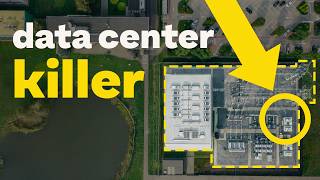
Stratos is the visceral version of this pattern. Rather than queue for utility power, the developers plan to tap the Ruby Pipeline, an interstate natural gas line crossing northern Utah, and burn fuel on-site to produce up to 9 GW of electricity [8]. Utah Clean Energy estimates the campus would consume roughly 448 billion cubic feet of natural gas per year — about 1.5x the entire state's current natural gas consumption [9]. The architecture is no longer 'data center hooked to grid.' It is 'pipeline → on-site turbines → racks,' with the public grid relegated to backup.

The second-order effect is structural: AI labs are becoming energy companies whether or not they wanted to. Anthropic's >300 MW commitment at SpaceX's Colossus 1 in Memphis [3]is the same playbook at lab scale. Investor-side discussions are already pricing in the 'time-to-power' premium — modular onsite generation can ship in six months while utility interconnects routinely take two to three years — and naming gas-turbine and fuel-cell incumbents (Caterpillar, Cummins, Generac, Bloom Energy) as the pick-and-shovel beneficiaries.

By the Numbers: What 9 Gigawatts Actually Means

Abstract gigawatt figures get easier when anchored to something physical. Nine gigawatts is roughly New York City's average electricity demand [8]. Stratos alone would 'nearly double the entire state of Utah's electricity 2025 peak demand' [9]. The campus would sit on ~40,000 acres in Box Elder County [10], with projected total cost north of $100 billion [11].

The macro picture is consistent with the local one. U.S. data-center grid demand is forecast at 75.8 GW in 2026 and 134.4 GW by 2030 [7]. Morgan Stanley projects U.S. data-center demand could reach 74 GW by 2028 against a 49 GW shortfall in available power access, with high-power transformer lead times now at five years [12]. AI data centers are projected to consume 9-17% of U.S. electricity by 2030, up from 4-5% today [12]. The natural gas power plant market has already absorbed a 66% cost surge driven by data-center demand [13].

The environmental side of the ledger is equally jarring. Utah Clean Energy estimates Stratos could emit up to 30.2 million tons of CO2 per year and consume up to 16.6 billion gallons of water annually [9]— figures that have become the rallying point for the project's opposition.

The Political Backlash: Tax Giveaways Meet the Great Salt Lake

Stratos is also the first AI buildout to crash into mature local politics. Box Elder County commissioners approved the project area unanimously on May 4 [14], but a referendum challenge was filed within days [15], and hundreds of residents rallied at the State Capitol on May 14 urging Governor Spencer Cox to halt the project [16]. Cox has tried to thread the needle, conditioning support on transparency: 'All water use must be reported publicly, and in no event will the developer reduce water going to the Great Salt Lake' [14].

Reddit's r/technology threads, which dominated community discussion of the approval, focused less on AI capability than on the financial structure: Military Installation Development Authority designations effectively cut the energy-use tax from 6% to 0.5% and grant an 80% property-tax rebate, framings that have turned the project into a tax-policy story as much as an infrastructure one. Community sentiment skewed sharply hostile on local-impact threads — air quality in the Salt Lake Valley, arsenic exposure if Great Salt Lake levels fall, and the use of imported construction labor were the dominant complaints. Investor-leaning communities took the opposite read, treating modular on-site generation as the long-overdue answer to a structural grid problem.

The political risk is real because Stratos is the template. If a 9 GW project can be slowed by referendum in a permissive red state, the playbook for the next ten projects looks very different. Commissioner Tyler Vincent's hedge — 'This project looks exciting... but we want to make sure this project is done in the right way' [14]— is likely to become the standard local response.

What Everyone's Missing: The Grid Hardware Is Already Sold Out

The narrative around the energy bottleneck still tends to discuss it as a future problem. It isn't. Anthropic is already throttling Claude during peak hours; OpenAI reportedly scrapped a Sora variant for compute reasons. Token consumption industry-wide reportedly jumped from 6 billion to 15 billion tokens per minute in five months, Blackwell spot prices rose 48% in two months, and CoreWeave is pushing 20%+ price hikes with three-year lock-ins. One CEO of a smaller cloud bluntly said power available through 2026 is 'already all spoken for.'

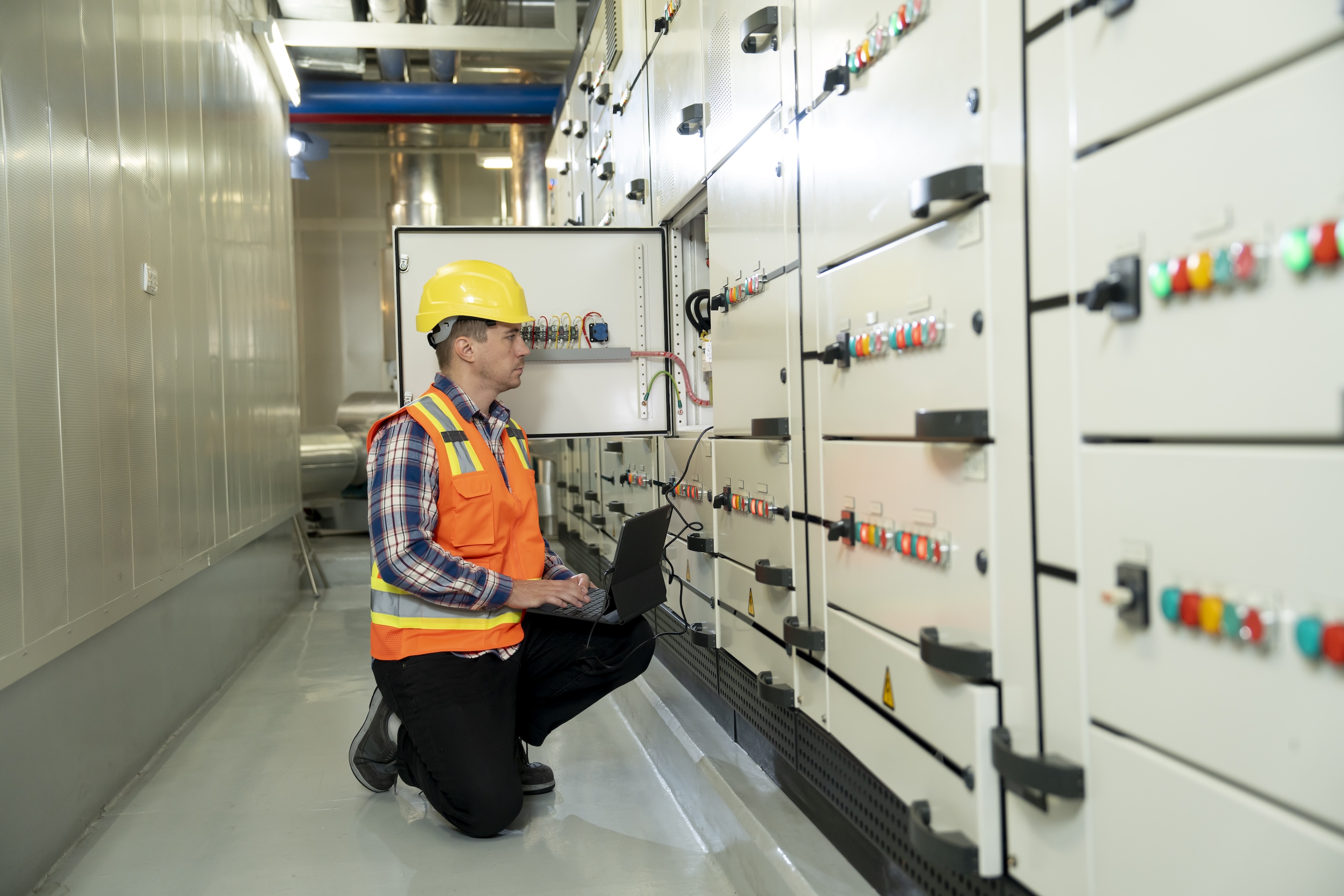
The deeper constraint is hardware lead time, not generation. Morgan Stanley pegs high-power transformer lead times at five years [12]. Electrical steel — the magnetic core material in transformers — is largely manufactured overseas. Independent grid analysts on developer YouTube and X have started openly describing the U.S. grid as 'sold out': in Texas, less than 1 GW of new interconnect has been approved in the past twelve months against tens of gigawatts of monthly requests. Mark Zuckerberg has stated plainly that 'energy is the biggest bottleneck for scaling AI,' a framing that has become the dominant explainer in the developer-content ecosystem alongside Amodei's 'country of geniuses' thesis.

If utilities cannot deliver new megawatts on a five-year horizon and AI demand is doubling on a sub-annual horizon, the math forces self-generation. Stratos is not a vanity project; it is the inevitable response to a queue that no longer functions. The contrarian read — that the AI build is overpriced and would survive a compute pullback — depends on the bottleneck being elastic. The evidence is that it is not.

Historical Context

2024-10-11
Publishes 'Machines of Loving Grace,' explicitly naming energy per bit erased as a physical-law constraint on AI compute density.
2026-01-09
Strikes multi-gigawatt nuclear deals to power AI data centers through 2035.
2026-04-13
Oracle agrees to buy up to 2.8 GW of fuel-cell power from Bloom Energy to feed its AI data center fleet.
2026-05-04
Unanimously approves the Stratos Project Area covering ~40,000 acres in northern Utah.
2026-05-06
Dario Amodei discloses 80x Q1 revenue growth and signs for more than 300 MW of capacity at SpaceX's Colossus 1 site in Memphis.
2026-05-13
Goldman flags AI agent rollouts hitting an energy bottleneck; Ford's Jim Farley calls it a crisis compounded by a skilled-trade labor shortage.
2026-05-14
Hundreds rally at the State Capitol urging Governor Cox to block Stratos, citing water, emissions, and Great Salt Lake risk.

Power Map

Key Players
Subject

AI Energy Bottleneck and Hyperscale Data Center Buildout

O'

O'Leary Digital / Kevin O'Leary

Lead developer raising capital for the $100B+ Stratos campus and serving as public-facing promoter; controls the project's political narrative and pacing.

AN

Anthropic

Frontier AI lab whose 80x Q1 2026 growth is one of the loudest demand signals driving the energy crunch; already locking up multi-hundred-megawatt slices of bespoke capacity.

ME

Meta, Microsoft, Google, Amazon, Oracle

Hyperscalers committing hundreds of billions in 2026 capex and signing direct nuclear, natural gas, and fuel-cell power deals that bypass traditional utility procurement.

UT

Utah Military Installation Development Authority (MIDA) & Box Elder County Commission

State and local authorities that designated the 40,000-acre parcel and approved the project area, granting the tax and regulatory framework that makes Stratos viable.

UT

Utah Clean Energy and local residents

Organized opposition driving referendum challenges and public protests over emissions, Great Salt Lake water draw, and air-quality impacts — the political risk vector for the project.

RU

Ruby Pipeline operator

Owner of the 680-mile interstate natural gas line that Stratos plans to tap for on-site generation; effectively the project's energy backbone.

Fact Check

16 cited
  1. [1] Machines of Loving Grace
  2. [2] Goldman Sachs warns AI agent rollouts will hit energy bottleneck and labor shortage
  3. [3] Anthropic CEO Dario Amodei says company grew 80-fold in first quarter
  4. [4] AI and the Power Grid: Where the Rubber Meets the Road
  5. [5] Meta Signs Multi-Gigawatt Nuclear Deals to Power AI Data Centers
  6. [6] Oracle Agrees to Buy Power From Bloom for AI Data Centers
  7. [7] Hyperscalers in 2026: What's Next for the World's Largest Data Center Operators
  8. [8] Utah mega data center could dump 23 atomic-bombs-worth of energy per day
  9. [9] Estimated Emissions and Water Consumption from the Proposed Stratos Data Center
  10. [10] Gensler unveils designs for Stratos hyperscale data center in Utah
  11. [11] Kevin O'Leary plans $100 billion AI data center in rural Utah
  12. [12] Powering AI: Energy Market Outlook 2026
  13. [13] Data center demand drives 66% surge in natural gas power plant costs
  14. [14] Everything we know about the Stratos data center coming to Utah
  15. [15] Stratos 9GW AI data center faces referendum challenge in Box Elder County
  16. [16] Photos: Utahns urge Gov. Cox to stop Box Elder data center

Source Articles

Top 1

THE SIGNAL.

Analysts

"Argues a hard physical floor exists for AI compute: 'Computation requires a certain minimum energy per bit erased, limiting the density of computation in the world.'"

Dario Amodei
CEO, Anthropic

"Warns that 'the infrastructure foundation on which AI has been constructed will not sustain the AI of tomorrow,' framing the bottleneck as a near-term blocker for agent rollouts."

Goldman Sachs Research
Institutional research note

"Cautions that 'even if the data centers get built, there's still a huge question mark about how the energy sector will support them,' linking the bottleneck to skilled-trade labor shortages."

Jim Farley
CEO, Ford Motor Company

"Conditions state support on environmental safeguards: 'All water use must be reported publicly, and in no event will the developer reduce water going to the Great Salt Lake.'"

Spencer Cox
Governor, State of Utah

"Identifies 'an inflection moment for US grids: the desire to accommodate AI-driven load without undermining reliability or driving up power costs.'"

BloombergNEF
Energy research division, Bloomberg
The Crowd

"Kevin O'Leary just got Utah to approve a 9 gigawatt data center. The entire state of Utah currently uses 4 gigawatts. The campus is called Stratos. It will run entirely off-grid. 41,200 acres in Box Elder County. Phase 1 is 3 GW. Full buildout reaches 9 GW, more than twice what [the state currently uses]"

@@aakashgupta0

"Mark Zuckerberg: "Energy is the biggest bottleneck for scaling AI." $META yesterday announced a deal to buy 6.6 GW of power from independent power producers by 2035. Zuck knows power will be scarce, so he is paying up to secure what he needs. The real AI trade now is energy."

@@thexcapitalist0

"In the AI boom, power is the bottleneck. In TX alone, tens of gigawatts of load requests apply for connection every month. And barely 1 GW has been approved in the past 12 months. THE GRID IS SOLD OUT But that won't stop datacenter developers.(1/4)"

@@SemiAnalysis_0

"New AI data center in Utah will generate and consume more than twice the amount of power the entire state uses — Kevin O'Leary's 9 Gigawatt Utah data center campus approved"

@u/lkl3421648
Broadcast
Dario Amodei — “We are near the end of the exponential”

Dario Amodei — “We are near the end of the exponential”

Energy, not compute, will be the #1 bottleneck to AI progress – Mark Zuckerberg

Energy, not compute, will be the #1 bottleneck to AI progress – Mark Zuckerberg

The Fatal Flaw in America's AI Infrastructure

The Fatal Flaw in America's AI Infrastructure