Anthropic in talks to lease Microsoft Maia 200 AI chips
TECH

Anthropic in talks to lease Microsoft Maia 200 AI chips

40+
Signals

Strategic Overview

  • 01.
    Anthropic is in early-stage talks with Microsoft to rent Azure servers powered by Microsoft's custom Maia 200 AI chips for inference workloads, with no formal agreement reached yet.
  • 02.
    If signed, Anthropic would run Claude across a four-way silicon stack — AWS Trainium, Google TPUs, Nvidia GPUs, and now Microsoft Maia 200 — making it the most chip-diversified frontier model maker in the industry.
  • 03.
    Microsoft unveiled Maia 200 on January 26, 2026 as a TSMC 3nm inference accelerator with 216GB HBM3e, marketed as roughly 30% better tokens-per-dollar than other silicon in its Azure fleet.
  • 04.
    The talks come after a November 2025 three-way alliance in which Microsoft invested $5B in Anthropic, Anthropic committed $30B to Azure, and Nvidia committed up to $10B in Anthropic — pushing Anthropic's valuation toward ~$350B.
  • 05.
    Anthropic's Q1 2026 demand grew at an 80x annualized pace versus a planned 10x, making any incremental inference capacity — even on unfamiliar silicon — strategically valuable.

Deep Analysis

The four-silicon strategy: Anthropic engineers its way out of vendor capture

The four-silicon strategy: Anthropic engineers its way out of vendor capture
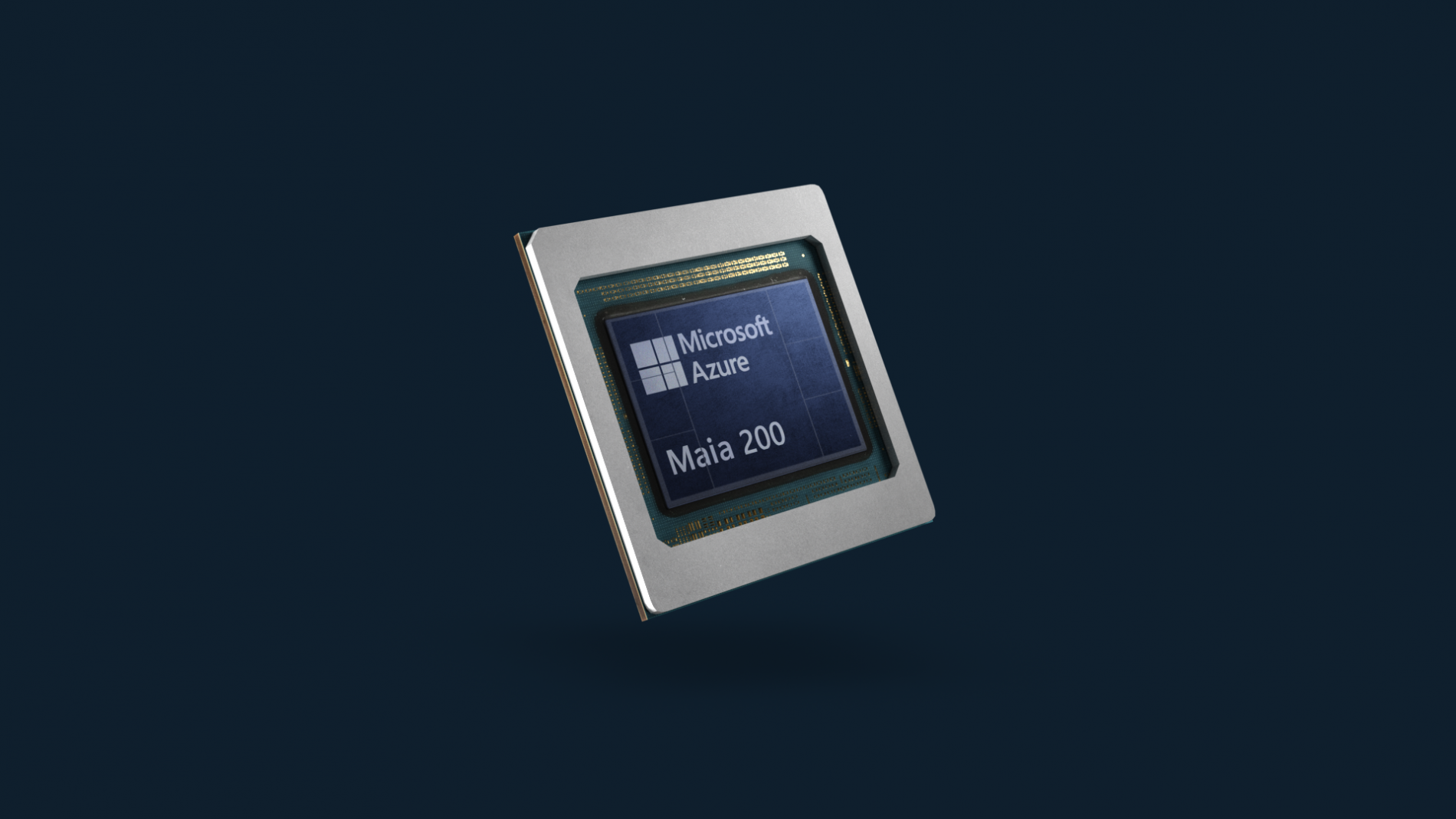
Microsoft Maia 200, TSMC 3nm, 216GB HBM3e — the fourth silicon family Anthropic would run Claude on.

If the Maia 200 deal closes, Anthropic will become the only frontier model maker simultaneously running production workloads on four distinct accelerator families — AWS Trainium, Google TPUs, Nvidia GPUs, and Microsoft Maia 200 [1]. That is not an accident of procurement; it is an explicit strategy that Anthropic CFO Krishna Rao laid out in April when Anthropic expanded its Google and Broadcom partnership: "We train and run Claude on a range of AI hardware — AWS Trainium, Google TPUs, and NVIDIA GPUs — which means we can match workloads to the chips best suited for them." [1]

The engineering tax to make this work is enormous. Forrester's Naveen Chhabra describes the porting problem bluntly: "You can think of Nvidia's CUDA library and Microsoft's Maia SDK as two not necessarily compatible rail lines, and if you have to replace one freight coach with the other, you need to ensure the bogies, aka apps, are compatible." [2]Anthropic has already paid that tax three times — its inference runtime works on Trainium's Neuron SDK, on TPU's XLA stack, and on CUDA. Adding a fourth backend is incremental cost, and the payoff is structural: no single chip vendor can squeeze Anthropic's gross margins, and no single cloud outage can take Claude offline.

The quiet implication is that diversification is now the frontier-lab default, not the exception. Anthropic's $100B+ Trainium arrangement [3], $200B Google Cloud commitment [1], $30B Azure pledge [4], and Nvidia's $10B equity stake [4]can only be reconciled if Claude inference runs anywhere — and that requires every major silicon backend to be a first-class citizen in Anthropic's stack.

The load-bearing number is 30%, not 3x

The load-bearing number is 30%, not 3x
Maia 200 inference rack — Microsoft positions the chip on tokens-per-dollar, not peak throughput.

Microsoft has marketed Maia 200 on two distinct claims: a peak-throughput framing positioning the chip ahead of Google's TPU and AWS Trainium, and a tokens-per-dollar framing pegging the chip at more than 30% better than other silicon in Microsoft's fleet [5]. The first number got the headlines; the second is the one that actually matters for an Anthropic deal.

The peak-throughput framing collapses under scrutiny. Maia 200 delivers more than 5 PFLOPS FP8 at 750W [6], which is competitive with — not a multiple of — Google's seventh-generation TPU on equivalent precision; the multiplier appears to be measured specifically against AWS Trainium 3. Investor-side community discussions were quick to flag the discrepancy, and the skepticism is technically correct. What is not in dispute is the per-dollar claim. Microsoft EVP Scott Guthrie has said publicly that "Maia is 30 percent cheaper than any other AI silicon on the market today." [6]

That 30% figure is the entire commercial case for Anthropic. With Q1 demand growing at an 80x annualized pace versus a planned 10x [7], Anthropic's gross margin per inference token is the single most-stressed line in its model. A 30% improvement in tokens-per-dollar on inference — exactly the high-volume Copilot-class serving Omdia analyst Mike Leone names as the workload Maia 200 will not stop competing with Nvidia for inside Microsoft [2]— is the difference between Claude scaling profitably and Claude scaling Anthropic into a cash crunch. The peak-FLOPS marketing is noise; the per-token economics is the deal.

Why Microsoft needs Anthropic more than Anthropic needs Maia

Why Microsoft needs Anthropic more than Anthropic needs Maia
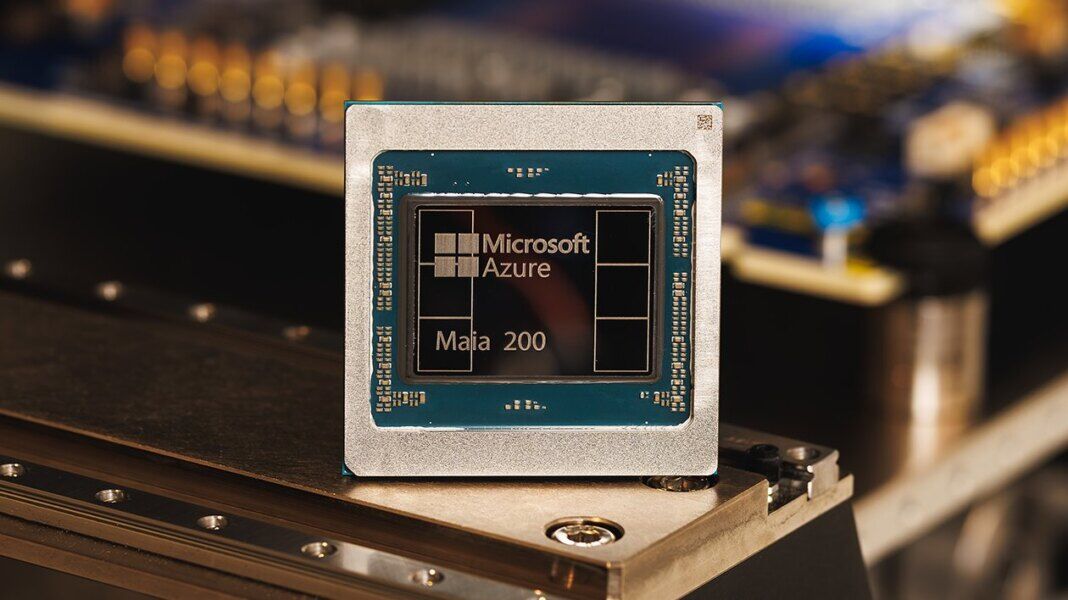
Maia 200 silicon: 140B+ transistors on TSMC 3nm, 836 mm² die, currently deployed only in Azure Arizona and Iowa.

On the surface, this looks like Microsoft doing Anthropic a favor — extending Azure capacity to a frontier lab that is bursting at the seams. Look more closely and the leverage runs the other way. Microsoft has shipped Maia 200 silicon into Arizona and Iowa data centers [6]and is using it internally to serve OpenAI's GPT-5.2 models [8]. But OpenAI is a captive workload Microsoft already owns; Maia 200's strategic value depends on whether it can attract a frontier-grade external customer.

HyperFrame Research's Steven Dickens reads the chip exactly this way: "I see Maia as a response to Google TPUs and it makes perfect sense. A cheaper option in Azure also makes sense for inference workloads." [2]Google's TPU is the proof point Microsoft is chasing — TPU is credible because Anthropic, Apple, and others run real production traffic on it. Until Maia hosts a comparable third-party customer, it is a captive accelerator and Wall Street will price it as such.

Microsoft's strategic incentive is reinforced by what Omdia's Mike Leone calls the internal-workload arbitrage: "If they shift their massive internal workloads like Copilot onto Maia, they'll effectively stop competing with their own customers for access to Nvidia GPUs." [2]Landing Anthropic externalizes that flywheel. It converts Maia 200 from an Azure-internal cost-saver into a third-party revenue line, validates the chip with the kind of customer Wall Street will price as a proof point, and gives Microsoft the missing item it needs to claim parity with AWS Trainium and Google TPU on external custom-silicon adoption.

The Nvidia paradox: investing $10B in a customer that may switch silicon

The Nvidia paradox: investing $10B in a customer that may switch silicon
Maia 200 cluster — up to 6,144 accelerators delivering ~61 exaFLOPS and 1.3 PB of HBM3e.

Nvidia is the most economically interesting bystander in this story. In November 2025, Nvidia committed up to $10B to Anthropic as part of the same alliance that produced Microsoft's $5B investment and Anthropic's $30B Azure pledge [4]. The structure of that deal — equity in exchange for explicit Claude optimization on Grace Blackwell and Vera Rubin [4]— was designed to keep Anthropic anchored to CUDA at the architectural level.

Six months later, Anthropic is openly evaluating a chip whose entire commercial pitch is that it bypasses Nvidia on inference economics. The custom-silicon shipment forecast tells the broader story: analysts project custom AI chip shipments to grow 44% in 2026 versus 16% for general-purpose GPUs [5], and Nvidia's 94% market share is the number every hyperscaler is trying to compress [2].

Omdia's Leone names the second-order effect explicitly: "If they shift their massive internal workloads like Copilot onto Maia, they'll effectively stop competing with their own customers for access to Nvidia GPUs." [2]The hyperscaler custom-silicon flywheel works in both directions — it lowers the hyperscaler's COGS and it slowly removes the largest single buyer from Nvidia's order book. Nvidia's $10B stake in Anthropic was an attempt to slow that flywheel through equity alignment. The Maia 200 talks suggest the alignment did not hold. The structural pressure of 30% better tokens-per-dollar, in a market where Anthropic is rationing inference capacity against 80x demand growth, will beat almost any equity-driven loyalty.

What ships first: the realistic Maia 200 deployment shape

What ships first: the realistic Maia 200 deployment shape
Maia 200 is positioned as Microsoft's inference-first accelerator — the realistic Claude workload fit is high-throughput, short-form serving.

If a deal lands, what actually moves to Maia 200? The research points to a narrow, specific answer rather than a wholesale migration. Microsoft's own positioning is explicit: the official launch post frames Maia 200 as "the AI accelerator built for inference" [6], and Omdia's Mike Leone reads the chip as forcing IT leaders to choose between Maia's Azure-only economics and Nvidia's cross-cloud flexibility: "You can commit to Maia for far better economics on Azure. Or you can stick with Nvidia for flexibility across clouds." [2]

The practical translation is that Claude's high-volume, low-token-per-request workloads — autocomplete-style API calls, classification, lightweight tool routing, short-form chat — are the realistic first migration. Long-context coding sessions, extended reasoning traces, and training would stay on Trainium, TPU, and Nvidia. That structure also explains why Anthropic can entertain Maia 200 without disturbing its $100B AWS Trainium commitment [3]or its $200B Google Cloud arrangement [1]— the workloads are sliced by characteristic, not by total volume.

The CUDA migration cost still bounds how fast this can happen. Chhabra's rail-line analogy [2]is the realistic timeline anchor: Anthropic engineers will need to port and re-validate inference kernels on Maia's SDK, requalify quality, and instrument cost dashboards before any meaningful traffic shifts. The talks are early-stage [9], and even an aggressive timeline puts material Maia 200 production traffic from Claude into late 2026 or 2027 — the same window in which Google's multi-gigawatt TPU expansion comes online [1]. The deal that matters most is not whether Anthropic adds Maia, but the relative ramp speed against TPU v7 and Vera Rubin.

Historical Context

2023-11-15
Microsoft announces Azure Maia 100, its first in-house AI accelerator on TSMC N5 with 64GB HBM2E, used internally for Copilot but never offered to external cloud customers.
2025-11-18
Three-way alliance announced: Microsoft invests $5B in Anthropic, Anthropic commits $30B to Azure, and Nvidia commits up to $10B in Anthropic with Grace Blackwell and Vera Rubin optimization; valuation reaches ~$350B.
2026-01-26
Microsoft unveils Maia 200 (TSMC 3nm, 140B+ transistors, 216GB HBM3e, 10 PFLOPs FP4, 750W TDP) and immediately deploys it in Arizona and Iowa Azure regions to run OpenAI's GPT-5.2 models internally.
2026-04-06
Anthropic expands its Google and Broadcom partnership, adding multiple gigawatts of TPU capacity coming online in 2027 on top of an existing $200B Google Cloud commitment.
2026-05-21
The Information reports Anthropic is in early talks to rent Azure-hosted Maia 200 capacity; Bloomberg, CNBC and others corroborate within hours.

Power Map

Key Players
Subject

Anthropic in talks to lease Microsoft Maia 200 AI chips

AN

Anthropic

Prospective customer that would gain a fourth silicon stream alongside AWS Trainium, Google TPUs, and Nvidia GPUs, reducing single-vendor exposure while satisfying its $30B Azure commitment.

MI

Microsoft

Chip supplier and cloud landlord; landing Anthropic would validate Maia 200 with a frontier model customer outside its captive OpenAI workload and narrow the gap with AWS Trainium and Google TPU.

NV

Nvidia

Incumbent at 94% AI GPU share whose pricing leverage erodes if hyperscalers redirect inference to custom silicon; Nvidia committed up to $10B in Anthropic partly to keep Claude optimized for Grace Blackwell and Vera Rubin.

AM

Amazon Web Services

Anthropic's primary cloud and training partner, backstopping a $100B+ 10-year Trainium arrangement that incremental Maia adoption would partially erode on the inference side.

GO

Google Cloud and Broadcom

Anthropic counterparty on a $200B multi-gigawatt TPU agreement starting 2027, competing directly with Maia 200 for the same inference workloads.

TS

TSMC and SK hynix

Maia 200's 3nm wafer supplier and reportedly sole HBM3e supplier; an Anthropic ramp tightens leading-edge wafer and HBM allocation across the rest of the industry.

Fact Check

9 cited
  1. [1] Expanding our use of Google Cloud and Broadcom for compute
  2. [2] Microsoft Maia 200 AI chip could boost cloud GPU supply
  3. [3] Anthropic in Talks with Microsoft Over Maia 200 AI Chips
  4. [4] Microsoft to invest $5B in Anthropic as Claude maker commits $30B to Azure in new Nvidia alliance
  5. [5] Microsoft (MSFT) Seeks to Expand Azure AI Edge Through Anthropic Maia Chip Deal
  6. [6] Microsoft Azure Maia 200: The AI Accelerator Built for Inference
  7. [7] Anthropic Eyes Microsoft Maia Chips Amid Compute Crunch
  8. [8] Anthropic and Microsoft Maia 200 AI Chips
  9. [9] Anthropic in Talks to Use Microsoft AI Chips, Information Says

Source Articles

Top 5

THE SIGNAL.

Analysts

"You can think of Nvidia's CUDA library and Microsoft's Maia SDK as two not necessarily compatible rail lines, and if you have to replace one freight coach with the other, you need to ensure the bogies, aka apps, are compatible."

Naveen Chhabra
Analyst, Forrester Research

"Long-term, I think it kind of forces IT leaders to make a choice between portability and price. You can commit to Maia for far better economics on Azure. Or you can stick with Nvidia for flexibility across clouds."

Mike Leone
Analyst, Omdia

"If they shift their massive internal workloads like Copilot onto Maia, they'll effectively stop competing with their own customers for access to Nvidia GPUs."

Mike Leone
Analyst, Omdia

"I see Maia as a response to Google TPUs and it makes perfect sense. A cheaper option in Azure also makes sense for inference workloads."

Steven Dickens
Analyst, HyperFrame Research

"Maia is 30 percent cheaper than any other AI silicon on the market today."

Scott Guthrie
EVP Cloud + AI, Microsoft

"We train and run Claude on a range of AI hardware — AWS Trainium, Google TPUs, and NVIDIA GPUs — which means we can match workloads to the chips best suited for them."

Krishna Rao
CFO, Anthropic
The Crowd

"ANTHROPIC EYES MICROSOFT CHIPS Anthropic is in early talks to rent Azure servers powered by $MSFT's Maia AI chips, per The Information. This would deepen a relationship that is already moving fast: Microsoft has pledged up to $5B to Anthropic, Anthropic committed $30B of Azure"

@@wallstengine295

"The Information: Anthropic Reportedly in Talks to Use Microsoft AI Chips : Discussions underway to lease servers based on Microsoft's in-house designed AI chip 'Maia' to address rising AI demand : Talks remain at an early stage and may not result in an actual agreement : MS"

@@jukan05218

"Microsoft says its newest AI chip Maia 200 is 3 times more powerful than Google's TPU and Amazon's Trainium processor"

@u/DaddyVaradkar542

"Microsoft Cancels Internal Anthropic Licenses As Shift To Token-Based AI Billing Blows Up Annual Budgets In Months"

@u/chunmunsingh609
Broadcast
Microsoft In Early Talks To Supply Maia 200 Chips To Anthropic; Open AI Ready To Go Public

Microsoft In Early Talks To Supply Maia 200 Chips To Anthropic; Open AI Ready To Go Public

Microsoft New AI Chip Maia 200 - NVIDIA is dead

Microsoft New AI Chip Maia 200 - NVIDIA is dead

AI Star Facing Computing Power Crisis! Reports Say Anthropic Plans to Lease Microsoft's Custom Maia Chips

AI Star Facing Computing Power Crisis! Reports Say Anthropic Plans to Lease Microsoft's Custom Maia Chips