Why This Matters
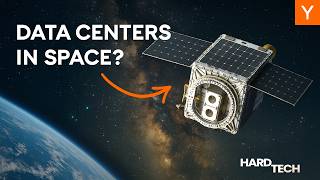
The AI industry faces a hard physical constraint: energy. According to The Next Web, there are currently 25 gigawatts of data center capacity under construction on Earth, but demand is outstripping supply as frontier models grow more compute-hungry. Starcloud's thesis is that space offers a way around this bottleneck entirely — unlimited solar energy, free vacuum cooling, and no competition with residential grids or water systems. The $170 million Series A at a $1.1 billion valuation signals that major institutional investors (Benchmark, EQT Ventures, a16z, and In-Q-Tel) find this thesis credible enough to back at scale.
However, it is important to note a limitation in the available expert commentary: all on-the-record technical and strategic views surfaced by this research come exclusively from Starcloud's own CEO, Philip Johnston. No independent industry analysts, aerospace engineers, or competing data center operators provided assessments in the sourced reporting. This means the bullish projections — such as Johnston's claim that 'in 10 years, nearly all new data centers will be being built in outer space' — should be understood as the founder's vision rather than a consensus view.