How background computer use actually works — and what Codex refuses to touch
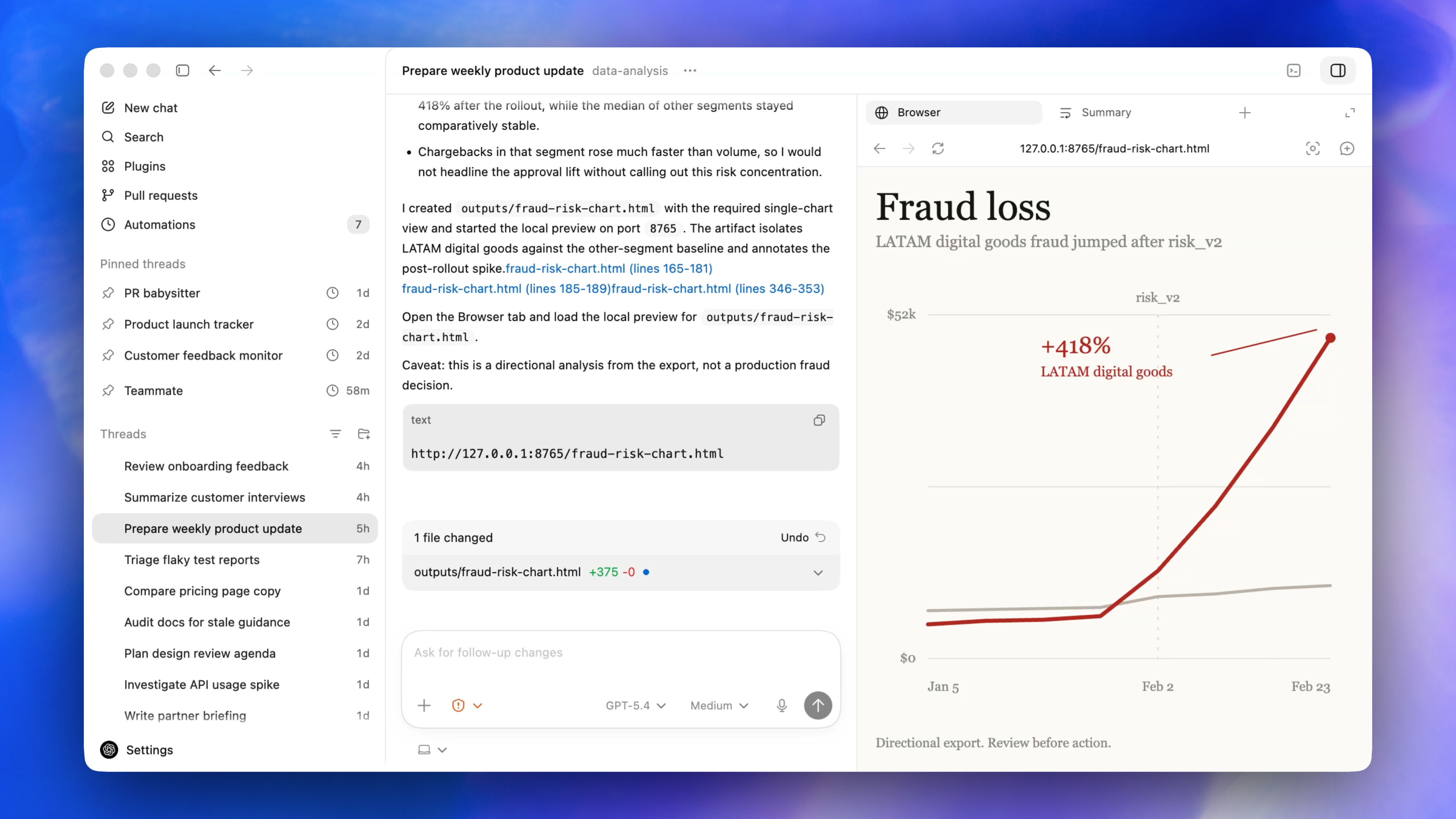
The flagship change is subtle but architecturally important: Codex now runs a second, virtual cursor on your Mac. Under the hood, the agent captures the screen, reasons over pixels and accessibility data, then issues mouse and keyboard events through macOS's Accessibility and Screen Recording APIs. Multiple Codex agents can run in parallel while you keep typing in other apps — the system is explicitly designed so 'multiple agents can work in parallel, without interfering with your own work in other apps,' per OpenAI's own documentation.
The caveats matter as much as the capability. Computer use is macOS-only at launch and gated out of the EU, UK, and Switzerland. It refuses to drive terminal apps, Codex itself, or any admin/security prompt — a deliberate choice to prevent the agent from sandbox-escaping or recursively controlling its own parent process. That scoping is also why OpenAI's in-app Atlas browser is currently restricted to localhost frontend and game-development work: the company is keeping the blast radius small while the behavior matures.