Bridging the Hallucination Gap: Why Two Flawed Tools Are Better Than One
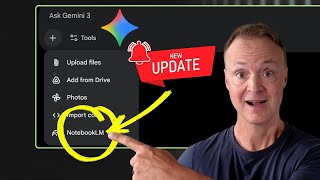
The core design insight behind Notebooks is that Gemini and NotebookLM have complementary weaknesses. Gemini is a generalist conversational AI — fast, flexible, and capable of synthesizing information on the fly, but prone to hallucination when it ventures beyond its training data. NotebookLM, by contrast, is ruthlessly grounded: it only reasons over documents the user has explicitly uploaded, which means it cannot hallucinate but also cannot explore beyond its source material. By connecting the two through bidirectional sync, Google creates a workflow where Gemini handles the expansive, creative phase of research while NotebookLM anchors the results in verified sources.
This is what Parth Shah at Android Police described when he called Gemini his 'fast research assistant who not only drafts that initial summary but also hands me the verified footnotes.' The architecture matters: when a user adds a source in Gemini, it instantly appears in NotebookLM, where the grounded model can generate citations, Audio Overviews, and Infographics strictly from that source material. Conversely, a notebook started in NotebookLM can be continued in Gemini with full conversational AI capabilities. The bidirectional sync is not merely a convenience feature — it is a structural answer to the hallucination problem that plagues every major AI assistant. Rather than trying to make one model both creative and perfectly grounded, Google split the problem across two specialized products and connected them with a shared memory layer.