Musk vs OpenAI trial
TECH

Musk vs OpenAI trial

42+
Signals

Strategic Overview

  • 01.
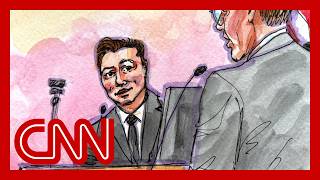
    Elon Musk testified for three days (April 28-30, 2026) in his civil lawsuit against OpenAI, Sam Altman, and Greg Brockman in U.S. District Court for the Northern District of California in Oakland, before Judge Yvonne Gonzalez Rogers.
  • 02.
    Musk repeatedly testified that the defendants 'stole a charity' by converting OpenAI from a nonprofit to a for-profit structure.
  • 03.
    Two days before trial, Musk texted Greg Brockman seeking settlement; when Brockman countered with a mutual claim-drop, Musk replied with a coercive threat that OpenAI is now moving to enter into evidence.
  • 04.
    OpenAI's lawyers argue the text proves Musk's lawsuit is motivated by competitive animus, not breach of charitable trust.
  • 05.
    Of the 26 original claims in the 2024 complaint, only two remain at trial: breach of charitable trust and unjust enrichment. Judge Gonzalez Rogers split the trial into a liability phase and a remedies phase, with the jury's verdict being advisory.
  • 06.
    Musk admitted under cross-examination that his AI company xAI 'partly' distills OpenAI's models to train Grok.
  • 07.
    Musk seeks approximately $130 billion in damages directed to OpenAI's charitable arm, reversion to nonprofit structure, and removal of Altman and Brockman from the board.
  • 08.
    Musk testified he donated roughly $38 million to OpenAI which he says was used for unauthorized commercial purposes.

Deep Analysis

The AGI Gambit: Forcing OpenAI to Argue Its Own Tech Is Mediocre

The most underappreciated tactical move in the Oakland courtroom isn't the 'stole a charity' rhetoric — it's a quieter argument Musk's lawyers are advancing about what counts as artificial general intelligence. OpenAI's commercial agreement with Microsoft contains a carve-out: once OpenAI's models reach AGI, Microsoft's exclusive license to GPT models terminates. Musk's team is positioning the existing model lineup as already crossing that threshold, which would force OpenAI's lawyers into the strange posture of publicly downplaying their own technology to preserve the Microsoft relationship.

The second-order effect is what makes this elegant: every minute OpenAI's counsel spends arguing that GPT isn't 'really' AGI becomes free positioning material for Grok. Musk doesn't need to win that legal point to win the marketing battle around it. And it pairs cleanly with the broader trial strategy — paint OpenAI's leadership as having converted a charity for personal enrichment, while simultaneously suggesting the underlying product isn't even what they've been selling investors. It's the courtroom equivalent of a pincer movement, and it explains why OpenAI's team has worked so hard to keep the trial focused narrowly on the two surviving claims rather than letting the AGI definitional fight breathe.
Discovery as the Real Prize: Why the Verdict May Matter Less Than the Documents

A consistent thread across skeptical observers is that the verdict itself is almost a sideshow. Judge Gonzalez Rogers has already designated the jury's role as advisory, with her own remedies determination to follow in a separate phase. That structure means the jury can find for Musk on liability and the practical outcome still hinges on a judge's equitable judgment about whether to break OpenAI apart. Meanwhile, AI-skeptic communities have rallied around a different read: the more lasting consequence is the discovery record — internal communications, financial materials, and the contractual mechanics that have surfaced as exhibits.

That documentary record matters because it doesn't disappear when the trial ends. Sworn testimony about the 2025 PBC conversion, the structure of the Microsoft relationship, and the original nonprofit's intent all become part of a public archive that future regulators, state attorneys general, or shareholder plaintiffs can pull from. Even a Musk loss leaves behind a sworn-testimony fossil record that didn't exist a month ago. That's the asymmetry: OpenAI can win the case and still lose information control over its own restructuring narrative, which is the kind of damage that compounds slowly rather than resolving at verdict.

The Accountability Vacuum: Why Nine Jurors May Be AI's Only Real Check

Eyewitness journalist Jacob Ward, who spent two days inside the Oakland courthouse, advanced the most provocative thesis circulating about this trial: that the nine-person Oakland jury panel may be the single most consequential formal accountability mechanism the AI industry has ever faced. The supporting facts are striking when assembled. Congress has held hearings on AI but passed no binding legislation. The FTC has retreated from earlier postures on AI market concentration. The California Attorney General formally approved OpenAI's nonprofit-to-for-profit conversion rather than blocking it. Against that backdrop of regulatory abstention, a private civil suit between two billionaires has become the venue where the question 'can a charity be converted into an $800 billion private enterprise' gets adjudicated under oath.

Vivian Dong's caveat — that 'no specific AI safety policy or industry practice is on trial, so the implications will be largely confined to OpenAI' — is technically correct as a legal matter but understates the institutional implication. When the only entity capable of forcing executives to testify under oath about their governance choices is a competitor with a personal grudge, the accountability infrastructure of an entire industry is being subsidized by spite. That's not a sustainable equilibrium, and it's why the trial is being watched well outside its formal jurisdiction. Whatever the jury decides, the underlying critique — that AI's largest companies have outpaced every standing oversight body — gets a public stage it wasn't going to get otherwise.

The xAI Distillation Admission and Why It Reframes the 'Stole a Charity' Pitch

The single most damaging moment of week one wasn't a defense argument — it was Musk's own admission. Asked whether xAI distills OpenAI's models to train Grok, Musk answered, simply, 'Partly.' That one word does compound work for OpenAI's defense theory. It supports the narrative that Musk's lawsuit is about competitive positioning rather than charitable trust, which is exactly the framing OpenAI's counsel wants the jury to adopt when they later evaluate the 'most hated men in America' settlement text. The text becomes admissible evidence of motive precisely because the distillation answer establishes that motive is plausible.

The rhetorical asymmetry is unforgiving. Musk's case rests on the moral framing 'you can't just steal a charity' — a phrase he repeated under oath, and which AI-skeptic communities have predicted will 'become caselaw.' But the same plaintiff testifying that defendants enriched themselves at a charity's expense also runs an $800-billion-adjacent competitor that admittedly trains on the alleged victim's models. OpenAI's lawyers don't need to disprove the charitable trust claim on the merits if they can convince the jury that the plaintiff's hands aren't clean enough to be the one bringing it. The historical record cuts the same way — Musk left the board in 2018 after failing to merge OpenAI with Tesla, a fact pattern that supports the theory of a founder who only rediscovered his commitment to nonprofit purity once the for-profit version started winning.

What an OpenAI Loss Would Actually Break in the AI Industry

Most coverage treats the $130 billion damages number and the proposed reversion to nonprofit structure as separate remedies, but they're entangled in ways that matter for the broader market. Musk is asking for damages directed to OpenAI's charitable arm, removal of Altman and Brockman from the board, and a structural unwinding of the October 2025 PBC conversion that left the original nonprofit with 26% and Microsoft with 27% of OpenAI Group PBC. Any of those remedies, granted in isolation, would force the renegotiation of contracts with what Futurism describes as 'most of the industry's biggest players.'

The ripple math is what makes a Musk win operationally explosive. Microsoft's 27% stake and licensing arrangement is structured around the for-profit entity that the lawsuit seeks to dissolve. Removing Altman would trigger leadership-change clauses in commercial contracts, cloud commitments, and likely employment retention plans across the senior research staff. And the IPO path that OpenAI has been signaling toward becomes structurally impossible if the company reverts to nonprofit governance — which is precisely why the AI-skeptic communities watching this trial frame it as a potentially deflationary event for the broader AI bubble. Even partial wins by Musk could force concession negotiations that leak into private valuations across the sector, because OpenAI's pricing is the reference point against which Anthropic, xAI, and the secondary-market valuations of every AI startup are measured. The Oakland courtroom is, by accident, holding a stress test for the whole asset class.

Historical Context

2015-12-11
OpenAI co-founded as a nonprofit AI lab by Musk, Altman, Brockman and others to counter Google's AI dominance.
2018
Musk left OpenAI's board after failing to convince executives to merge it with Tesla; OpenAI later launched its for-profit subsidiary.
2023-01
Microsoft's $10 billion investment in OpenAI, which Musk testified was the tipping point convincing him Altman and Brockman were stealing the charity.
2024-02-29
Musk filed his original 26-claim lawsuit against OpenAI, Altman, and Brockman in California federal court.
2024-11
Musk filed for a preliminary injunction to block OpenAI's nonprofit-to-for-profit conversion, citing $44M in contributions from 2016-2020.
2025-05
Trimmed the lawsuit by eliminating false advertising and fiduciary duty claims while permitting fraud and unjust enrichment claims.
2025-10
OpenAI formally restructured into a for-profit Public Benefit Corporation; the original nonprofit kept 26% and Microsoft received 27%.
2026-04-27
Jury selection seated a nine-person jury in Oakland; opening arguments began the next day.

Power Map

Key Players
Subject

Musk vs OpenAI trial

EL

Elon Musk

Plaintiff and OpenAI co-founder; alleges breach of charitable trust and unjust enrichment; also runs competing AI firm xAI.

SA

Sam Altman

OpenAI CEO and co-defendant; Musk seeks his removal from the board.

GR

Greg Brockman

OpenAI President and co-defendant; recipient of Musk's pre-trial settlement texts; expected to testify in week two.

JU

Judge Yvonne Gonzalez Rogers

U.S. District Judge presiding in Oakland; trimmed the case to two claims, split it into liability and remedies phases, and warned lawyers AI itself is not on trial.

WI

William Savitt

OpenAI's lead trial attorney (formerly represented Musk and Tesla); cross-examined Musk.

MI

Microsoft

OpenAI's largest commercial partner; received a 27% stake in the new for-profit OpenAI Group PBC.

OP

OpenAI Group PBC

For-profit entity formed in October 2025 with the original nonprofit retaining 26% ownership; the restructuring at the heart of the dispute.

XA

xAI / Grok

Musk's competing AI venture; OpenAI's lawyers argue Musk's lawsuit aims to undermine a competitor; Musk admitted xAI 'partly' distills OpenAI models.

Source Articles

Top 5

THE SIGNAL.

Analysts

"No specific AI safety policy or industry practice is on trial, so the implications will be largely confined to OpenAI rather than setting industry-wide AI safety precedents."

Vivian Dong
Attorney and AI safety expert

"Argued Musk was 'never committed to OpenAI being a nonprofit' and is suing to undermine competitor xAI."

William Savitt
OpenAI's lead trial counsel

"OpenAI is shackled to most of the industry's biggest players through multibillion-dollar contracts; if it loses for-profit status and its CEO, ripple effects could span an already shaky industry."

Futurism analysis
Tech publication
The Crowd

"AI bubble could pop within days - if Musk wins the lawsuit (on trial now), OpenAI IPO gets blocked and investors face clawbacks triggering a chain reaction"

@u/Alex__007921

"Here's a rough summary of Elon Musk's 1 hour and 40 minute long testimony today during the OpenAI trial. He will resume his testimony tomorrow."

@u/Spirited-Gold9629389

"Elon Musk just embarrassed himself in court. He admitted there was no written agreement for his early OpenAI donation, while also acknowledging xAI partly used OpenAI models in training."

@u/44th--Hokage0
Broadcast
Elon Musk testifies in OpenAI trial accusing company of abandoning nonprofit mission

Elon Musk testifies in OpenAI trial accusing company of abandoning nonprofit mission

Elon Musk vs. OpenAI: Testy exchanges fill day 2 of trial

Elon Musk vs. OpenAI: Testy exchanges fill day 2 of trial

Musk vs Altman: What I Saw at the Courthouse

Musk vs Altman: What I Saw at the Courthouse