Why This Matters
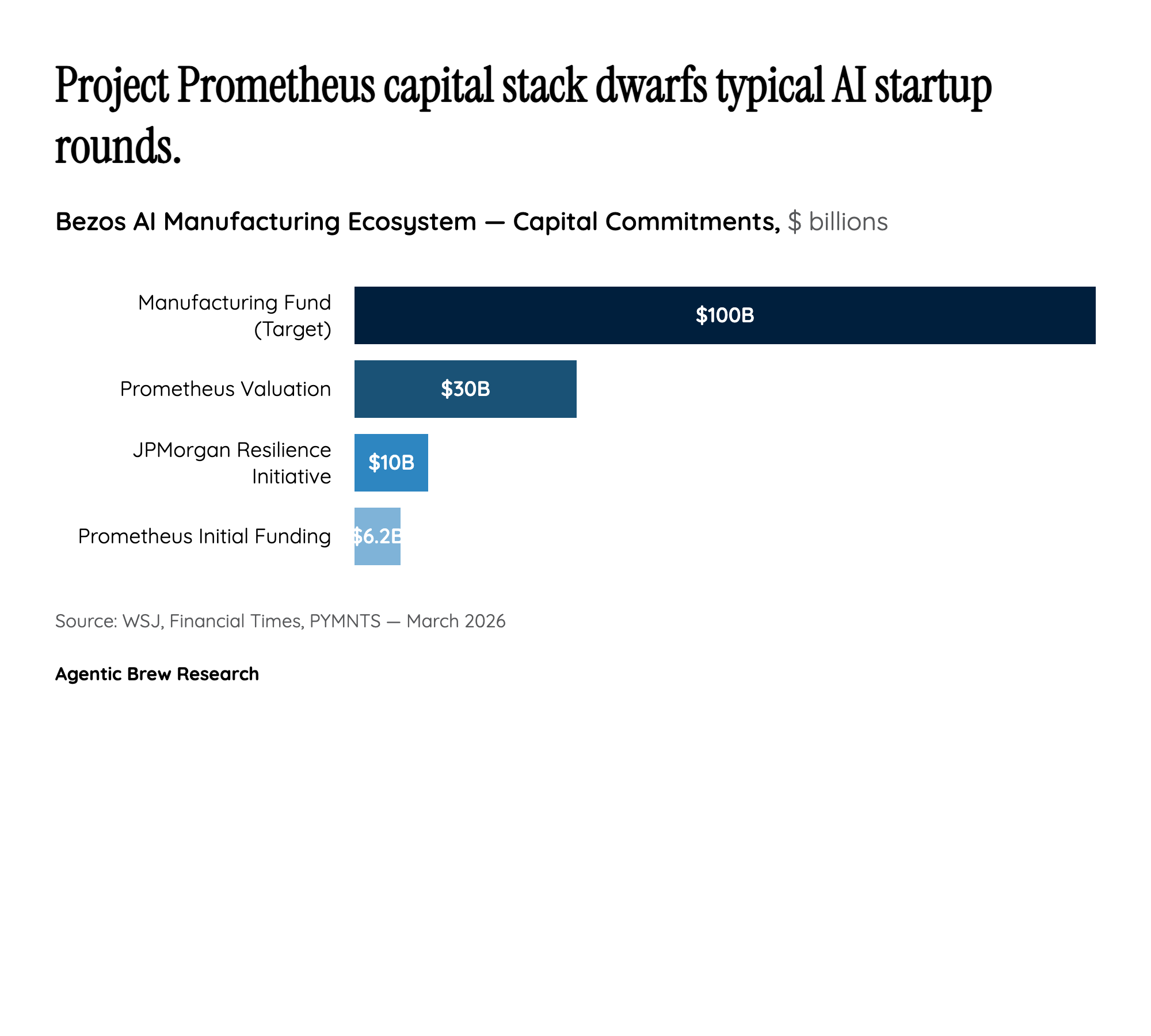
Jeff Bezos's $100 billion manufacturing fund represents a paradigm shift in how artificial intelligence is deployed in the real economy. While the past decade of AI investment has concentrated overwhelmingly on software—chatbots, recommendation engines, content generation—this initiative aims to bring AI into the physical world of factories, assembly lines, and industrial supply chains. The sheer scale of the fund, rivaling SoftBank's Vision Fund, signals a belief that the next wave of AI value creation lies not in digital services but in transforming how physical goods are designed, produced, and delivered.
The strategic significance extends well beyond one billionaire's ambitions. The fund targets sectors—semiconductors, defense, aerospace—that are at the heart of U.S. national security and industrial competitiveness. At a time when the U.S. is actively reshoring manufacturing capacity and reducing dependence on foreign supply chains, a $100 billion AI-driven manufacturing initiative could accelerate that transition dramatically. It also raises fundamental questions about the future of industrial labor, corporate consolidation, and the role of private capital in sectors traditionally shaped by government policy.