Why This Matters
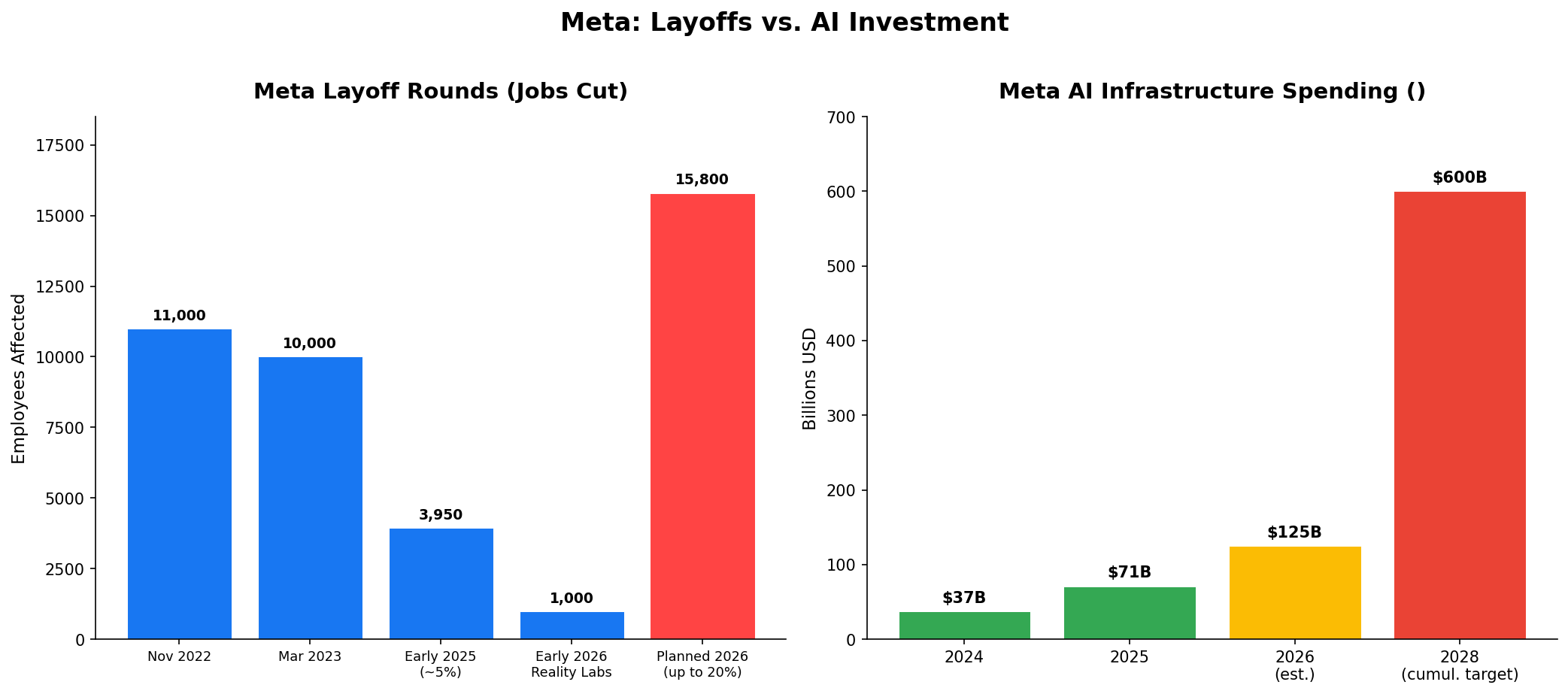
Meta's planned layoffs represent a watershed moment in how Big Tech manages the transition to an AI-first economy. Unlike the 2022-2023 cuts, which were framed as correcting pandemic-era over-hiring, these reductions are explicitly tied to funding AI infrastructure. This marks a shift from performance-based workforce management to strategy-driven restructuring, where headcount is treated as a fungible resource that can be traded for compute capacity.
The significance extends well beyond Meta. With over 35,000 tech layoffs worldwide in 2026, the industry is establishing a new norm: companies with record revenue and profits can still execute massive layoffs if the capital is redirected toward AI. This creates a troubling precedent where workforce stability is decoupled from business performance. For the estimated 15,800 Meta employees at risk, the message is clear: even at a company generating $200+ billion in annual revenue, no role is safe if AI infrastructure is deemed a higher priority.