
Iran IRGC threatens to destroy Stargate AI data center in Abu Dhabi
TECH

Iran IRGC threatens to destroy Stargate AI data center in Abu Dhabi

33+
Signals

Strategic Overview

  • 01.
    On April 3, 2026, Iran's IRGC released a video showing satellite imagery of the $30 billion Stargate AI data center in Abu Dhabi, threatening its 'complete and utter annihilation' if the U.S. attacks Iranian power infrastructure. IRGC spokesperson Brigadier General Ebrahim Zolfaghari delivered the threat, marking the first time the IRGC has designated a specific installation for threatened destruction.
  • 02.
    The threat follows an established pattern of escalation: on March 1, 2026, Iranian Shahed drones struck two AWS data centers in the UAE and damaged a third in Bahrain — the first time a state has deliberately targeted commercial data centers during active military operations. Iran subsequently named 18 U.S. tech companies as legitimate military targets.
  • 03.
    The Stargate UAE project is a 1-gigawatt compute cluster within a 5-gigawatt, 19-square-kilometer AI campus in Abu Dhabi, with approximately 500,000 Nvidia GPUs planned. The first 200-megawatt phase is expected online by end of 2026.
  • 04.
    The broader conflict escalated after the U.S. and Israel launched strikes on Iran on February 28, 2026, killing Iran's supreme leader and top military leaders. President Trump subsequently threatened to strike Iran's power plants and water desalination facilities if Iran does not reopen the Strait of Hormuz, directly triggering the IRGC's counter-threat against Stargate.

Deep Analysis

The $5,000 Drone vs. the $30 Billion Data Center: An Asymmetry That Rewrites the Rules

At the heart of this story is a staggering asymmetry that no amount of investment can easily resolve. A Shahed drone costs roughly $5,000 to produce. The Stargate UAE facility carries a $30 billion price tag. As one Reuters-cited analyst put it: 'Before now, the thought was, if America gets constipated in its ability to build data centres, we'll build them with our allies in the Middle East. But who's going to insure a $20bn facility in the Middle East that can be taken out by a $5,000 drone?' That question is no longer rhetorical — it is the central strategic problem facing the global AI infrastructure buildout.

The vulnerability is not merely theoretical. Sam Winter-Levy of the Carnegie Endowment pointed out that an attacker does not even need to destroy a data center outright: 'If you knock out some of the chillers you can take them fully offline.' Data centers are thermally fragile systems where a disruption to cooling infrastructure can cascade into a full shutdown. The March 2026 AWS strikes proved this in practice, knocking two of three availability zones offline in ME-CENTRAL-1 and disrupting banking, payments, and enterprise software across the Gulf region. The implication is clear: even a partially successful strike can achieve the attacker's objective of taking critical compute capacity offline.
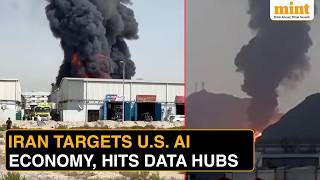

From Hypothetical to Historical: The AWS Strikes Changed Everything

What makes the IRGC's threat against Stargate so credible is that it is not the first move — it is the latest in an escalating campaign that has already crossed the threshold from rhetoric to action. On March 1, 2026, Iranian Shahed drones struck two AWS data centers in the UAE and damaged a third in Bahrain. This was, by all accounts, the first time a state actor deliberately targeted commercial data centers during active military operations. The precedent was set before the Stargate threat was ever issued.

The AWS attacks were not random. Dennis Murphy of Georgia Tech argued that Iran targeted data centers for three overlapping reasons: the assumption that they house dual-use military-civilian workloads, the symbolic and economic value of striking American corporate infrastructure on allied soil, and the simple tactical fact that data centers are large, stationary, and lack dedicated air defenses. The IRGC then escalated further on March 31 by declaring 18 American technology companies — including Microsoft, Google, Apple, Meta, Oracle, Intel, Nvidia, Cisco, and Palantir — as legitimate military targets. The Stargate threat on April 3 was the logical next step: moving from a general category of targets to naming a specific, flagship installation.

Intelligence Signaling: What the Satellite Video Reveals About Iran's Capabilities

The IRGC's propaganda video was not merely a verbal threat — it was a deliberate demonstration of intelligence capability. The video showed a dramatic space shot zooming into Abu Dhabi on Google Maps, then transitioning to a 'night vision' view of the Stargate data center at a location that appears empty on standard mapping services. The accompanying message — 'Nothing stays hidden to our sight, though hidden by Google' — was a pointed signal that Iran has independent surveillance capabilities over the facility, beyond what is available through commercial satellite imagery.

This intelligence signaling serves multiple purposes. It communicates to the United States and the UAE that operational security through map obfuscation is insufficient. It demonstrates to domestic and regional audiences that the IRGC possesses advanced reconnaissance assets. And it establishes targeting credibility — a threat is far more potent when the adversary demonstrates it knows exactly where the target sits. The fact that this was the first time the IRGC singled out a specific installation for threatened destruction, after previously issuing only category-level threats against tech companies, suggests a deliberate escalation in specificity designed to maximize deterrent effect.

The Uninsurable Campus: Gulf AI Strategy at a Crossroads

The Stargate UAE project represents the centerpiece of a broader American strategy to expand AI compute capacity by building in allied nations where energy is abundant and permitting is fast. The Abu Dhabi campus was designed at extraordinary scale: 5 gigawatts of total planned capacity across 19 square kilometers, with over 100,000 cubic meters of concrete poured and steelworks weighing 1.5 times the Eiffel Tower for just the first 200-megawatt phase. The project involves a coalition of the most powerful names in technology — OpenAI, Oracle, SoftBank, Nvidia, G42, and Cisco. Global hyperscaler capital expenditure for 2026 was estimated at $600 billion by TD Cowen, with the Gulf positioned to capture a significant share.

That strategy now faces a fundamental viability question. Insurance is the unglamorous but critical enabler of large-scale infrastructure investment, and no insurer prices risk the same way after a state actor has already demonstrated willingness to strike commercial data centers with drones. Reddit discussions noted that OpenAI's direct exposure may be around $15 billion against a roughly $850 billion valuation, but the systemic risk extends far beyond one company. If the Gulf becomes uninsurable or prohibitively expensive for hyperscale data center construction, the entire geographic diversification strategy for AI compute collapses. Former NSC expert Chris McGuire's suggestion that data centers may need dedicated missile defense systems illustrates how far the security calculus has shifted — from cybersecurity firewalls to Iron Dome-style physical defenses. The facility houses an estimated 500,000 Nvidia GPUs, representing an enormous concentration of scarce AI compute resources. Destruction or even prolonged disruption would ripple through global AI capacity at a moment when demand far exceeds supply.

Data Centers as the New Dual-Use Battleground

The targeting of commercial data centers by a state military force represents a category shift in modern warfare. Zachary Kallenborn of King's College London warned that as data centers become critical hubs for military information transit, they will be increasingly targeted by both cyber and physical attacks. Iran's framing of these facilities as dual-use targets — civilian on the surface but supporting American military and intelligence operations — provides the strategic rationale. Whether or not any specific workloads in the Stargate or AWS facilities serve military purposes is, in a sense, beside the point: the perception of dual-use is sufficient to justify targeting under Iran's operational calculus.

This creates an uncomfortable new reality for the technology industry. Social media reaction captured the spectrum of public response — from alarm (posts about the threat garnered tens of thousands of engagements on X) to skepticism on Reddit, where commenters noted the project has barely broken ground and questioned the practical significance of threatening an unfinished facility. But the strategic significance transcends the construction timeline. The principle being established is that commercial technology infrastructure located in geopolitically contested regions is fair game in state-on-state conflict. That principle, once normalized, applies not just to Stargate or the Gulf, but to any data center in any region where great-power tensions could escalate. The era of treating data centers as purely civilian infrastructure, safely distant from military conflict, ended on March 1, 2026 when the first Shahed drone hit an AWS facility in the UAE.

Historical Context

2025-01-21
President Trump announced the $500 billion Stargate AI infrastructure initiative at a White House press conference.
2025-05-22
Stargate UAE announced as the first international deployment — a 1GW compute cluster within a 5GW, 19-square-kilometer AI campus in Abu Dhabi.
2026-02-28
U.S. and Israel launched strikes against Iran, killing Iran's supreme leader and top military leaders, triggering Iranian retaliation across the Gulf.
2026-03-01
Iranian Shahed drones struck two AWS data centers in the UAE and one in Bahrain — the first deliberate state attack on commercial data centers in history.
2026-03-31
Iran state media declared 18 American technology companies — including Microsoft, Google, Apple, Meta, Oracle, Nvidia, and Palantir — as legitimate military targets.
2026-04-01
An additional Iranian drone struck an Amazon data center in Bahrain, continuing the campaign against commercial cloud infrastructure.
2026-04-03
IRGC released video with satellite imagery of the Stargate facility in Abu Dhabi, threatening 'complete and utter annihilation' — the first time a specific installation was singled out.

Power Map

Key Players
Subject

Iran IRGC threatens to destroy Stargate AI data center in Abu Dhabi

IR

Iran's IRGC

Threat actor that released satellite imagery of the Stargate facility and threatened its destruction; previously carried out drone strikes against AWS data centers in March 2026

OP

OpenAI

Key partner in the Stargate project, operating the AI compute cluster alongside Oracle

G4

G42 (UAE)

Abu Dhabi-based AI firm building and hosting the Stargate UAE infrastructure

UN

United States (Trump administration)

Threatened to strike Iranian civilian infrastructure if Iran does not reopen the Strait of Hormuz, directly triggering the IRGC counter-threat against Stargate

AM

Amazon Web Services

Already targeted by Iranian drones; two UAE data centers and one Bahrain facility struck on March 1, 2026, knocking two of three availability zones offline

SO

SoftBank / Oracle / Nvidia

Major investors, operators, and suppliers for the Stargate initiative; Nvidia alone is expected to supply approximately 500,000 GPUs for the facility

THE SIGNAL.

Analysts

"Warned that data centers will be increasingly targeted by both cyber and physical attacks as they become critical military information hubs: 'If data centers become critical hubs for transiting military information, we can expect them to be increasingly targeted by both cyber and physical attacks.'"

Zachary Kallenborn
PhD researcher, King's College London

"Noted that physical attacks on data centers will become more common as AI grows strategically significant, and that even partial damage can be devastating: 'If you knock out some of the chillers you can take them fully offline.'"

Sam Winter-Levy
Carnegie Endowment for International Peace

"Suggested that continuing Middle East data center investment may require unprecedented physical security measures: 'If you're actually going to double down the Middle East, maybe it means missile defense on data centers.'"

Chris McGuire
AI/technology competition expert, former NSC

"Argued that data centers were targeted for three reasons: assumed military use, symbolic and economic messaging, and because they are large, fragile, and lack dedicated air defenses. 'Iran may well have targeted the UAE to rattle the global economy and garner attention.'"

Dennis Murphy
PhD Student of International Affairs, Georgia Institute of Technology
The Crowd

"Holy shit! Iran has begun signaling retaliation targets across the Gulf after the destruction of the B1 bridge in Karaj, with high value U.S.-linked infrastructure now explicitly in scope, primarily targeting Stargate UAE."

@@pureguava103005800

"HOLY SH***T, IRAN HAS SENT A NEW WARNING! Iranian spokesperson says that Iran will attack a massive $30 BILLION Stargate AI Data Center in UAE. Oil is skyrocketing!"

@@RippleXrpie12000

"The IRGC reportedly threatened to completely annihilate the $30 billion Stargate AI data center in Abu Dhabi. This massive US-UAE-Japan backed project is now squarely in Tehran crosshairs after recent Iranian strikes on Gulf data centers."

@@MarioNawfal1400

"Iran threatens $30bn Stargate AI hub in Abu Dhabi"

@u/ubm_69
Broadcast
Iran Opens NEW WAR FRONT: Airstrikes Target AI Data Centres Across Middle East | Here is Why

Iran Opens NEW WAR FRONT: Airstrikes Target AI Data Centres Across Middle East | Here is Why

How The Iran War Threatens Big Tech AI Data Center Buildout In The Middle East

How The Iran War Threatens Big Tech AI Data Center Buildout In The Middle East

IRGC Spox Vows To Destroy $30b U.S AI Data Center In UAE After Amazon, Oracle | Chilling Video

IRGC Spox Vows To Destroy $30b U.S AI Data Center In UAE After Amazon, Oracle | Chilling Video