Claude Code 4.7 Viral Moment in AI Coding Agent Race
TECH

Claude Code 4.7 Viral Moment in AI Coding Agent Race

30+
Signals

Strategic Overview

  • 01.
    Anthropic released Claude Opus 4.7 on April 16, 2026 as the new flagship model, with improvements pitched at advanced software engineering, vision, and instruction following.
  • 02.
    Claude Code, Anthropic's agentic coding system, went viral over the 2025-2026 winter break as both engineers and self-described non-coders used it to build working apps from natural-language prompts.
  • 03.
    In response to non-coder adoption, Anthropic launched Cowork in research preview on January 12, 2026, a Claude Desktop variant of Claude Code aimed at non-programmers and built on the same Claude Agent SDK.
  • 04.
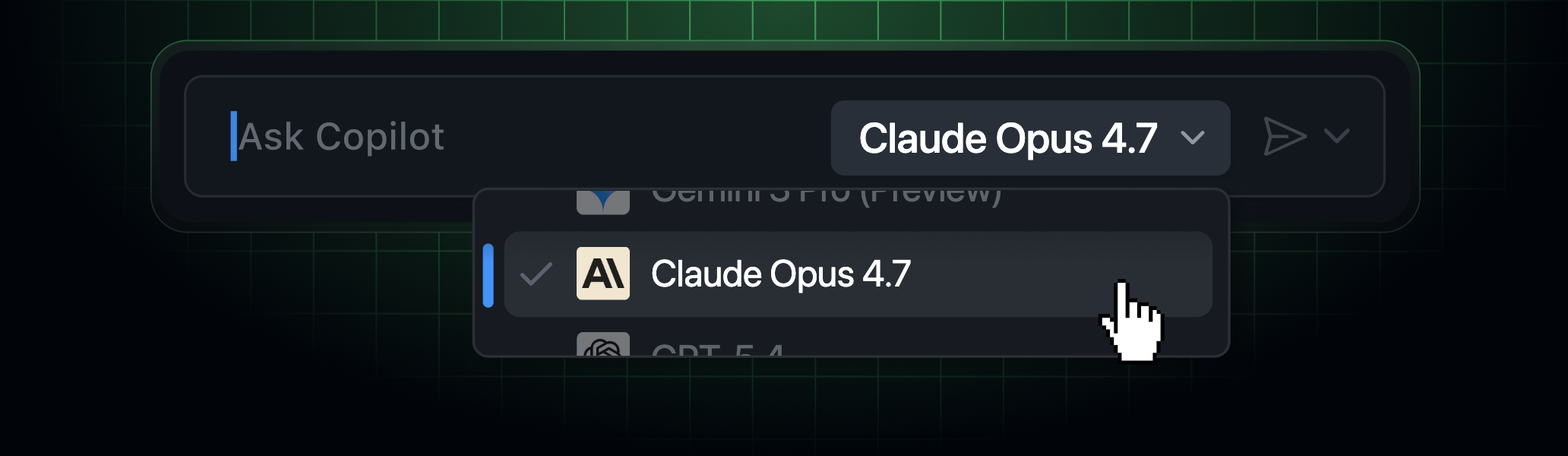
    Opus 4.7 pricing is unchanged from 4.6 at $5 per million input tokens and $25 per million output tokens, and is distributed via Claude products, the API, Amazon Bedrock, Vertex AI, Microsoft Foundry, and GitHub Copilot.

When Power Users Mutiny

Two stories about Claude Code 4.7 are running on parallel tracks, and they barely touch. On one track, non-coders post videos of an agent building a working mobile app from a paragraph of plain English; the framing is liberation, the screenshot count is high, and the takeaway is that a $350K developer's worth of work just got compressed into minutes. On the other track — the one inhabited by people who have shipped against Claude Code every day for the past year — the reception is openly hostile.

The heavy-use Reddit threads from the past week tell a remarkably consistent story. One top thread argued, with a concrete example, that 4.7 silently ignored a plan document the user had handed it; reverting to 4.6 produced a response that explicitly called out the failure. A widely-upvoted heavy-use review from a long-time user characterized 4.7 as more confident and more wrong: better at instruction following on simple cases, but more likely to give an authoritative-sounding answer that turns out, on inspection, to be incorrect. The most-engaged X post from the same window is a public defection: a user who had been on Claude Code for thirteen months announcing the switch to Codex, citing slowness, bugs, and a belief that the model has been quietly nerfed.

The split isn't random. The non-coder hype runs on first-run wow moments — a one-shot prompt that produces a working artifact. The power-user revolt runs on the long tail — what happens on prompt #40 of a week-long project, when the agent is asked to integrate with an existing plan, respect uncommitted work, and not regress earlier behavior. Anthropic shipped a model tuned hard for the first kind of demo and shipped it during a quarter when its rivals are tuning hard for the second.

The Token Tax Hidden in xhigh

The Token Tax Hidden in xhigh
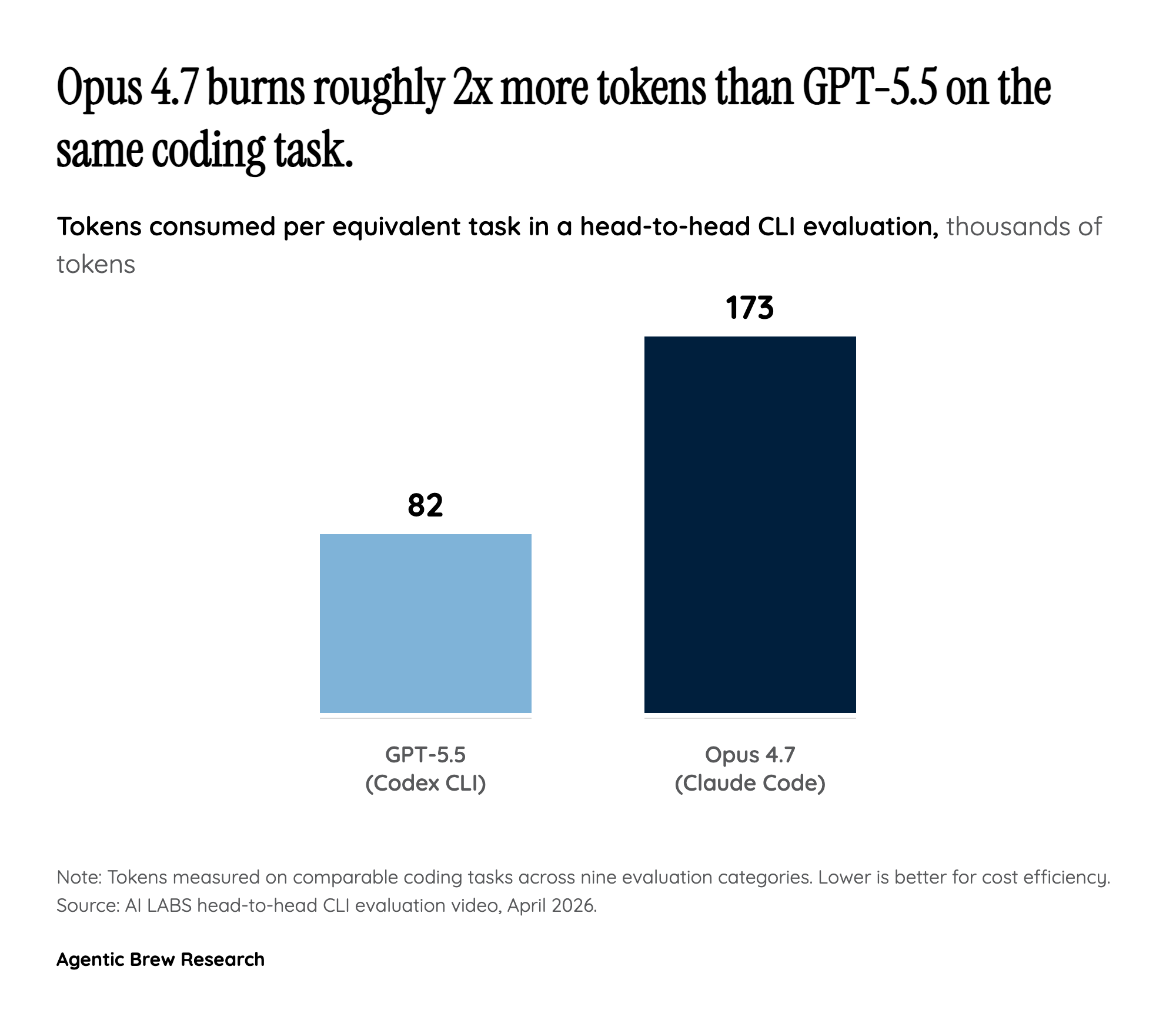
GPT-5.5 (Codex CLI) used 82,000 tokens vs Opus 4.7's 173,000 tokens on comparable coding tasks.

The most concrete economic finding in the heavy-use community feedback is that 4.7 costs more to run than 4.6 for similar work, and the geometry of that cost is not what most users expect. According to a heavy-use review that drew strong upvotes, 4.7 on the xhigh effort level burns meaningfully more tokens than 4.6 on its max setting; turning 4.7 up to max-reasoning makes things worse, with the reviewer characterizing it as outright wasteful relative to xhigh on the same model. Practical advice across multiple threads converged on the same prescription: stay on xhigh, do not climb to max, and consider pinning back to 4.6 with claude --model claude-opus-4-6 for tasks where 4.6's behavior was preferred.

This matters because pricing didn't change. Opus 4.7 is still $5 per million input tokens and $25 per million output tokens, the same as 4.6. If the same task now consumes more tokens, the effective hourly cost of a power user climbs even though the sticker price did not. A separate head-to-head video benchmark put a sharper number on the asymmetry: GPT-5.5 used roughly 82,000 tokens on a comparable task while Opus 4.7 used roughly 173,000. For solo developers on the $200 tier the gap is annoying; for a team running dozens of agents in parallel it compounds into a meaningful budget line, and it explains why several of the loudest defections have come from users who track their own spend closely.

What Codex Actually Wins

Stripping out the tribalism, the head-to-head evidence in the research is more textured than either side's marketing. An XDA Developers review of an end-to-end app build gave the win cleanly to Claude Code: it asked clarifying questions, shipped a working tool in under ten minutes, and even spun up a server so the reviewer could run it, while Codex's no-questions approach required multiple correction rounds. A blind-review survey cited in a Reddit-distributed comparison goes the same direction on output quality — Claude Code's code was rated cleaner roughly two-thirds of the time. So on first-try correctness and on perceived code quality, Claude Code is still ahead.

What Codex appears to be winning is everything that surrounds the model. The same survey found that 65% of developers reach for Codex daily despite preferring Claude's output in blind review — a striking gap that points at workflow rather than intelligence. A widely-watched comparison video singled out Codex CLI's Rust-based UI, personality settings, and pre-installed skills as feeling more polished than Claude Code 2.1.0, which had stability issues at launch and an auto-mode permission change that confused users. Add OpenAI's Background Computer Use — the asynchronous, fire-and-forget pattern — and the picture gets clearer: Codex is being preferred as a daily driver not because its model is smarter on a given prompt but because the agent harness around it is currently more pleasant to live in. Anthropic now has to defend the model layer while catching up on the layer above it.

Anthropic's Quiet Pivot Toward the Non-Coder

Read the public record sequentially and Anthropic's product strategy looks less like a single direction and more like a company straddling two audiences in real time. Claude Code launched in November 2024 as a CLI — a tool that explicitly assumed its user could open a terminal. Within thirteen months it acquired a web interface, then a Slack integration, then Cowork, a Claude Desktop variant aimed at people who, by Boris Cherny's own framing, are not programmers. Cherny has said in interviews that Cowork was "obvious" and that it was built largely with Claude Code itself in roughly a week and a half. That cadence — a flagship enterprise tool spawning a non-coder twin in days — is the giveaway about where Anthropic believes the next wave of growth lives.

It also reframes Opus 4.7's reception. If the company optimization target has shifted toward users whose evaluation rubric is "did it produce a working artifact from one paragraph," then the model's bias toward confidence and instruction-following starts to look like a deliberate choice rather than a regression. Dario Amodei's now-public observation that engineers inside Anthropic increasingly say "I don't write any code anymore. I just let the model write the code, I edit it" describes the audience the company is increasingly building for: editors of model output, not authors of code. The friction visible on Reddit is the friction of veteran authors discovering that the tool has tilted, at the margin, toward editors. Whether Anthropic widens that gap or course-corrects in the next minor release is the most consequential open question raised by this launch.

Historical Context

2024-11
Claude Code launched as a command-line tool, beginning life as a terminal-native coding agent.
2025-10
Claude Code added a web interface, broadening access beyond the terminal.
2025-12
Slack integration for Claude Code shipped two months after the web interface.
2026-01-12
Cowork launched in research preview for Max subscribers, offering Claude Code-style agency to non-coders via the desktop app.
2026-04-16
Claude Opus 4.7 launched across Claude products, the API, Bedrock, Vertex AI, Microsoft Foundry, and GitHub Copilot, with a new xhigh effort level and a 1M-token context window.

Power Map

Key Players
Subject

Claude Code 4.7 Viral Moment in AI Coding Agent Race

AN

Anthropic

Maker of Claude Code and Opus 4.7. Positions itself as the enterprise AI leader while courting non-coders through Cowork — a dual identity that shapes how the entire coding-agent category is marketed.

BO

Boris Cherny

Head of Claude Code at Anthropic. Drove the Cowork launch in roughly a week and a half after seeing non-programmers adopt Claude Code, making him the internal product owner for the non-coder pivot.

OP

OpenAI

Primary rival in the coding-agent race. Ships GPT-5.x-Codex variants and Background Computer Use, pressuring Anthropic with speed and asynchronous autonomy and pulling power-user mindshare in the days after the Opus 4.7 launch.

GI

GitHub / Microsoft

Distributes Opus 4.7 to Copilot Pro+, Business, and Enterprise across VS Code, Visual Studio, Copilot CLI, JetBrains, Xcode, and Eclipse — the largest single channel for getting the model in front of working developers.

AW

AWS and Google Cloud

Cloud distribution channels offering Opus 4.7 via Bedrock and Vertex AI with up to 10,000 RPM rate limits — the path enterprise customers use to deploy the model under their own compliance perimeter.

NO

Non-coder and vibe-coder users

New user class driving the viral surface area of the launch by building functional apps and websites in minutes from plain-language prompts — and the audience Cowork was reverse-engineered to serve.

Source Articles

Top 1

THE SIGNAL.

Analysts

"Cowork was the obvious next step to make Claude Code accessible to non-programmers: "It was just kind of obvious that Cowork is the next step. We just want to make it much easier for non-programmers.""

Boris Cherny
Head of Claude Code, Anthropic

"Engineers feel "unshackled" because Claude Code handles tedious work — "Engineers just feel unshackled, that they don't have to work on all the tedious stuff anymore" — even as Anthropic positions itself enterprise-first."

Boris Cherny
Head of Claude Code, Anthropic

"Engineers inside Anthropic increasingly act as editors of model output rather than authors: "I have engineers within Anthropic who say 'I don't write any code anymore. I just let the model write the code, I edit it.'""

Dario Amodei
CEO, Anthropic

"Claude Code is impressive but unsettling because it can replicate skills built over a career: "It's amazing, and it's also scary. I spent my whole life developing this skill, and it's literally one-shotted by Claude Code.""

Andrew Duca
CEO of a cryptocurrency tax platform

"In a head-to-head app build, Claude Code shipped a working tool first try while Codex required multiple fixes: "Claude Code clearly won. The whole point of this tool was to block apps, paste in my writing, and then prove I'd done the work. Claude Code did all of that without a single issue on the first run.""

XDA Developers reviewer
Hands-on developer reviewer
The Crowd

"i'm done. codex is fucking incredible after heavily using claude code for over 13 months, i've moved to codex opus is painfully slow and takes 5-10 mins for a one-liner. the app is super buggy and flickers constantly. low thinking is useless. and they keep nerfing the model"

@@SuhailKakar2758

"Claude can now build your entire mobile app — like a $350K Apple-level developer — in minutes, for free. What used to take a full team weeks (and thousands of dollars)… can now be done with a few powerful prompts."

@@Oliviacoder1176

"2026 is the year of Agents OpenClaw, Claude Code Codex and Cursor... In this video, I broke it all down with @Rasmic. Consider this a 2026, year in review for AI agents."

@@rileybrown207

"switch from Claude to codex (both $200 tier)"

@u/Perfect-Series-2901132
Broadcast
Claude Opus-4.7 Just Dropped, And...

Claude Opus-4.7 Just Dropped, And...

Claude Opus 4.7 Just Dropped... Or Did It Really?

Claude Opus 4.7 Just Dropped... Or Did It Really?

It's Broken… The Claude Code Vs Codex Debate Is Finally Over

It's Broken… The Claude Code Vs Codex Debate Is Finally Over