NVIDIA Physical AI and Robotics Platform Expansion
TECH

NVIDIA Physical AI and Robotics Platform Expansion

27+
Signals

Strategic Overview

  • 01.
    NVIDIA has launched a comprehensive physical AI platform spanning foundation models (GR00T, Cosmos), simulation tools (Isaac Lab 3.0, Newton 1.0), and edge hardware (Jetson Thor at 2,070 TFLOPS, Jetson T4000 at 1,200 TFLOPS), with CEO Jensen Huang declaring 'The ChatGPT moment for robotics is here' at CES 2026.
  • 02.
    The four largest industrial robot manufacturers — ABB, FANUC, YASKAWA, and KUKA, with over 2 million installed robots combined — are integrating NVIDIA Omniverse and Isaac into their controllers, signaling industry-wide adoption of NVIDIA's robotics stack.
  • 03.
    At GTC 2026, NVIDIA announced Cosmos 3 as the first unified world foundation model, commercially licensed GR00T N1.7, and previewed GR00T N2 which more than doubles task success rates in unfamiliar environments. The Newton 1.0 physics engine was co-developed with Google DeepMind and Disney Research.
  • 04.
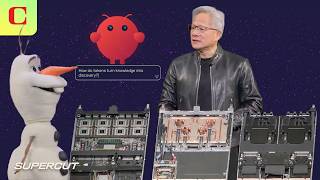
    The announcements have drawn significant public attention: NVIDIA's GR00T N1 demo video reached 277K YouTube views, CNET's GTC 2026 keynote supercut garnered 316K views, and industry commentator @EvanKirstel observed on X.com that GTC 2026 'packed 30,000 attendees across ten venues' with physical AI as 'the dominant thread.'

Deep Analysis

The Android Strategy: Why NVIDIA Wants to Own the Robotics Stack, Not Just Sell Chips

TechCrunch's characterization of NVIDIA as the 'Android of generalist robotics' is more than an analogy — it describes a deliberate platform strategy with historical precedent. Just as Google's Android gave away the mobile operating system to ensure dominance in services and search, NVIDIA is open-sourcing critical components like the Newton 1.0 physics engine and GR00T foundation models while selling the hardware (Jetson Thor, T4000) that runs them best. The commercial licensing of GR00T N1.7 at GTC 2026 marks the transition from research showcase to revenue-generating platform.

The scope of adoption validates the strategy's traction. When ABB, FANUC, YASKAWA, and KUKA — manufacturers controlling over 2 million installed industrial robots — simultaneously integrate NVIDIA's Omniverse and Isaac into their controllers, it signals that the robotics industry has accepted NVIDIA as its default AI software layer. The Hugging Face partnership extends this reach further, connecting 2 million robotics developers with 13 million AI builders through the LeRobot framework. The public reception underscores this momentum: CNET's 12-minute GTC keynote supercut drew 316K YouTube views, while industry commentator @EvanKirstel noted on X.com that GTC 2026 'packed 30,000 attendees and 1,000+ sessions across ten venues' with physical AI as 'the dominant thread.' NVIDIA is building the gravitational center of a developer ecosystem, making it increasingly costly for any robot manufacturer to build outside its orbit.
Synthetic Data Collapses Training Economics: From 9 Months of Human Demos to 11 Hours of Simulation

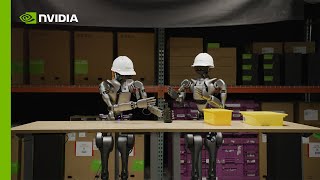
Perhaps the most underappreciated number in NVIDIA's announcements is this: GR00T N1 generated 780,000 training trajectories in 11 hours, equivalent to 9 months of human demonstration data. This roughly 600x speedup in training data generation doesn't just reduce costs — it fundamentally changes which robotic tasks become economically viable to automate. Tasks that previously couldn't justify months of human demonstrator time can now be trained overnight. NVIDIA's GR00T N1 demo video on YouTube has drawn 277K views, suggesting strong developer and researcher interest in this capability.

The implications cascade through the entire robotics value chain. TrendForce's projection that humanoid robot training costs will 'decline rapidly' is grounded in this synthetic data breakthrough. Combined with GR00T N2's reported 2x+ improvement in task success rates for unfamiliar environments and Mimic's 10x sample efficiency gains, the data bottleneck that has constrained robotics for decades is dissolving. The Newton 1.0 physics engine — co-developed with Google DeepMind and Disney Research for multiphysics simulation fidelity — ensures that synthetic training data transfers reliably to real-world performance. When simulation becomes this fast and faithful, the limiting factor shifts from data collection to imagination: what tasks do you want your robot to learn?

The 1% Revenue Paradox: Massive Strategic Bet, Minimal Financial Contribution

Zacks Investment Research surfaces an uncomfortable truth: automotive and robotics currently account for approximately 1% of NVIDIA's total revenue. Even with the automotive segment growing 32% year-over-year to $592 million in Q3 FY2026, this remains a rounding error compared to NVIDIA's data center business. The company is investing enormous engineering resources — building foundation models, co-developing physics engines, designing custom edge SoCs — for a segment that barely registers on its income statement.

This paradox only resolves if NVIDIA's bet on timing is correct. The global robotics market is projected to grow from $73.64 billion in 2025 to $218.56 billion by 2031 at a 19.86% CAGR. If NVIDIA captures even a modest platform tax on that growth — analogous to Google's cut of mobile commerce — the payoff dwarfs current automotive revenue. Jensen Huang's assertion that 'every industrial company will become a robotics company' is the thesis in its most expansive form. The Foxconn deployment of Skild AI-powered manipulators on Blackwell production lines, the surgical robotics adoption by CMR Surgical and Medtronic, and the humanoid programs at Boston Dynamics, Figure, and Agility all represent early proof points. But proof points are not proof. The distance between a $3,499 developer kit and a $218 billion market opportunity is bridged by execution, manufacturing scale, and regulatory acceptance — none of which NVIDIA controls alone.

The Unlikely Alliance: Why Competitors Co-Built Newton 1.0

The co-development of Newton 1.0 by NVIDIA, Google DeepMind, and Disney Research is a remarkable collaboration between entities that are otherwise competitors or operating in entirely different domains. Google DeepMind has its own robotics ambitions and foundation models; Disney Research has proprietary animation and physical simulation expertise. Yet all three contributed to an open-source physics engine. This suggests that accurate multiphysics simulation has become a pre-competitive infrastructure need — like TCP/IP for the internet — where fragmented proprietary solutions slow everyone down.

Newton 1.0 enables dexterous manipulation simulation at a fidelity level that no single organization could achieve alone. The engine must model rigid body dynamics, soft body deformation, fluid interaction, and contact physics simultaneously for training to transfer from simulation to reality. Google DeepMind brings reinforcement learning-optimized simulation expertise, Disney Research contributes decades of physical animation fidelity, and NVIDIA provides GPU-accelerated parallel simulation at scale. The open-source release ensures that the entire robotics ecosystem — including NVIDIA's Jetson hardware customers — benefits from higher-quality training, which in turn drives hardware sales. For Google DeepMind, better simulation infrastructure accelerates its own robotics research regardless of which hardware runs the trained models. The alliance works precisely because each party's strategic interests align on simulation quality while diverging on monetization.

Historical Context

2025
The global robotics market reached $73.64 billion, establishing the baseline for projected growth to $218.56 billion by 2031 at a 19.86% CAGR.
2026-01-05
Jensen Huang declared the 'ChatGPT moment for physical AI' and unveiled Cosmos Transfer 2.5, Predict 2.5, Cosmos Reason 2, Isaac GR00T N1.6, and the Jetson T4000 module at $1,999 with 1,200 FP4 TFLOPS.
2026-03-16
Announced Cosmos 3 (first unified world foundation model), Isaac Lab 3.0 with Newton 1.0 physics engine co-developed with Google DeepMind and Disney Research, commercially licensed GR00T N1.7, and previewed GR00T N2 which more than doubles task success rates in unfamiliar environments.
2026-03
NVIDIA introduced the Jetson Thor platform delivering 2,070 FP4 TFLOPS with 128GB memory and 7.5x higher AI compute than Jetson AGX Orin, with developer kits at $3,499.
2026-04-07
Showcased NemoClaw (natural language to robot control), Cosmos world models, and partner deployments including surgical robotics from CMR Surgical and Medtronic.

Power Map

Key Players
Subject

NVIDIA Physical AI and Robotics Platform Expansion

NV

NVIDIA

Full-stack platform provider building the 'Android of robotics' — from foundation models (GR00T, Cosmos) to simulation (Isaac, Newton) to edge hardware (Jetson Thor/T4000), aiming to be the default operating layer for all physical AI.

AB

ABB, FANUC, YASKAWA, KUKA

Industrial robot giants with 2M+ combined installed base, integrating NVIDIA Omniverse and Isaac into their robot controllers, effectively adopting NVIDIA as their AI software layer.

GO

Google DeepMind and Disney Research

Co-developers of Newton 1.0 open-source physics engine, contributing multiphysics simulation expertise for dexterous manipulation training.

HU

Hugging Face

Integration partner connecting NVIDIA's Isaac and GR00T with the LeRobot open-source framework, bridging robotics and AI developer communities totaling 15 million builders.

BO

Boston Dynamics, Figure, Agility, 1X

Humanoid robot pioneers building on NVIDIA's physical AI stack, serving as flagship demonstrations of the platform's capabilities.

SK

Skild AI and Foxconn

Skild AI provides generalized robot intelligence deployed on Foxconn's Blackwell production lines via dual-arm manipulators, representing one of the first large-scale factory deployments of NVIDIA's physical AI stack.

THE SIGNAL.

Analysts

"Declared 'The ChatGPT moment for robotics is here' at CES 2026, and at GTC 2026 stated 'Physical AI has arrived — every industrial company will become a robotics company.' Huang frames NVIDIA's role as providing the full AI stack that transforms every industrial operation into a robotics-driven enterprise."

Jensen Huang
CEO, NVIDIA

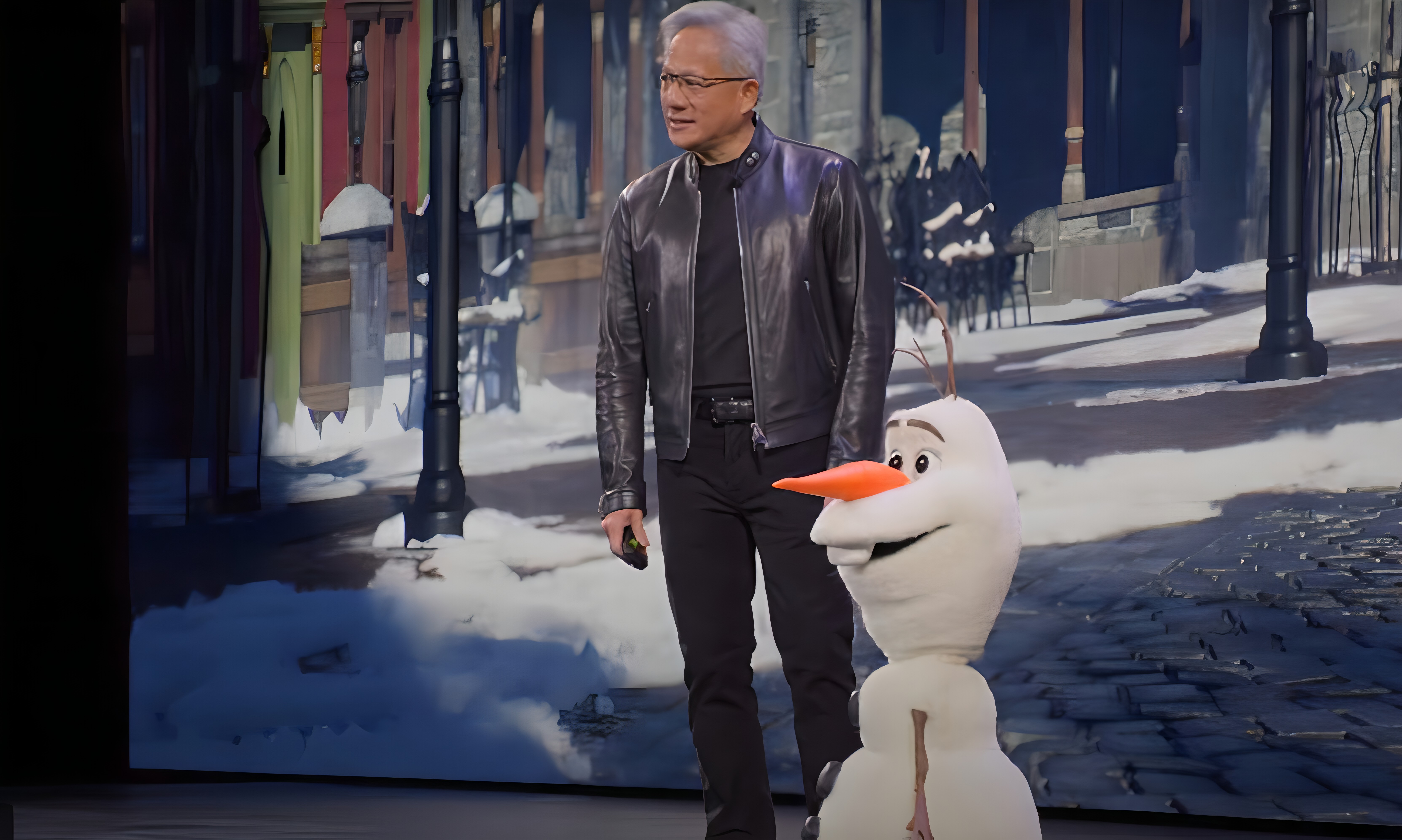
"Projects that training costs for humanoid robots will decline rapidly, suggesting consumer-facing scenarios like the 'Olaf' companion robot highlighted in NVIDIA's GTC keynote may become feasible sooner than expected."

TrendForce
Industry Research Firm

"Notes that NVIDIA's robotics strategy centers on providing a full stack rather than selling chips alone, but flags that automotive and robotics currently represent approximately 1% of NVIDIA's total revenue, highlighting the gap between strategic vision and current financial contribution."

Zacks Investment Research
Financial Analysis Firm

"Characterized NVIDIA as seeking to become the 'Android of generalist robotics,' drawing a parallel to Google's mobile platform strategy where NVIDIA provides the software layer that robot hardware manufacturers build upon."

TechCrunch
Technology Publication
The Crowd

"NVIDIA GTC 2026 packed 30,000 attendees and 1,000+ sessions across ten venues. Physical AI covering robotics, autonomous systems, and digital twins was the dominant thread. Jensen is building the infrastructure layer for everything."

@@EvanKirstel0

"NVIDIA Launches Jetson Thor: SUPERCOMPUTER PLATFORM FOR PHYSICAL AI. NVIDIA unveiled Jetson AGX Thor, a breakthrough platform for humanoid and physical AI robots. Powered by the Blackwell GPU with 128GB memory, Thor delivers up to 2070 FP4 TFLOPS."

@@InfoR00M0

"Just released at #CES2026 - we are expanding the NVIDIA open model universe across industries to advance the development of real-world AI systems. Introducing new models, data, and tools for: NVIDIA Nemotron for agentic AI, NVIDIA Cosmos for physical AI, NVIDIA Alpamayo"

@@nvidia0
Broadcast
NVIDIA GTC 2026 Keynote: Everything That Happened in 12 Minutes | Supercut

NVIDIA GTC 2026 Keynote: Everything That Happened in 12 Minutes | Supercut

NVIDIA Isaac GR00T N1: An Open Foundation Model for Humanoid Robots

NVIDIA Isaac GR00T N1: An Open Foundation Model for Humanoid Robots

The Future of Physical AI is Here

The Future of Physical AI is Here