Iran threatens to strike Stargate AI data center in Abu Dhabi
TECH

Iran threatens to strike Stargate AI data center in Abu Dhabi

34+
Signals

Strategic Overview

  • 01.
    Iran's Islamic Revolutionary Guard Corps released a video on April 3, 2026, threatening the 'complete and utter annihilation' of OpenAI's $30 billion Stargate AI data center in Abu Dhabi, featuring satellite and night-vision footage of the facility. The threat is conditional -- to be carried out if the US bombs Iranian civilian infrastructure such as power plants and desalination facilities.
  • 02.
    The threat is backed by precedent: on March 1, 2026, Iranian Shahed drones struck two AWS data centers in the UAE and damaged a third in Bahrain, marking the first time in recorded history that a state deliberately targeted commercial data centers in a military campaign. The strikes knocked AWS's ME-CENTRAL-1 region offline for over 24 hours, disrupting banking, payments, and ride-hailing services across the Gulf.
  • 03.
    The Stargate facility is a 1-gigawatt compute cluster within a 5-gigawatt campus spanning 19.2 square kilometers, planned to house approximately 500,000 Nvidia GPUs. It is a joint venture involving OpenAI, SoftBank, Oracle, G42, and Nvidia, and represents a centerpiece of both US AI strategy and the UAE's ambitions as a global AI hub.
  • 04.
    The IRGC had previously named 18 US technology companies -- including Apple, Microsoft, Nvidia, and Tesla -- as legitimate military targets, but the Stargate video marks the first time a specific installation was designated for threatened destruction.

Deep Analysis

The $5,000 Drone vs. the $30 Billion Data Center: Asymmetric Warfare Meets AI Infrastructure

The central paradox of this crisis is the staggering asymmetry between the cost of attack and the cost of what is being attacked. Iran's Shahed drones -- which cost roughly $5,000 to produce -- have already demonstrated their ability to knock out hyperscale data centers worth billions of dollars. The Stargate facility in Abu Dhabi, with its planned 500,000 Nvidia GPUs and $30 billion price tag, represents perhaps the single highest-value concentration of AI compute hardware ever assembled in one location. A successful strike would not only destroy the physical infrastructure but could create a global GPU shortage lasting years, given the extreme complexity and lead times involved in manufacturing advanced AI chips.

This asymmetry fundamentally challenges the economics of concentrating AI infrastructure in geopolitically exposed regions. As one analyst noted, the question is no longer whether such facilities can be built, but whether anyone will insure them. Hyperscaler capital expenditure is projected to exceed $600 billion in 2026 with roughly 75 percent tied to AI infrastructure, and a significant portion of that investment thesis depends on the assumption that data centers are civilian infrastructure immune from military targeting. Iran has shattered that assumption. The IRGC video's pointed message -- 'Nothing stays hidden to our sight, though hidden by Google' -- demonstrated not just intent but intelligence capability, showing they had mapped the facility despite its absence from public satellite imagery.


From Cyber to Kinetic: The Day Data Centers Became Military Targets

Before March 1, 2026, the idea of a nation-state physically attacking commercial data centers belonged to the realm of threat modeling exercises and speculative fiction. The Iranian drone strikes on AWS data centers in the UAE and Bahrain changed that permanently. Two of three availability zones in AWS's ME-CENTRAL-1 region were knocked offline for over 24 hours, disrupting banking services, ride-hailing platforms, and payment processors across the Gulf. This was not a cyberattack -- it was a kinetic military strike against the physical infrastructure of the internet, and it worked.

The escalation pattern since then has been methodical. The IRGC first named 18 US technology companies as legitimate military targets, establishing a doctrinal framework. Then came the AWS strikes on March 1, proving operational capability. On April 2, Iran claimed a strike on an Oracle data center in Dubai, though this remains disputed. And on April 3, the IRGC released the Stargate video, singling out a specific, named facility for the first time. Each step has raised the stakes while demonstrating increasing precision in targeting. As CSIS Director Aalok Mehta observed, these strikes signal that data centers may now be 'considered legitimate targets for attack in modern armed conflicts' -- a shift that has implications far beyond the current Iran conflict for every data center in every geopolitically sensitive region worldwide.

The Insurance Crisis That Could Redirect Hundreds of Billions in AI Investment

The financial implications of data centers entering the theater of war extend far beyond the immediate threat to Stargate. The entire investment thesis for Middle East AI infrastructure is under strain. Before the Iran conflict escalated, the Gulf region -- particularly the UAE and Saudi Arabia -- was positioning itself as a global AI hub, attracting hundreds of billions in commitments from US hyperscalers seeking cheap energy, favorable regulations, and proximity to growing Asian markets. That calculus has been upended. The moment a state actor classifies data center facilities as retaliatory targets, as Silicon Canals editorial analysis noted, 'the insurance calculus changes, the investment thesis shifts, and every major cloud provider operating in the region must reassess.'

The practical question now facing executives at OpenAI, SoftBank, Oracle, and their insurers is whether the Stargate UAE project can proceed as planned. Phase 1, with 200 megawatts of Nvidia Grace Blackwell GB300 systems, was expected to come online by the end of 2026. The broader campus was designed to scale to 5 gigawatts across 19.2 square kilometers. If the threat environment makes this untenable, the capital -- and the AI capacity it represents -- will need to go somewhere. Northern Europe, India, and Southeast Asia are the most frequently cited alternatives, regions that offer some combination of political stability, energy availability, and distance from active conflict zones. For the UAE and its AI champion G42, which is responsible for building the campus, the stakes are existential: losing Stargate would deal a severe blow to the country's ambition to become an indispensable node in the global AI supply chain.

Psychological Warfare or Credible Threat? Reading the IRGC's Escalation Ladder

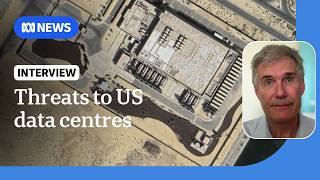
A critical question for policymakers and investors is whether the IRGC's Stargate video represents a genuine operational plan or sophisticated psychological warfare designed to undermine US economic confidence in the region. Expert analysis from ABC News Australia suggests the latter -- that Iran's threats are primarily aimed at 'attacking US confidence' in the Gulf, functioning as psychological warfare targeting investment sentiment rather than signaling imminent kinetic action. From this perspective, the threat is a form of economic warfare: even without firing a single drone, Iran can inflict billions in damage by making the region uninvestable.

However, the case for taking the threat at face value is equally compelling. The IRGC has demonstrated both the will and capability to strike data centers, having already hit AWS facilities just weeks earlier. The threat is explicitly conditional -- tied to whether the US follows through on President Trump's stated intention to bomb Iranian power plants and desalination facilities. This conditionality gives it the character of deterrence rather than bluster. Iran is essentially saying: if you destroy our civilian infrastructure, we will destroy yours. The fact that the video included satellite and night-vision imagery of the actual Stargate campus suggests genuine intelligence preparation of the battlefield, not merely a propaganda exercise. Whether or not Iran ultimately strikes Stargate, the threat itself has already achieved a strategic objective by forcing a fundamental reassessment of the security assumptions underpinning hundreds of billions of dollars in planned AI infrastructure investment across the Gulf.

Alarm Across Social Media: How the Threat Went Viral and Shaped Public Perception

The IRGC's Stargate threat did not just make headlines in specialist tech publications -- it detonated across social media platforms, generating tens of thousands of engagements and signaling that the convergence of AI infrastructure and military conflict has captured broad public attention. On X.com, the story triggered a wave of alarmed and negative sentiment, with the three highest-engagement posts accumulating approximately 26,000, 20,000, and 13,000 total engagements respectively. The dominant themes centered on the military threat to AI infrastructure, the emerging pattern of Iranian retaliation against technology targets, and potential energy market consequences. Notably, @DropSiteNews, an investigative journalism account, reported on the IRGC's classification of ICT infrastructure as legitimate military targets, generating 728 retweets, 2,600 likes, and 172,000 views -- suggesting that the framing of data centers as wartime targets resonated deeply with an audience already primed by concerns about AI concentration risk.

On YouTube, the story drew substantial viewership across ideologically diverse channels. The Jimmy Dore Show covered the Oracle and Amazon data center strikes to an audience of 125,000 viewers, contextualizing the attacks within broader US foreign policy debates. Oneindia News drew 36,800 views with coverage that included the actual IRGC propaganda video footage, giving international audiences direct exposure to Iran's threat messaging. ABC News Australia's expert analysis segment, which emphasized the psychological warfare dimension, accumulated 26,200 views. The breadth of YouTube coverage -- spanning political commentary, international news, and expert analysis -- indicates the story has broken out of the tech press into mainstream geopolitical discourse.

On Reddit, active discussions proliferated across at least five major subreddits: r/technology, r/OpenAI, r/LocalLLaMA, r/economy, and r/ChatGPT. The spread across these communities is itself revealing -- the story simultaneously registered as a technology infrastructure concern, an AI industry risk, a macroeconomic event, and a consumer-facing disruption threat. The r/LocalLLaMA engagement is particularly telling, as that community's focus on self-hosted AI models suggests the threat is already reinforcing arguments for decentralized and geographically distributed AI compute, rather than concentration in megascale facilities vulnerable to state-level attack. Taken together, the social media response reveals that the IRGC's threat -- regardless of whether it is ultimately carried out -- has already accomplished a secondary strategic objective: embedding the idea that AI data centers are military targets into mainstream public consciousness, a perception shift that may prove difficult to reverse even if the geopolitical situation stabilizes.

Historical Context

2025-01-21
The Stargate Project was formally announced by President Trump as a $500 billion AI infrastructure joint venture between OpenAI, SoftBank, Oracle, and MGX.
2025-05-22
Stargate UAE announced as a 1GW compute cluster in Abu Dhabi with G42 as builder and OpenAI/Oracle as operators, representing approximately $30 billion in investment across a 19.2 sq km campus.
2026-02-28
US-Israel joint military campaign against Iran began, killing Iran's supreme leader and top military leaders, triggering Iranian retaliation across the Gulf region.
2026-03-01
Iranian Shahed drones struck two AWS data centers in the UAE and damaged a third in Bahrain -- the first state-sponsored attack on commercial data centers in history -- knocking AWS ME-CENTRAL-1 offline for over 24 hours and disrupting Gulf banking and payment services.
2026-04-02
Iran claimed a strike on an Oracle data center in Dubai, though the claim is disputed.
2026-04-03
IRGC released video with satellite and night-vision imagery of the Stargate campus, threatening 'complete and utter annihilation' -- the first time the IRGC designated a specific installation for threatened destruction.

Power Map

Key Players
Subject

Iran threatens to strike Stargate AI data center in Abu Dhabi

OP

OpenAI

Lead AI company behind Stargate; the Abu Dhabi facility will serve as its premier compute facility. Has not commented publicly on the IRGC threat.

IR

Iran's IRGC / Brigadier General Ebrahim Zolfaghari

IRGC spokesperson who released the threat video with satellite imagery of the Stargate campus, representing the state actor making conditional threats against the facility.

G4

G42 (UAE AI firm)

Builder and local partner for Stargate UAE; backed by UAE government; responsible for land and construction across the 19.2 sq km campus.

SO

SoftBank

Major investor in the $500 billion Stargate venture; CEO Masayoshi Son is one of the project's most visible advocates.

OR

Oracle

Cloud operations partner that will co-operate the UAE data center. Also had a Dubai data center reportedly struck by Iran on April 2, though this is disputed.

AM

Amazon Web Services (AWS)

Victim of Iranian drone strikes on March 1, 2026, that knocked its ME-CENTRAL-1 region offline for over 24 hours -- establishing the precedent for state attacks on commercial data centers.

THE SIGNAL.

Analysts

"The strikes on AWS data centers signal that data centers may now be 'considered legitimate targets for attack in modern armed conflicts,' which will significantly change how companies think about data center security and geographic placement."

Aalok Mehta
Director, Center for Strategic and International Studies

"Questioned the viability of Middle East data center builds given the drone threat, noting that 'who's going to insure a $20bn facility in the Middle East that can be taken out by a $5,000 drone?' and suggesting capital could redirect to safer regions."

Unnamed industry analyst
Industry analyst

"Once state actors classify data center facilities as retaliatory targets, the insurance calculus changes, the investment thesis shifts, and every major cloud provider operating in the region must reassess their exposure."

Silicon Canals editorial analysis
Technology publication

"Iran's threats are primarily aimed at attacking US investor confidence in the region rather than necessarily signaling imminent kinetic action, functioning as psychological warfare targeting investment sentiment."

ABC News Australia expert analysis
Expert, ABC News Australia
The Crowd

"Iran leveling up. They released a video of threatening to strike 1GW Stargate AI datacenter in the UAE. The data center is hidden on Google maps they even shown that"

@@FurkanGozukara21000

"BREAKING : Iran has sent chilling warning to attack massive billion Stargate AI Data Center in UAE. Iran already announced & attacked Amazon & Oracle Data centers in Bahrain & Dubai in 2 days. Life Lesson — Never take Iranian threats lightly. NEVER EVER."

@@mr_mayank17000

"HOLY SH***T, IRAN HAS SENT A NEW WARNING! Iranian spokesperson says that Iran will attack a massive BILLION Stargate AI Data Center in UAE. Oil is skyrocketing!"

@@RippleXrpie12000
Broadcast
Iran HITS Oracle & Amazon Facilities In The Persian Gulf In MAJOR Escalation!

Iran HITS Oracle & Amazon Facilities In The Persian Gulf In MAJOR Escalation!

IRGC Spox Vows To Destroy b U.S AI Data Center In UAE After Amazon, Oracle | Chilling Video

IRGC Spox Vows To Destroy b U.S AI Data Center In UAE After Amazon, Oracle | Chilling Video

Iran's threats to data centres in Gulf states aim to 'attack US confidence', expert says | ABC NEWS

Iran's threats to data centres in Gulf states aim to 'attack US confidence', expert says | ABC NEWS