The Palantir Playbook, Reissued at Frontier-AI Scale
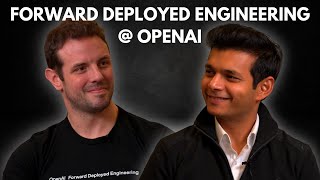
Strip away the financial engineering and what OpenAI just announced is a textbook reissue of the Forward Deployed Engineer model that Palantir invented around 2010, when intelligence-agency clients could not openly share their requirements and Palantir's internal "Delta" engineers learned the problem by living inside the customer [1]. The Deployment Company is going to look much the same: small teams of engineers embedded inside a Fortune 500 client, paid by the new venture but sitting in the customer's slack channels, refactoring their data pipelines, and shipping production code against their workflows.
The acquired piece — Tomoro — is the operational atom that makes the model work. Tomoro was founded in 2023 "in alliance with OpenAI" and spent three years productizing this exact motion for enterprises like Virgin Atlantic, Tesco, Supercell, the NBA, Red Bull, Fidelity International, and Mattel [2]. It claims to have built Supercell's support agent serving 110 million users in twelve weeks, quadrupled its own headcount, and grown monthly revenue more than tenfold [2]. Acquiring roughly 150 of those engineers on day one [3]means the Deployment Company doesn't have to bootstrap an FDE culture from a cold start — the most expensive part of standing up a Palantir-style services arm.
Reddit threads on the announcement converged quickly on the Palantir comparison: the dominant framing in /r/aiecosystem is that this is deliberate embedment — engineers wired so deeply into client systems that removal becomes structurally impossible. That is exactly the Palantir lesson, and it's the part incumbent system integrators should be most worried about.