Anti-AI extremists attack Sam Altman's home twice in three days
TECH

Anti-AI extremists attack Sam Altman's home twice in three days

37+
Signals

Strategic Overview

  • 01.
    Daniel Moreno-Gama, a 20-year-old from Spring, Texas, threw a Molotov cocktail at OpenAI CEO Sam Altman's San Francisco residence at approximately 3:45 a.m. on April 10, 2026, igniting part of an exterior gate before security extinguished the fire. Moreno-Gama then traveled to OpenAI's Mission Bay headquarters, threw a chair at the glass doors, and stated he intended to burn the building down and kill anyone inside. He was arrested roughly an hour later carrying incendiary devices, kerosene, and a lighter, while a 9mm handgun and computer were found in his Union Square hotel room.
  • 02.
    Moreno-Gama authored a three-part manifesto titled 'Your Last Warning' that advocated killing AI CEOs and their investors, listing names and addresses. He faces state charges including two counts of attempted murder, attempted arson, and possession of destructive devices carrying 19 years to life, plus federal charges for attempted property destruction by explosives and possession of an unregistered firearm. U.S. Attorney Craig Missakian stated the case may be treated as domestic terrorism.
  • 03.
    Just three days later, on April 13 at 1:40 a.m., Amanda Tom (25) and Muhamad Tarik Hussein (23) fired a gunshot at Altman's property from a Honda sedan. Both were arrested for negligent discharge and three firearms were seized, though no confirmed connection to anti-AI ideology has been established.
  • 04.
    According to policy researcher Dean W. Ball, Moreno-Gama had been an active member of the official Pause AI Discord server, and the organization reportedly deleted his messages after his involvement became public, raising questions about the movement's accountability.

Deep Analysis

From Online Rage to Real-World Violence: Tracing the Anti-AI Radicalization Pipeline

The Moreno-Gama attack did not emerge in a vacuum. It sits at the end of a clearly traceable radicalization pipeline that runs from legitimate policy concerns about artificial intelligence through increasingly extreme online communities and into physical violence. The revelation — documented by policy researcher Dean W. Ball on X — that Moreno-Gama was an active participant in Pause AI's official Discord server, and that the organization reportedly deleted his messages after his arrest, illuminates the uncomfortable proximity between mainstream AI safety advocacy and its violent fringe. This does not implicate the broader AI safety movement in the attack, but it does expose how easily individuals with violent inclinations can find ideological validation in communities dedicated to opposing AI development.

The pipeline is fueled by genuinely concerning economic data. Workers aged 22-25 in AI-exposed fields have experienced a 13% relative employment decline, and 50% of U.S. adults express more concern than excitement about AI according to Pew research. The Soufan Center also flagged that electricity rates in parts of Virginia surged 267% due to data center proliferation, adding pocketbook grievances to existential fears. These legitimate anxieties create a fertile substrate for radicalization when combined with online echo chambers that frame AI development as an existential threat requiring urgent, direct action. Moreno-Gama's manifesto, titled 'Your Last Warning,' explicitly framed its violence as a moral imperative to prevent human extinction — a rhetorical framework that borrows heavily from mainstream AI safety discourse but strips away all commitment to nonviolence.

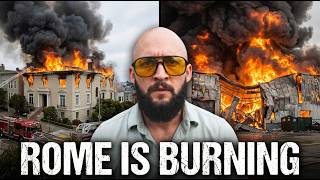
The social media response to the attacks has been intense and revealing. A YouTube video by Dr. Josh C. Simmons titled 'Sam Altman's $27 Million House Burns: This Is How An Empire Dies' garnered 46,000 views, over 4,200 likes, and 1,600 comments, framing the attack within a narrative of populist frustration against AI industry elites. On X, the Wall Street Journal's report about the anti-AI target list found on the suspect was widely shared, while Dean W. Ball's post documenting Pause AI's deletion of the suspect's messages raised pointed questions about organizational accountability. The overall sentiment has been one of alarm and condemnation, but the sheer volume of engagement — and the populist framing of some commentary — suggests the ideological substrate for further radicalization remains robust.
The Hit List Problem: A Manifesto That Endangers an Entire Industry

Perhaps the most alarming element of the Moreno-Gama case is not the attack itself but the manifesto he left behind. 'Your Last Warning' did not merely articulate anti-AI ideology — it provided a target list of AI CEOs and investors, complete with names and addresses. This transforms a single attacker's actions into an ongoing, distributed threat against the entire AI industry's leadership. Every executive named in that document now faces elevated risk, and the manifesto's public emergence creates a blueprint that future attackers can follow without needing to conduct their own reconnaissance.

Executive security experts have sounded alarms about the structural vulnerabilities this exposes. Kent Moyer of The World Protection Group noted that executives like Altman maintain multiple properties with publicly available addresses, creating a broad attack surface that is difficult to defend. John Orloff of Jensen Hughes highlighted the fundamental personalization problem: in the public imagination, the CEO is held personally responsible for every decision the company makes, making them lightning rods for grievance-driven violence. The combination of a published target list, easily accessible personal information, and a cultural moment in which 41% of Americans aged 18-29 find CEO assassination 'acceptable or somewhat acceptable' creates a threat environment that the AI industry's security infrastructure was not designed to handle. Corporate security spending has already surged in response, but the underlying vulnerability — prominent individuals leading controversial transformations — cannot be solved by bodyguards alone.

Three Days, Two Attacks: Why the Copycat Pattern Changes Everything

The second attack on Altman's home — a gunshot fired from a Honda sedan by Amanda Tom and Muhamad Tarik Hussein just three days after the Molotov cocktail — fundamentally changes the risk calculus around this story. While investigators have not confirmed any anti-AI motive for the second attack, the temporal and geographic coincidence is striking. Whether or not Tom and Hussein were directly inspired by Moreno-Gama's action, the fact that Altman's home was attacked twice in 72 hours demonstrates how a high-profile act of violence can paint a target on a specific location and individual.

The SF Standard broke the second attack news on X, tweeting 'Just in: Sam Altman's home appears to have been the target of a second attack Sunday morning, a mere two days after a 20-year-old man allegedly threw a Molotov cocktail at the property.' The rapid spread of this news across social media underscores how coverage of the first attack may have functionally advertised the target to anyone already harboring grievances. The three firearms seized from the second attack's suspects suggest a level of preparation that goes beyond spontaneous action. Whether this represents ideological contagion, opportunistic attention-seeking, or mere coincidence, the operational reality is the same: a single act of political violence against a tech executive has created a cascading threat environment. The escalation from incendiary device to firearm between the two incidents is particularly concerning, as it suggests that future copycat actors may continue to escalate in lethality.

Domestic Terrorism or Criminal Violence? The Legal Designation That Could Reshape AI Politics

U.S. Attorney Craig Missakian's statement that the case may be prosecuted as domestic terrorism if evidence shows Moreno-Gama's attacks were intended to change public policy represents a potential watershed moment. A domestic terrorism designation would be the first time anti-AI violence has been officially categorized alongside other ideologically motivated threats to national security. This would trigger enhanced investigative powers, longer sentences, and — perhaps most significantly — would formally position anti-AI extremism within the federal government's threat taxonomy alongside other recognized forms of domestic terrorism.

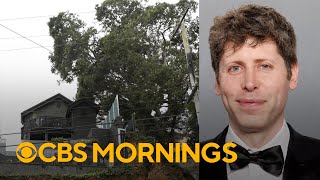
The political implications extend well beyond this single case. A terrorism designation would force a reckoning within the AI safety movement about the boundaries between advocacy and incitement. It would also provide ammunition to AI companies seeking to frame opposition to their work as a security threat rather than legitimate policy debate — a framing that civil liberties advocates would vigorously contest. The legal question hinges on intent: was the attack designed to intimidate and coerce policy change, or was it the product of individual mental instability? Moreno-Gama's detailed manifesto, his targeted travel from Texas to San Francisco, and his systematic approach to the attack all point toward ideological motivation, but prosecutors will need to prove this beyond reasonable doubt. Sam Altman himself, speaking on CBS Mornings, called for de-escalation of rhetoric — a response that seeks to separate the policy debate about AI safety from the violence directed at him personally. The outcome of this legal determination will set precedent for how the United States categorizes and responds to the growing phenomenon of anti-AI violence for years to come.

Historical Context

December 2024
UnitedHealthcare CEO Brian Thompson was fatally shot in New York City, an event that revealed widespread public sympathy for violence against corporate executives and normalized anti-CEO rhetoric online.
November 2025
StopAI cofounder Sam Kirchner went missing after assaulting a colleague who refused to help him purchase a weapon he intended to use against AI company employees, marking an early escalation of anti-AI sentiment toward violence.
January 2026
An anti-tech militant group attacked Germany's power grid while explicitly denouncing AI data centers, representing the first major infrastructure attack motivated by anti-AI ideology.
Early April 2026
A shooting occurred at an Indiana official's home accompanied by a note reading 'No data centers,' demonstrating that anti-AI violence was extending beyond tech executives to government officials involved in AI infrastructure decisions.
April 10, 2026
Moreno-Gama threw a Molotov cocktail at Sam Altman's San Francisco residence at 3:45 a.m., then proceeded to OpenAI headquarters where he threatened to burn the building and kill occupants. Arrested with incendiary devices, kerosene, and a firearm.
April 13, 2026
A second attack on Altman's property occurred just three days after the Molotov incident, when two suspects fired a gunshot from a car. Three firearms were seized; no confirmed anti-AI motive has been established.

Power Map

Key Players
Subject

Anti-AI extremists attack Sam Altman's home twice in three days

DA

Daniel Moreno-Gama

Primary suspect, 20 years old from Spring, Texas. Traveled to San Francisco specifically to target Altman, carried out Molotov cocktail attack on his home and threatened OpenAI headquarters. Authored anti-AI manifesto listing AI executives by name and address.

SA

Sam Altman

OpenAI CEO and target of both attacks. His San Francisco residence was struck by a Molotov cocktail and then by gunfire three days later. In a CBS Mornings interview, he called for de-escalation of rhetoric in the AI industry.

AM

Amanda Tom and Muhamad Tarik Hussein

Suspects in the second attack on April 13, arrested for negligent discharge after firing at Altman's property. No confirmed connection to anti-AI ideology.

FB

FBI and U.S. Attorney Craig Missakian

Leading federal investigation, raided Moreno-Gama's Texas home. Missakian stated the case may be prosecuted as domestic terrorism if evidence shows the attacks were intended to change public policy.

OP

OpenAI

Company whose CEO and Mission Bay headquarters were both targeted. Faces heightened security concerns as the manifesto listed multiple AI industry executives.

PA

Pause AI movement

Anti-AI advocacy organization whose Discord server Moreno-Gama was reportedly an active member of, according to policy researcher Dean W. Ball. Allegedly deleted his messages after the attack, raising accountability questions.

THE SIGNAL.

Analysts

"Stated that 'if the evidence shows that Mr. Moreno-Gama executed these attacks to change public policy... we will treat this as an act of domestic terrorism,' signaling the potential for significant legal escalation beyond standard criminal charges."

U.S. Attorney Craig Missakian
Federal prosecutor evaluating domestic terrorism charges

"Warned that 'executives are more vulnerable than ever,' noting that Altman's multiple properties with publicly available addresses create significant vulnerability. The attack underscores systemic gaps in executive protection for tech leaders."

Kent Moyer
CEO of The World Protection Group, executive security firm

"Observed that 'ultimately, the CEO is the person held responsible for decisions made by the company,' explaining how AI-driven labor disruption channels public antagonism directly toward individual executives rather than institutions."

John Orloff
Executive security expert at Jensen Hughes

"Assessed that 'potential violent anti-AI acts will likely emerge from personal grievances, socioeconomic dynamics, and ideological persuasions,' noting that online threats to sabotage AI data centers have proliferated significantly and that electricity rates in parts of Virginia surged 267% due to data center proliferation."

The Soufan Center
Security-focused think tank
The Crowd

"The suspect in a Molotov cocktail-style attack at OpenAI Chief Executive Sam Altman's California home last week was carrying an Anti-AI document that included a list of artificial-intelligence CEOs, court documents said."

@@WSJ0

"Pausers and stoppers rushed to cast doubt on whether the guy suspected of throwing a Molotov Cocktail at Sam Altman's house was one of theirs. Then it became clear that the guy had been an active member of the official Pause AI Discord. Then Pause AI deleted all of his [messages]."

@@deanwball0

"Just in: Sam Altman's home appears to have been the target of a second attack Sunday morning, a mere two days after a 20-year-old man allegedly threw a Molotov cocktail at the property."

@@sfstandard0
Broadcast
Sam Altman's  Million House Burns: This Is How An Empire Dies

Sam Altman's Million House Burns: This Is How An Empire Dies

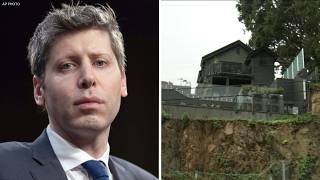
Suspect arrested after throwing Molotov cocktail at OpenAI CEO Sam Altman's San Francisco home

Suspect arrested after throwing Molotov cocktail at OpenAI CEO Sam Altman's San Francisco home

Sam Altman says we should deescalate the rhetoric after home hit with Molotov cocktail

Sam Altman says we should deescalate the rhetoric after home hit with Molotov cocktail