Nvidia CEO Jensen Huang Claims AGI Has Been Achieved
TECH

Nvidia CEO Jensen Huang Claims AGI Has Been Achieved

34+
Signals

Strategic Overview

  • 01.
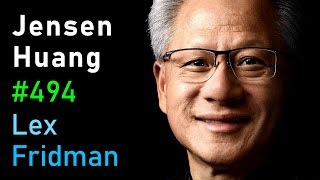
    Nvidia CEO Jensen Huang declared 'I think we've achieved AGI' during Lex Fridman Podcast #494 on March 23, 2026, defining AGI commercially as AI capable of building a viral web service generating $1B in revenue, even briefly.
  • 02.
    Huang immediately tempered his claim, stating there is a 0% chance AGI could run a company at Nvidia's scale, and acknowledged significant limitations remain in current AI systems.
  • 03.
    The declaration came days after GTC 2026 (March 16-21), where Nvidia announced $1T in Blackwell and Vera Rubin platform orders, with the company's market cap reaching approximately $4.5 trillion.
  • 04.
    The claim reignited fierce industry debate, with prominent figures like Andrej Karpathy placing AGI a decade away and Google DeepMind's Demis Hassabis citing 5-8 years, while social media reactions were overwhelmingly skeptical about Huang's commercially-oriented definition.

Deep Analysis

Why This Matters

Jensen Huang's AGI declaration carries outsized weight because of who he is and when he said it. As CEO of the world's most valuable company — a $4.5 trillion enterprise that supplies the computational substrate for virtually all frontier AI development — his words move markets, shape policy conversations, and influence billions of dollars in capital allocation. When Huang says AGI has arrived, it is not an academic musing; it is a statement from the person with the deepest commercial interest in the answer being 'yes.'

The timing is equally significant. The claim came just two days after GTC 2026 concluded, where Nvidia announced $1 trillion in forward orders for its Blackwell and Vera Rubin platforms. Wall Street had responded with caution rather than exuberance to those numbers. By declaring AGI achieved, Huang effectively reframes the entire AI investment thesis: if AGI is here, then the infrastructure buildout is not speculative — it is table stakes. This narrative maneuver turns skepticism about AI capex into a question of whether companies are investing enough, not too much.
How It Works: The Definition Game

At the core of this controversy is a definitional sleight of hand. Traditional AGI definitions — from computer science textbooks to AI research labs — describe a system with human-level cognitive abilities across all domains: reasoning, learning, planning, creativity, and adaptation in novel situations. Huang instead proposed a commercial proxy: an AI that could independently build a web service generating $1 billion in revenue, even fleetingly. He specifically used the example of Claude creating an app that billions of people use briefly at $0.50 each.

This reframing is strategically brilliant but scientifically problematic. By the traditional definition, no current system comes close — as Huang himself admitted when he gave a 0% chance of AI running Nvidia. Current AI agents can write code, generate content, and automate workflows, but they cannot autonomously identify market opportunities, navigate regulatory environments, manage supply chains, or make the kind of multi-domain strategic decisions that running a company requires. The gap between 'can build a viral app' and 'possesses general intelligence' is the gap Huang's definition papers over.

The Microsoft-OpenAI contract illustrates how much the definition matters commercially. Their agreement originally defined AGI as AI generating $100 billion in profits — a threshold that, if met, would trigger significant changes in IP rights and partnership terms. The February 2026 shift to an independent expert panel reflects the growing recognition that no single metric captures AGI. Huang's attempt to define AGI by a different financial metric ($1B revenue) adds another competing standard to an already fragmented landscape.

By The Numbers

Nvidia market capitalization: approximately $4.5 trillion, making it the world's most valuable company and giving Huang's statements extraordinary market influence. Projected Blackwell and Vera Rubin orders: $1 trillion through 2027, representing the largest infrastructure commitment in computing history. Vera Rubin chip specifications: 336 billion transistors, 288GB HBM4 memory, 22 TB/s memory bandwidth, and 50 petaFLOPS per chip — a generational leap in AI compute density.

Microsoft-OpenAI AGI profit threshold: $100 billion, with Microsoft holding a 27% stake in OpenAI and a $250 billion Azure compute contract. Social media engagement on Huang's claim: Polymarket's post received 18,000 likes and 3,400 retweets; Lex Fridman's original post drew 7,500 likes and 1,400 retweets. The Lex Fridman podcast episode itself garnered 276,000 views within hours of release, while Nvidia's GTC keynote had accumulated 9.7 million views. These numbers underscore both the public appetite for AGI discourse and the amplification power of Huang's platform.

Impacts & What's Next

The immediate impact is a renewed and intensified debate about AGI timelines, with real commercial consequences. If the industry broadly accepts Huang's lower bar for AGI, it justifies continued massive infrastructure spending and could accelerate regulatory frameworks being developed for 'general-purpose AI.' Conversely, if the community largely rejects his definition — as early signals from Hacker News and AI researchers suggest — the claim could backfire, fueling narratives about hype-cycle peak and term redefinition to sustain investment.

For Nvidia specifically, the AGI narrative supports its forward order book. If customers believe AGI is here or imminent, they are more likely to commit to the $1 trillion in Vera Rubin orders rather than wait for clearer signals. For OpenAI and Microsoft, Huang's claim creates an awkward dynamic: their contractual definition of AGI has direct financial consequences, and an influential third party claiming the milestone has been reached — by a different definition — introduces noise into an already complex partnership.

Looking ahead, expect the AGI definition debate to intensify through 2026. The independent expert panel that now governs the Microsoft-OpenAI AGI determination will face pressure to clarify benchmarks. Meanwhile, Google DeepMind, xAI, and Anthropic will each position their own timelines strategically. The real test will come not from declarations but from demonstrated capabilities: can AI systems reliably perform novel, multi-domain tasks without human oversight? Until that bar is cleared consistently, Huang's claim will remain more provocation than proclamation.

The Bigger Picture

Huang's AGI declaration fits into a broader pattern in technology where the goalposts of transformative milestones shift as commercial pressures mount. The AI industry has a long history of this: 'AI' itself has been redefined repeatedly since the 1950s, with each generation's breakthroughs eventually reclassified as 'just software' once they become routine. Self-driving cars were 'two years away' for a decade. AGI may be undergoing a similar definitional compression, where the extraordinary becomes ordinary and the bar is lowered to match what currently exists.

The skepticism from Hacker News commenters — 'Have we reached the stage of the cycle where we redefine the terms that we used to attract investment?' — captures the core tension. AGI has been the North Star of AI research for decades, carrying connotations of truly human-equivalent intelligence. Redefining it as 'can build a viral app' strips the term of its original ambition while preserving its rhetorical power. This is not necessarily dishonest — reasonable people disagree about what AGI means — but it is strategically convenient for the CEO of the company that sells the picks and shovels of the AI gold rush.

Ultimately, whether AGI has been achieved depends entirely on what you mean by AGI. Huang has chosen a definition that serves Nvidia's interests. His critics have chosen definitions that demand more. The truth likely lies in the recognition that intelligence is not a binary threshold but a spectrum, and current AI systems occupy an impressive but incomplete position on that spectrum. The real question is not whether AGI is here, but whether the framing of that question is being used to drive investment decisions worth trillions of dollars — and whether those decisions will prove sound regardless of what we call the technology.

Historical Context

2023-11
At NYT DealBook, Huang predicted AGI would arrive within 5 years, setting expectations that he would later accelerate.
2024-12
Reports revealed their partnership contract defines AGI as AI generating $100B in profits, establishing a financial rather than technical AGI threshold.
2026-02
Joint statement shifted AGI determination to an independent expert panel, decoupling the contractual trigger from a simple financial metric.
2026-03-16
GTC 2026 keynote showcased $1T in Blackwell and Vera Rubin orders, the NemoClaw agent platform, and the Vera Rubin chip with 336B transistors and 50 petaFLOPS per chip.
2026-03-21
Despite GTC announcements, Wall Street analysts expressed caution about Nvidia's forward guidance, suggesting the market was not fully won over.
2026-03-23
Huang declared 'I think we've achieved AGI' on Lex Fridman Podcast #494, using a commercial revenue-based definition while immediately acknowledging major limitations.

Power Map

Key Players
Subject

Nvidia CEO Jensen Huang Claims AGI Has Been Achieved

NV

Nvidia

Dominant AI chip supplier with ~$4.5T market cap; Huang's AGI narrative directly supports demand for its GPU infrastructure, with $1T in next-gen orders announced at GTC 2026.

OP

OpenAI / Microsoft

Their partnership contract uses AGI as a contractual termination switch affecting IP rights, with AGI defined as $100B in profits; an independent expert panel now determines when AGI is reached.

GO

Google DeepMind

Major AGI research competitor; CEO Demis Hassabis has publicly placed AGI 5-8 years out, citing gaps in continual learning and long-term planning that challenge Huang's claim.

XA

xAI (Elon Musk)

Competing AI venture targeting AGI within 2 years; Musk's aggressive timeline contrasts with both Huang's 'already here' claim and skeptics' longer horizons.

AI

AI Investor Community

Huang's AGI declaration serves as a powerful market signal for continued AI infrastructure spending; skeptics warn it could represent peak-cycle term redefinition to sustain investment momentum.

THE SIGNAL.

Analysts

"Declared 'I think we've achieved AGI' using a commercial definition -- AI that could build a viral app generating $1B in revenue -- while acknowledging a 0% chance of AI running a company like Nvidia."

Jensen Huang
CEO, Nvidia

"Places AGI at least a decade away, warning that current AI produces 'mountains of slop' and poses significant security vulnerabilities, emphasizing the gap between impressive demos and reliable general-purpose intelligence."

Andrej Karpathy
Former AI Chief, Tesla; AI Researcher

"Estimates AGI is 5-8 years away, noting that current models lack continual learning and long-term planning capabilities essential for true general intelligence."

Demis Hassabis
CEO, Google DeepMind

"Has stated he would be surprised if advanced AI surpassing human capabilities does not emerge by 2030, positioning OpenAI's timeline between Huang's 'now' claim and more conservative estimates."

Sam Altman
CEO, OpenAI
The Crowd

"BREAKING: NVIDIA CEO announces we have achieved AGI"

@@Polymarket18000

"Here is my conversation with Jensen Huang, CEO of NVIDIA, the most valuable and one of the most influential companies in the history of human civilization. It is the engine powering the AI revolution."

@@lexfridman7500

"JUST IN: NVIDIA CEO JENSEN HUANG SAYS I THINK WE HAVE ACHIEVED AGI. The most consequential sentence in AI just dropped on a podcast. Speaking on the @lexfridman podcast today, @nvidia CEO Jensen Huang declared that AGI has been achieved. No formal benchmark. No peer review."

@@BSCNews5800

"Nvidia CEO Jensen Huang says I think we have achieved AGI"

@u/unknown17
Broadcast
Jensen Huang: NVIDIA - The  Trillion Company & the AI Revolution | Lex Fridman Podcast #494

Jensen Huang: NVIDIA - The Trillion Company & the AI Revolution | Lex Fridman Podcast #494

NVIDIA GTC Washington, D.C. Keynote with CEO Jensen Huang

NVIDIA GTC Washington, D.C. Keynote with CEO Jensen Huang

NVIDIA CEO Jensen Huang's Vision for the Future

NVIDIA CEO Jensen Huang's Vision for the Future