No Approval Prompts: Anthropic's Calculated Bet on Unsupervised Autonomy
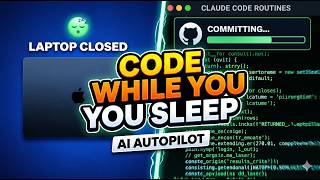
The most architecturally significant decision in Routines is not what it adds but what it removes: the human approval step. Anthropic's documentation states plainly that routines run as full Claude Code cloud sessions with no permission-mode picker and no approval prompts during a run. The AI can execute shell commands, call connectors, and take actions under the user's GitHub identity — all without a human confirming any individual step. This is a deliberate departure from the guardrailed, interactive paradigm that has defined AI coding assistants since their inception.
This design choice creates an interesting tension with Anthropic's public positioning as the safety-focused AI company. By removing human-in-the-loop controls for routine execution, Anthropic is essentially arguing that the safety boundary should be at the configuration level (what prompt, repo, and connectors you attach) rather than the execution level (approving each action). The research preview label provides some cover, but the architecture signals a permanent direction. The security implications are substantial: a misconfigured routine with broad repository access and shell permissions could introduce vulnerabilities, push unreviewed code, or take destructive actions — all autonomously, repeatedly, and potentially while the developer sleeps. The fact that GitHub triggers support 17 event categories with detailed filtering suggests Anthropic is aware of the blast radius and is trying to give developers granular control at the trigger boundary instead.
Early YouTube coverage reflects this tension. Nick Saraev's reaction video — titled 'Claude Routines Just Dropped, And It's Perfect' — captures the developer enthusiasm for removing friction from automated workflows, while Artem Zhutov's morning routine demo (7,398 views, the highest engagement of any launch-day content) shows users are already pushing Routines beyond code-centric tasks into personal productivity automation involving calendars, goals, and task management. The speed at which tutorial content appeared — including a comprehensive trigger-by-trigger guide from Hyperautomation Labs — suggests the developer community sees this as a significant capability shift worth learning immediately.