Pentagon excludes Anthropic from DoD AI vendor deal
TECH

Pentagon excludes Anthropic from DoD AI vendor deal

36+
Signals

Strategic Overview

  • 01.
    On May 1, 2026, the Department of Defense signed agreements with eight AI vendors—SpaceX, OpenAI, Google, NVIDIA, Reflection, Microsoft, AWS, and Oracle—to deploy frontier AI on classified IL6 and IL7 networks, while pointedly excluding Anthropic in what Pentagon CDAO leadership cast as a leap from secret to top-secret AI tooling.
  • 02.
    Anthropic was frozen out after refusing to permit Pentagon use of Claude 'for all lawful purposes,' insisting on contractual red lines against domestic mass surveillance and fully autonomous lethal weapons—red lines the Trump administration treated as unacceptable supplier conduct.
  • 03.
    The exclusion follows a February 27, 2026 escalation in which President Trump ordered every federal agency to immediately cease using Anthropic and Defense Secretary Pete Hegseth designated the company a Supply-Chain Risk to National Security roughly 90 minutes later, extending the prohibition to every Pentagon contractor and partner with a six-month phase-out.
  • 04.
    Anthropic has sued in two federal courts to undo the designation, won a preliminary injunction in the Northern District of California framing the action as First Amendment retaliation, but lost a parallel motion at the D.C. Circuit—leaving the company legally split-screened as the May procurement closed without it.

Deep Analysis

The 'all lawful purposes' clause is the real fault line — and it is about domestic surveillance, not battlefield AI

The headline framing is a fight over 'safety,' but the actual contract language at the center of the dispute is narrower and more politically explosive. The Pentagon, according to reporting summarized by Mayer Brown's national-security practice, sought to renegotiate Anthropic's usage policy so the military could deploy Claude 'for all lawful purposes' without limitation. Anthropic refused to drop two specific carve-outs: domestic mass surveillance of U.S. persons, and fully autonomous lethal weapons. That is not a refusal to do defense work — Anthropic had already accepted a $200M two-year prototype OTA from CDAO in July 2025 and onboarded a former director of the Pentagon's Office of Net Assessment, James Baker, as strategist-in-residence. It is a refusal to remove guardrails on a specific class of uses. Reddit threads picked this up faster than mainstream commentary, with r/news and r/technology framing the dispute as a private firm holding the line against warrantless domestic surveillance. The legal record reinforces this reading: Judge Rita F. Lin's preliminary injunction characterized the designation as retaliation for Anthropic 'bringing public scrutiny to the government's contracting position' — language that treats the contract clause itself as protected speech.

Multi-vendor diversification is now an explicit doctrine — and it just rewrote DoD AI procurement

Pentagon CTO Emil Michael's stated rationale — 'it's irresponsible to be reliant on any one partner' — is more than a talking point; it is the operating logic behind the May 1 awards. All eight winners (SpaceX, OpenAI, Google, NVIDIA, Reflection, Microsoft, AWS, Oracle) received concurrent IL6 and IL7 environments, collapsing what used to be a tiered, sequential certification process into a single parallel rollout. GenAI.mil — the enterprise platform Hegseth launched in December 2025 with Google Gemini and expanded with xAI's Grok in January 2026 — has reportedly grown to over 1.3 million DoD personnel users with tens of millions of prompts and hundreds of thousands of agents created in five months, all against an FY2026 defense budget request of $961.6B that includes $33.7B for science, technology, and autonomous systems. The structural implication is that no individual frontier-model provider can hold leverage over the Pentagon on policy terms; substitution risk is now baked in. Anthropic's exclusion is the first real-world demonstration that the doctrine has teeth — a vendor that says no on a contractual red line can be replaced across classified networks within a single procurement cycle.

The legal architecture: FASCSA, 10 U.S.C. § 3252, and a split-screen court fight

The supply chain risk designation is not a generic blacklist — it rides on a specific statutory stack that contractors are now scrambling to map. Mayer Brown's analysis identifies three load-bearing authorities: Federal Acquisition Supply Chain Security Act (FASCSA) orders that propagate exclusions across federal agencies; 10 U.S.C. § 3252, which gives the Department of Defense independent authority to exclude sources from national security system contracts without waiting for Federal Acquisition Security Council recommendations; and standard suspension/debarment tools. The clauses that downstream contractors must now audit include FAR 52.204-29, FAR 52.204-30, and DFARS 252.239-7018. The litigation has split: Judge Rita F. Lin in the Northern District of California granted Anthropic a preliminary injunction in March 2026 on First Amendment retaliation grounds, while the D.C. Circuit denied Anthropic's parallel motion to lift the designation, citing ongoing military operations. That divergence is unusual — it means the same federal action is simultaneously enjoined in one venue and operative in another, leaving the supply chain risk label legally live for the May 1 awards even as Anthropic prevails on the constitutional question on the West Coast.

The financial and reputational paradox: pro-Anthropic public sentiment versus a multi-billion-dollar revenue hit

The financial and reputational paradox: pro-Anthropic public sentiment versus a multi-billion-dollar revenue hit
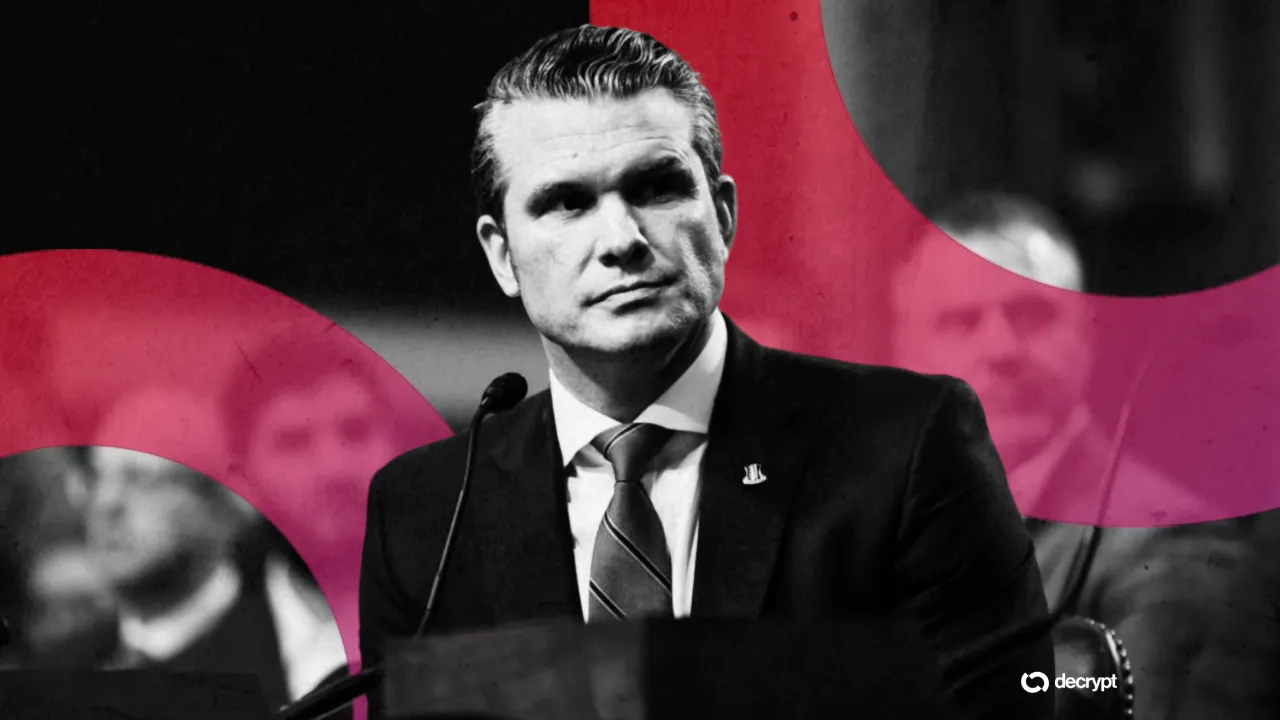
Defense Secretary Pete Hegseth, who issued the supply chain risk designation against Anthropic roughly 90 minutes after Trump's federal-agency directive.

Two divergent signals are running in parallel. On the financial side, Anthropic CFO Krishna Rao has warned in court filings that the directive could reduce 2026 revenue by 'multiple billions of dollars' across the entire business once customers take a 'maximal reading' of the federal restrictions; projected public-sector ARR of more than $500 million is at risk of shrinking 'substantially or disappear[ing] altogether,' and a single FDA partner switch already eliminated a $100M+ anticipated pipeline. Palantir removing Claude from DoD platforms compounds the contagion into defense-adjacent commercial accounts. On the public-sentiment side, the picture is the opposite. Reddit threads on Anthropic rejecting the Pentagon's offer drew tens of thousands of upvotes, with sentiment overwhelmingly framing Anthropic as morally taking a stand; Hegseth's reported '5:01pm Friday ultimatum' was widely called out as coercive; and a non-trivial number of commenters said they would switch from OpenAI to Claude in solidarity. YouTube long-form coverage from the Ezra Klein Show and Washington Post reinforced the structural framing that the Pentagon overreached. The paradox is that the very stance costing Anthropic revenue in classified procurement is generating brand equity in the $14B annual revenue base that comes primarily from non-military customers — over 500 of whom already pay $1M+ per year for Claude. Whether that brand premium offsets the public-sector hole is the open business question of the year for frontier AI labs.

Historical Context

2025-07
DoD's Chief Digital and AI Office awarded Anthropic a two-year prototype other-transaction agreement worth up to $200 million, alongside parallel deals with frontier rivals.
2025-09
Conflict surfaced over Anthropic's policy restrictions on use of Claude for surveillance and lethal autonomous weapons.
2025-12
Hegseth launched the GenAI.mil enterprise platform with Google Gemini integration, kicking off the Pentagon's multi-vendor AI strategy.
2026-01
Hegseth onboarded xAI's Grok for military use; reports surfaced of an Anthropic clash specifically over lethal autonomous weapons clauses.
2026-02-27
Trump ordered all federal agencies to immediately cease using Anthropic; Hegseth designated the company a supply chain risk roughly 90 minutes later.
2026-03-09
Anthropic filed two federal lawsuits—in the Northern District of California and at the D.C. Circuit—challenging the supply chain risk designation and Trump's directive.
2026-04-17
Chief of Staff Susie Wiles met with Anthropic CEO Dario Amodei in a possible rapprochement attempt that ultimately did not reverse the designation.
2026-05-01
DoD signed IL6/IL7 agreements with eight vendors—SpaceX, OpenAI, Google, NVIDIA, Reflection, Microsoft, AWS, Oracle—formally locking Anthropic out of classified AI procurement.

Power Map

Key Players
Subject

Pentagon excludes Anthropic from DoD AI vendor deal

U.

U.S. Department of Defense / Pentagon

Awarding authority that signed IL6/IL7 agreements with eight vendors and excluded Anthropic; designated Anthropic a supply chain risk and is driving multi-vendor diversification under the GenAI.mil enterprise platform.

AN

Anthropic

Excluded AI lab; refused the 'all lawful purposes' clause to preserve red lines against mass surveillance and autonomous weapons; suing the administration on First Amendment grounds while warning of multi-billion-dollar revenue impact.

PR

President Donald Trump and Defense Secretary Pete Hegseth

Trump issued the February 27, 2026 directive ordering every federal agency to cease using Anthropic; Hegseth followed minutes later with the formal supply chain risk designation that bars contractors from any commercial activity with the company.

PE

Pentagon CTO Emil Michael (Under Secretary for Research and Engineering)

Public-facing official articulating the multi-vendor diversification rationale; confirmed Anthropic remains blacklisted even as agencies including the NSA evaluate Anthropic's cybersecurity model 'Mythos.'

EI

Eight selected vendors (SpaceX, OpenAI, Google, NVIDIA, Reflection, Microsoft, AWS, Oracle)

Beneficiaries of the largest single Pentagon AI procurement of the year, gaining concurrent IL6 and IL7 access to deploy frontier models on classified networks underpinning the GenAI.mil platform.

PA

Palantir

Defense AI integrator that removed Claude models from DoD platforms after the supply chain risk designation, deepening Anthropic's exclusion from the operational defense ecosystem.

Source Articles

Top 3

THE SIGNAL.

Analysts

"Argues over-reliance on a single AI vendor is a national-security liability and that Anthropic's safety stance turns it into a supply-chain risk; ongoing Mythos evaluations by other agencies do not constitute reinstatement."

Emil Michael
Pentagon CTO / Under Secretary for Research and Engineering, U.S. DoD

"Found that punishing Anthropic for publicly disclosing its contracting position constitutes classic illegal First Amendment retaliation, and granted a preliminary injunction against enforcement of the supply chain risk designation."

Judge Rita F. Lin
U.S. District Judge, Northern District of California

"Quantified the financial damage of the federal blacklist, warning that the directive could reduce 2026 revenue by 'multiple billions of dollars' and cripple defense-adjacent commercial relationships—a single FDA partner switch alone wiped out a >$100M anticipated pipeline."

Krishna Rao
Chief Financial Officer, Anthropic

"Walks contractors through the legal toolkit—FASCSA orders, 10 U.S.C. § 3252, suspension/debarment—underpinning the designation, and recommends inventory and clause review of FAR 52.204-29/-30 and DFARS 252.239-7018 to manage downstream exposure."

Mayer Brown legal analysts (J. Ryan Frazee, John Prairie, Adam S. Hickey)
Government Contracts and National Security partners, Mayer Brown LLP

"The dispute exposes governance failures: contractual red lines from private firms cannot substitute for national AI-warfare governance frameworks, and the supply chain risk label creates legal exposure for NATO and Five Eyes allies that operate Claude."

Oxford Cyber and Technology Policy programme commentary
Expert commentary, University of Oxford
The Crowd

"This week, Anthropic delivered a master class in arrogance and betrayal as well as a textbook case of how not to do business with the United States Government or the Pentagon. Our position has never wavered and will never waver: the Department of War must have full, unrestricted [use of AI capabilities]"

@@SecWar0

"Anthropic sues Pentagon over "supply-chain-risk" Anthropic filed two lawsuits against the Pentagon after being labeled a rare "supply chain risk," a designation usually reserved for foreign adversaries. The company argues the move violates its First Amendment rights and..."

@@kimmonismus0

"Lots of new, hard to follow details today about the OpenAI-Pentagon deal. Here's a roundup of the most important things about using commercially available data for surveillance on Americans. TL;DR: It seems the Pentagon wanted Anthropic to allow this, and Anthropic's refusal is [the core of the dispute]"

@@ShakeelHashim0

"Anthropic rejects latest Pentagon offer: 'We cannot in good conscience accede to their request'"

@u/drippymoudy47071
Broadcast
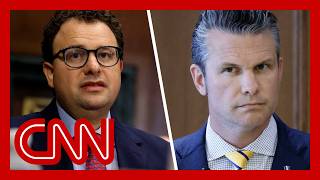
Pentagon CANNOT call Anthropic a national security risk

Pentagon CANNOT call Anthropic a national security risk

Why the Pentagon Wants to Destroy Anthropic | The Ezra Klein Show

Why the Pentagon Wants to Destroy Anthropic | The Ezra Klein Show

Anthropic AI rejects Pentagon's weapons & surveillance ultimatum

Anthropic AI rejects Pentagon's weapons & surveillance ultimatum